
Livraison le jour même ou le lendemain

Qualité garantie

Débloquez vos offres de bienvenue: Livraison GRATUITE | Jusqu'à -80 % | 30 jours d'essai gratuits à JoyPlus
Téléchargez l'application
Between school supplies, work notes and journaling, Paper Mate pens and felt-tip pens serve very different purposes. But you need to pick the right model – a tip that’s too wide for a diary, ink that bleeds through the paper, or an awkward mechanism can quickly spoil the experience.
Here are the criteria to consider before buying, followed by a selection tailored to different needs.
A tip described as “medium” won’t necessarily give the same result depending on the technology used. A 0.7 mm fibre-tip pen can produce an expressive line, while a 1 mm ballpoint pen will give a bolder stroke. The result also depends on the pressure you apply and the type of paper.
For small annotations, tables or notebook margins, check the exact measurement. For a bullet journal or headings, a medium tip will offer better visibility.
Water-based ink is often appreciated for its smooth flow and vibrant colours. However, the result also depends on the paper’s weight and finish. On thin paper, the colour may show through on the other side, even if the product is designed to limit ink bleed.
Left-handed writers should check the stated drying time and test the pen on their usual paper. Writing speed, temperature and the amount of ink deposited also affect the risk of smudging.
A pack of 16 colours is handy for colour-coding and creative hobbies, but it’s probably overkill for administrative notes written in black or blue. On the other hand, a single-colour pen may lack versatility for timetables, corrections or revision cards.
The right choice depends on how many colours you actually need, how often you’ll use them, and how much space you have in your pencil case.
For consistent writing, compare the following:
Paper Mate fibre-tip pens must be carefully recapped after each use to prevent the tip from drying out. A retractable Paper Mate pen can be operated with one hand and avoids losing the cap, but its mechanism has more small parts.
For children under 3 years old, caps, springs and other small parts pose a choking hazard. Follow the warnings on the product page and supervise young children when they’re using these pens.
A rubberised or textured grip can make long writing sessions more comfortable, especially for students, teachers and professionals. Felt-tip pens with caps should be stored in a cool, dry place, preferably horizontally. With a retractable pen, remember to retract the tip before putting it in a pocket or bag.
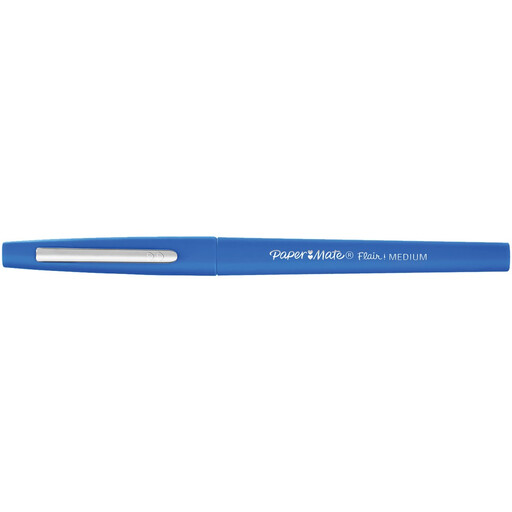
Why this choice suits this profile: This blue medium-point 0.7 mm felt-tip pen works for notes, diagrams and creative projects without needing multiple different pens.
The tip and colour are clearly stated, while the cap protects the fibre between uses.
Quick-drying water-based ink, cylindrical barrel and ambidextrous grip.
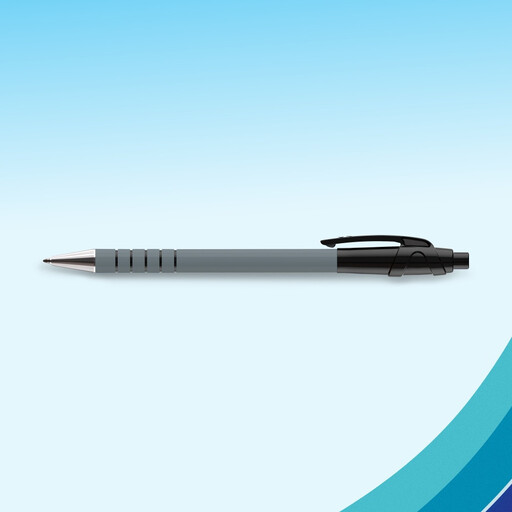
Why this choice suits this profile: Its rubberised barrel and push-button mechanism meet the demands of professional use and long note-taking sessions.
The retractable tip protects pockets and prevents losing a cap when you’re on the move.
1 mm tip, textured rubberised grip and barrel made from at least 40% recycled materials according to the product page.
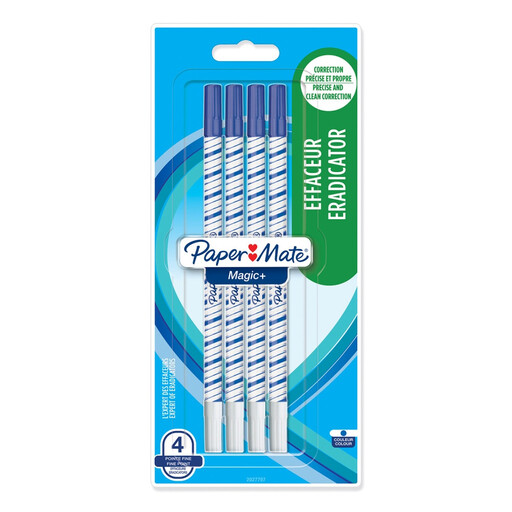
Why this choice suits this profile: Students and users who often correct their notes get a writing tip and an integrated eraser in the same instrument.
The fine 0.3 mm tip lets you write in tight spaces, while the eraser means you don’t need to add correction tape.
Dual-ended instrument, blue ink and pack of four.
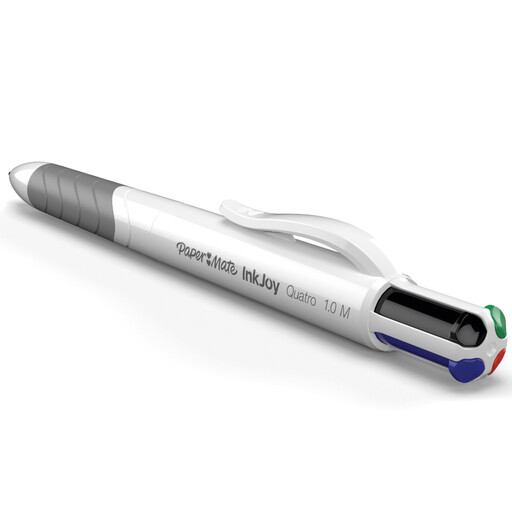
Why this choice suits this profile: This Paper Mate four-colour pen is ideal for timetables, corrections and colour-coded note-taking.
A single instrument holds four colours, reducing pen changes and clutter in your pencil case.
Four ballpoint inks, 0.7 mm tip and retractable mechanism.
We’ve put together a complete, real-time updated selection of products that meet these demanding criteria and comply with European safety regulations.
A 0.7 mm tip works well for most notebooks and office paper. For small diaries or tight annotations, a 0.3 mm tip offers greater precision. For headings, diagrams and colour-coding, a fibre-tip pen will generally be more visible.
Erasable models are handy for exercises, drafts and personal notes. They don’t necessarily replace permanent ink for administrative documents, contracts or archives. Check the product page for the specific model and test it on your chosen surface before committing.
It all depends on how often you write, the pressure you apply and storage conditions. Firmly replace the cap after each use and avoid heat and direct light. A felt-tip pen used every day will naturally wear out faster than one only brought out for occasional journaling.