
Livraison le jour même ou le lendemain

Qualité garantie

Débloquez vos offres de bienvenue: Livraison GRATUITE | Jusqu'à -80 % | 30 jours d'essai gratuits à JoyPlus
Téléchargez l'application
Buying a paper and leather hole punch may seem straightforward… until the tool jams, creases your sheets, or creates uneven holes in a leather strap. The right choice depends on whether you are filing documents, creating a scrapbook, or working with leather. A 4-hole punch is in a different category from a leather hole-punch plier.
Before comparing models, it is worth avoiding three common mistakes.
A 1-hole punch lets you position the hole wherever you need it. It is therefore suitable for labels, tickets, index cards, and creative projects. A 4-hole punch, on the other hand, is designed to maintain even spacing compatible with certain binders and binding systems. It is not more versatile; it simply addresses a different need.
The presence of metal alone does not guarantee that a tool is durable. You should also examine its construction, mechanism, punching capacity, and base stability. For leather, the shape of the head, the lever, and the cutting support directly affect the consistency of the results.
A paper punch is generally designed for a limited paper weight. Leather, canvas, flexible plastic, and thick card require a suitable leather hole punch. Forcing an office model through material that is too thick may dull the mechanism or create a poorly cut hole.
For school, administrative, or household use, start by checking how many sheets the tool can handle. The MAPED Essentials 4-hole punch, for example, is rated for 10 sheets of 80 gsm paper or 12 sheets of 70 gsm paper. This figure is far more useful than a vague claim of power: it helps you adjust your technique and avoid overloading the tool.
A single-hole punch is ideal for projects where the hole position needs to remain flexible. For filing, check the spacing between the holes and compatibility with your binders. Alignment is particularly important for binding and filing: repeated misalignment can make pages difficult to turn.
An all-metal construction can provide excellent durability for regular use, but it will also be heavier. For a professional punch or one intended for frequent use, examine the rigidity of the lever, the quality of the cutting area, and whether it includes a confetti collection chamber.
For a leather hole-punch plier, the priorities are different: punch-head diameters, a force-multiplying mechanism, non-slip handles, and the ability to replace or rotate the tips. The available sizes should match those of your rivets, buckles, snap fasteners, or laces.
Blades and punch tips are sharp. Always use the tool on a stable surface, respect its stated capacity, and keep it out of the reach of young children. Also remember to remove paper chads and leather residue regularly to reduce the risk of blockages.
For metal tools, wiping them dry after use is generally enough to remove dust. With a leather punch, occasional light lubrication of the pivot and punch heads can help maintain smooth operation. In all cases, follow the manufacturer’s recommendations.
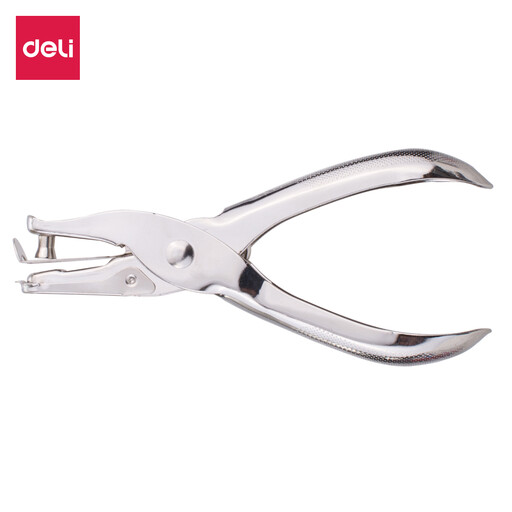
Why this model is a good fit: Its compact format meets the needs of students, home users, and workstations where holes need to be positioned freely.
It is designed for paper, not thick materials, so its clearly defined purpose prevents you from asking too much of it.
Single-hole mechanism, easy-to-carry format, metal construction, and a confetti collection chamber that should be emptied regularly.
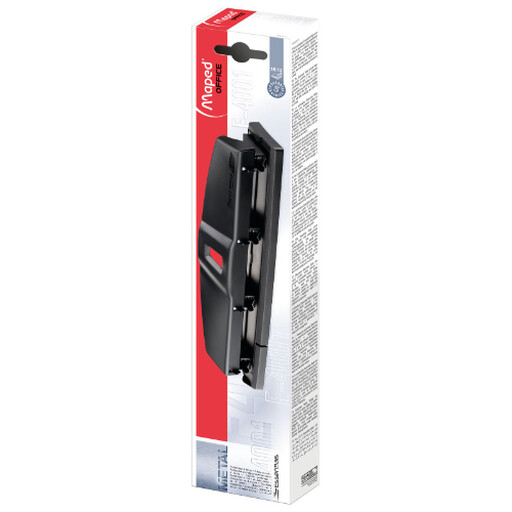
Why this model is a good fit: It is designed for offices, classrooms, and home users who regularly file documents in four-ring binders.
Its stated capacity of 10 to 12 sheets is a reminder that a four-hole alignment does not mean the tool is intended for high-volume punching.
All-metal construction, four-hole alignment system, confetti collection chamber, and a stated five-year manufacturer’s warranty.
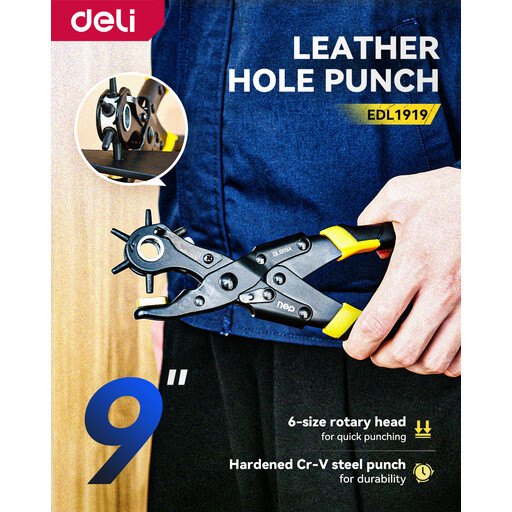
Why this model is a good fit: This leather hole-punch plier is designed for users working with leather, canvas, fabric, or flexible plastic who need several punch diameters.
Its six interchangeable heads, ranging from 2 to 4.5 mm, let you select the diameter precisely, leaving no ambiguity about its versatility.
Plated steel, non-slip handles, dual-lever mechanism, and a stated brass support.
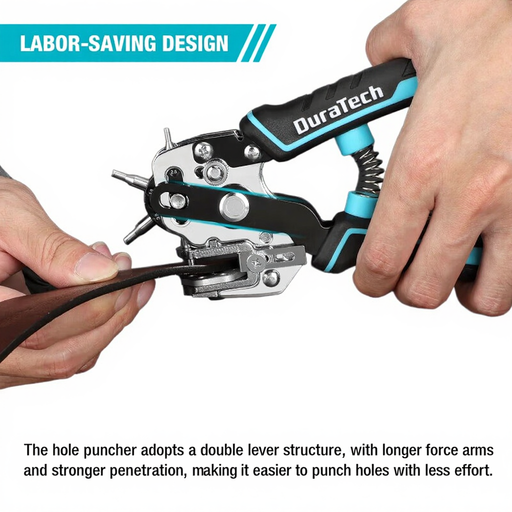
Why this model is a good fit: It is suited to projects that require precise adjustment of the distance from the edge and accurate selection of the punch diameter.
The distance adjustment and adjustable lower base reduce the risk of punching too close to the edge, provided the instructions are followed correctly.
Six diameter settings, non-slip handle, assisting spring, and stated stainless-steel construction.
Scrapbooking cutting dies and embossing stencils are not used like an office hole punch. They are designed to cut or imprint patterns in paper with a compatible machine, according to the system specified by the manufacturer.
For cards, photo albums, and other crafting projects, check the pattern dimensions, the material being worked with, and compatibility with your die-cutting machine. The following references can complement your supplies: cutting dies for cards and albums, decorative patterns and embossing, or metal scrapbooking borders.
We have brought together an updated selection of tools that meet these selection criteria and the safety requirements applicable in France.
Choose a leather hole punch or hole-punch plier offering several diameters, a stable lever, and a suitable cutting area. A standard paper punch is not designed for this type of material. If you plan to use it frequently, also compare handle comfort and how easily the moving parts can be maintained.
No. Check the spacing between the holes and the format of your sheets before buying. The number of holes alone does not guarantee compatibility with a particular binder or binding system.
Respect its stated capacity, empty the confetti collection chamber, wipe down the mechanism, and store the tool in a dry place. Never force cardboard, plastic, or leather through a product intended for paper only. Staying within these limits will help reduce premature wear and the risk of jamming.