
Livraison le jour même ou le lendemain

Qualité garantie

Débloquez vos offres de bienvenue: Livraison GRATUITE | Jusqu'à -80 % | 30 jours d'essai gratuits à JoyPlus
Téléchargez l'application
A poorly chosen envelope can quickly turn a simple task into an unnecessary expense. An A4 document slipped into a size that's too narrow, a closure that doesn't hold properly, or paper that's too flimsy can spoil both the presentation of your mail and its protection.
Before buying paper envelopes, three mistakes crop up time and again:
The size must match the contents, while leaving enough margin to insert the document without unnecessary folding.
Also check whether you need a window envelope or a plain one. The former makes it easy to display an address printed on the document, while the latter offers a more versatile presentation and greater freedom for writing or sticking on a label.
Paper weight is expressed in g/m². It refers to the weight of the paper per square metre, but on its own it doesn't determine its strength or finish.
For regular use, also look out for any certifications. Products may carry an FSC or PEFC certification, which relates to the responsible sourcing of fibres according to the manufacturer's stated standard. This mention doesn't replace the need to check the dimensions, paper weight and closure type.
Self-seal white envelopes usually have an adhesive strip protected by a peel-off film. They're handy for preparing several items of mail quickly, without having to moisten the flap.
Gummed envelopes have an adhesive strip that needs to be moistened. They're suitable for classic correspondence or invitations, provided they're stored in a dry place to prevent premature sticking.
For a business, association or school, compare the number of envelopes per pack and how easy they are to store. A pack of 25 is enough for an occasional need, while a larger quantity will often be more practical for regular use.
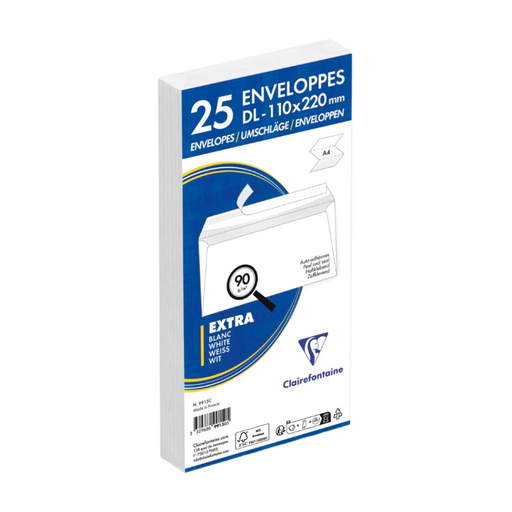
Why this choice suits this profile: The DL format of 110 × 220 mm is ideal for letters and A4 documents folded into three. The pack of 25 covers a typical need at home, school or the office.
Its dimensions and 90 g/m² paper weight are clearly stated. So there's no risk of choosing an envelope based on its appearance alone.
90 g/m² white Clairefontaine paper, self-seal closure protected by a silicone strip and FSC certification stated.
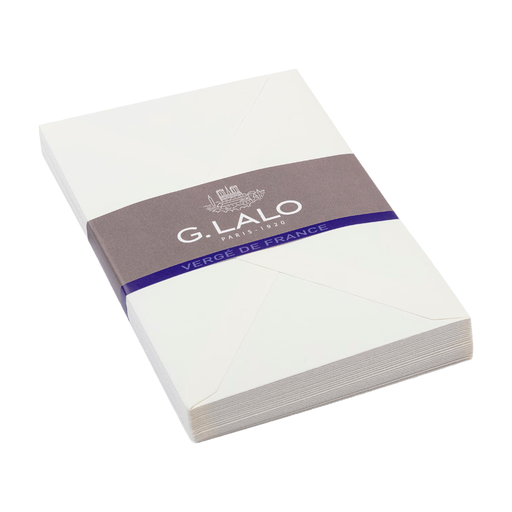
Why this choice suits this profile: The 100 g/m² white laid paper offers a visible texture, perfect for invitations, announcements, menus or thank-you notes.
The texture, C6 size and gummed closure are all specified, so you can check they're right for event correspondence.
French laid paper at 100 g/m², lined texture and gummed flap for sealing.
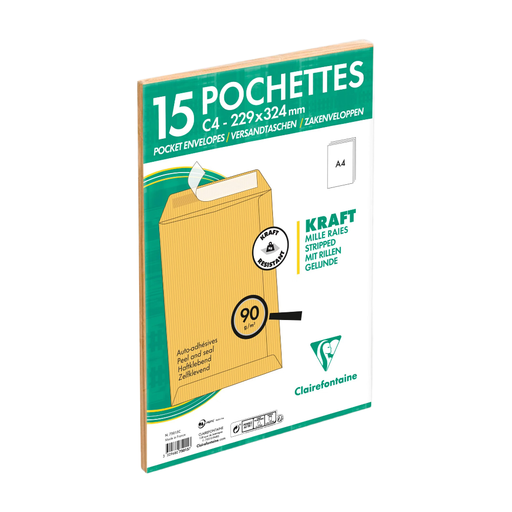
Why this choice suits this profile: The C4 format of 229 × 324 mm holds an A4 sheet without folding. It meets the needs of businesses, schools, artists and administrative departments.
Its size is designed for flat documents, which avoids unnecessary creases and envelopes that are too small for A4 folders.
90 g/m² Milleraies kraft paper, self-seal closure and PEFC certification stated.
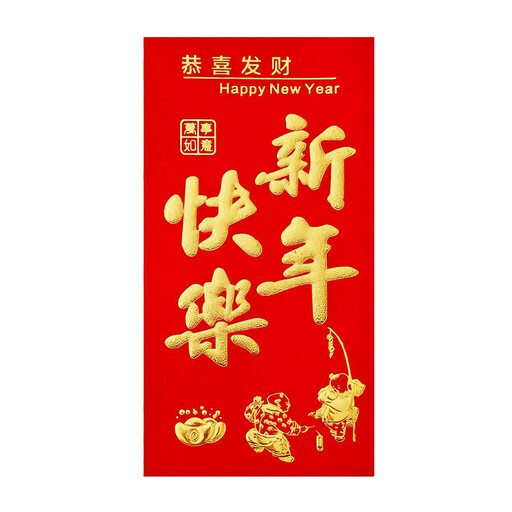
Why this choice suits this profile: These gift envelopes are intended for cash presents during Lunar New Year, a wedding, birthday or other celebration.
The pack size and intended use are clearly stated. This stops you from picking an ordinary envelope for a cultural or festive occasion.
Red paper, small format and pack of 6 envelopes designed for cash gifts.
We've put together a comprehensive, real-time updated list of products that fully meet these strict selection criteria and European safety regulations.
For envelopes intended for letters, go for the DL format if the A4 sheet is folded into three. For an invitation or a card, the C6 format offers a suitable size and is available in white, laid or decorative paper.
For professional documents, check for a self-seal flap and choose the C4 format if you want to keep sheets flat. Kraft envelopes are also a good option when you're after a natural look and a tougher paper.
For gift envelopes, finally, Chinese red envelopes, hongbao and decorated designs serve a different purpose from postal mail. Before ordering, check the number of pieces, the finish and the interior capacity.
The DL format of 110 × 220 mm is generally designed to hold an A4 sheet folded into three. It's particularly suitable for letters, invoices and administrative mail.
A gummed envelope is sealed by moistening the adhesive strip on the flap. A self-seal envelope has a protected strip that you simply uncover before pressing the flap down. The latter is often more practical for preparing a large number of items of mail.
The storage life depends above all on the storage conditions. Keep them flat, in a dry place, away from moisture and direct sunlight. For gummed models, these precautions help reduce the risk of premature sticking and warping. For self-seal models, they help preserve the effectiveness of the adhesive strip.