For fuss-free dark chocolate to serve to a group, choose a bag of bite-sized chocolates; squares or bars also work if you’re happy to portion them yourself. If you’re melting chocolate for crêpes, opt for a product intended for baking. In every case, check the pack size, cocoa percentage, sugars per 100 g and allergens for the product you choose.
Who are these formats for?
Hosts looking for a no-prep option
If you want to put chocolate on the table as soon as your guests arrive, a bag of bite-sized chocolates saves you having to break up bars. Lindt, for example, describes its 1 kg LINDOR Dark 70% bag as a sharing format.
Anyone comparing recipes
If the taste and ingredients of the dark chocolate matter most to you, compare the cocoa percentage, ingredients, sugars per 100 g and allergens for each product.
Anyone preparing a filling for crêpes
If you plan to melt the chocolate or add it to a dessert, a bar intended for baking is the right choice. The Nestlé Dessert 70% product page describes it as suitable for this use, unlike a bag of bite-sized chocolates that’s ready to serve.
What should you check before buying?
First decide whether you’ll serve the chocolate as it is, break it into pieces or melt it for crêpes. Then compare the labels of formats suited to your plans.
| Criteria |
What to check |
Who is this for? |
| Ready-to-serve format |
Net weight and whether it comes as bite-sized pieces or a bar to break up. |
When I’m hosting a group, I want to put portions of chocolate on the table without having to prepare them. Around 33% of consumers prioritise this ready-to-serve option. |
| Cocoa and preferred taste |
Minimum cocoa percentage and whether it contains a filling or inclusions. |
To serve with crêpes, I’m looking first and foremost for a dark chocolate flavour my guests will enjoy, rather than relying on the word “dark” alone. Cocoa content is the top criterion for around 27% of consumers. |
| Sugars and nutritional information |
Sugars and fat per 100 g; Nutri-Score only if it appears on the product. |
Before choosing between different recipes, I want to compare their nutritional values on a like-for-like basis. Around 20% of consumers put this comparison first. |
| Allergens and use in cooking |
Ingredients, may-contain warnings and whether the chocolate is intended for baking if you plan to melt it. |
If a guest needs to avoid an ingredient or I’m preparing a filling, I need a product that suits their requirements. Around 20% of consumers make this check their top priority. |
Common mix-ups to avoid
-
Assuming “dark chocolate” always means 70% cocoa
Carrefour France’s listings for Nestlé squares state at least 70% cocoa, while Auchan France’s listing for the Côte d’Or L’Original multipack states at least 46%. So the category name doesn’t tell you the percentage for a specific product.
Check the minimum cocoa percentage on the pack before choosing the flavour you want.
-
Ruling out a product because it has no Nutri-Score
According to the French Directorate-General for Competition, Consumer Affairs and Fraud Control (DGCCRF), Nutri-Score labelling is voluntary in France. Its absence alone doesn’t tell you anything about the chocolate’s ingredients.
Compare the nutritional information per 100 g and the ingredients list, whether or not the logo is displayed.
-
Applying the soft drinks tax to dark chocolate
The rate published in the Official Bulletin of Public Finances – Tax concerns levies on non-alcoholic drinks containing added sugars or sweeteners, not solid dark chocolate.
When comparing chocolates, check the sugars per 100 g on the label.
-
Assuming dark chocolate is suitable for every guest
Depending on the product, listings from Lindt, Nestlé, Côte d’Or and Carrefour Bio mention milk, soya or possible traces of nuts. The cocoa percentage won’t tell you whether these ingredients are present.
Check the ingredients list and may-contain warnings on the exact pack before serving the chocolate to anyone with an allergy.
Brands and ranges to consider
Lindt
According to Lindt France, the LINDOR Dark 70% range includes a 1 kg bag of bite-sized chocolates described as suitable for sharing, as well as a 200 g cone.
- The 1 kg bag saves you having to portion bars for serving.
- The bag’s product listing mentions dairy ingredients and soya, as well as possible traces of nuts. Check this information if any of your guests have an allergy.
Nestlé
The 176 g 70% dark chocolate squares and the 170 g Nestlé Dessert 70% bar suit two different uses: serving as squares or melting for baking.
- Carrefour France’s listing for the 70% squares gives cocoa mass, sugar and cocoa butter as ingredients.
- The Dessert bar needs to be prepared before serving melted; its listing mentions possible traces of nuts.
Côte d’Or
The L’Original multipack contains two 200 g bars, giving you 400 g of chocolate to break up and share.
- The two-bar pack makes it easy to prepare pieces for serving.
- Auchan France’s listing states at least 46% cocoa and mentions milk, soya and possible traces of nuts.
Carrefour Bio
The 200 g organic 70% dark chocolate bar is made to be broken up and shared, rather than served straight from a bag of bite-sized chocolates.
- Carrefour France’s listing gives cocoa mass, cane sugar, cocoa butter and vanilla as ingredients.
- It warns that the chocolate may contain traces of milk and nuts; check the pack before sharing.
Marque Repère / E.Leclerc
E.Leclerc’s dark chocolate bar range includes Équador products with different cocoa percentages.
- These bars let you choose a cocoa percentage stated on each product.
- For serving in pieces, you’ll need to break up the bar and check the ingredients and allergens for the product you choose.
Chocolate bars and baking chocolate on Joybuy
These Joybuy products let you choose chocolate to melt for crêpes or bars to break up and share. If you want bite-sized chocolates to serve straight from a large bag, you’ll need to look for a different format.
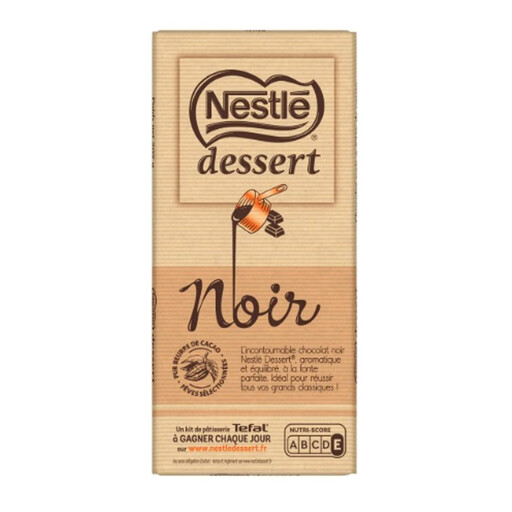 Image unavailable
Nestle Dark Dessert 205 g
Worth considering if you’re planning a melted chocolate filling rather than serving bite-sized chocolates. The listed pack size is 205 g; check the cocoa percentage if that’s important to you, as well as any milk and nut warnings if relevant to your guests.
View on Joybuy
 Image unavailable
POULAIN Fine Dark 70% 100 g
A bar to break up if you’d like to share the chocolate among your guests. It’s labelled 70% and weighs 100 g, so check whether you’ll have enough for your group, and look for maltitol and the warning on the pack.
View on Joybuy
 Image unavailable
CARRE SUISSE organic dark chocolate, lemon and green pepper, 100 g
Break it up and serve if lemon and green pepper suit your guests’ tastes. This 100 g bar isn’t a large bag, so check the may-contain warnings for milk, nuts, soya and gluten if relevant to anyone you’re serving.
View on Joybuy
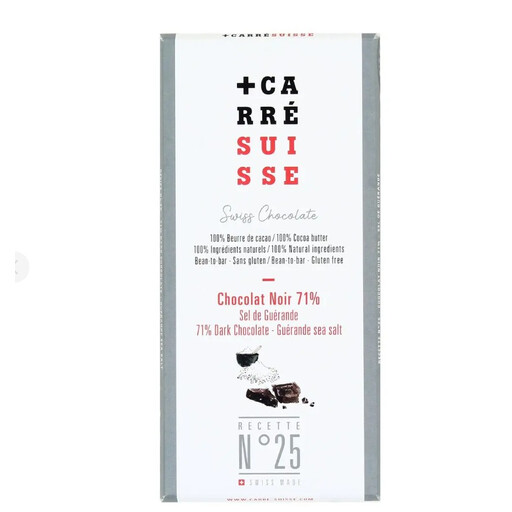 Image unavailable
CARRE dark chocolate with Guérande sea salt, 100 g
A bar to portion if you’d like to offer dark chocolate with a savoury note. It weighs 100 g; check that the flavour suits your guests and read the may-contain warnings on the pack before sharing.
View on Joybuy
 Image unavailable
POULAIN Extra Dark 200 g
This 200 g bar can be broken into pieces for serving. If cocoa content or allergens are important to you, check the percentage on the pack and look for milk and soya warnings before choosing.
View on Joybuy
Frequently asked questions
Is Nutri-Score compulsory on dark chocolate in France?
No. The DGCCRF states that Nutri-Score labelling is voluntary, whereas a nutrition declaration is generally compulsory for pre-packed foods. To compare two chocolates, check their nutritional information per 100 g and their ingredients, even if neither displays a logo.
Does the French soft drinks tax apply to a bar of dark chocolate?
No. The rate published in the Official Bulletin of Public Finances – Tax applies to levies on certain non-alcoholic drinks, not solid dark chocolate. When choosing between chocolates, compare the sugars per 100 g instead.
How can I compare the sugars in two dark chocolates?
Look at the same “sugars” line in the nutrition table per 100 g on each pack. Don’t confuse total sugars with an “added sugars” claim: they don’t refer to the same measure.
Which allergens should I check before sharing dark chocolate?
Check the ingredients and may-contain warnings on the exact product. The product listings mentioned here flag milk, soya or possible traces of nuts, depending on the product. The words “dark chocolate” don’t mean a product is suitable for everyone.
Which chocolate should I choose to make a melted filling for crêpes?
Choose chocolate labelled for baking or melting if you plan to prepare it before serving your crêpes. The Nestlé Dessert 70% product page recommends it for this use. Then check the ingredients and make sure you have enough for your guests.


