To enjoy biscuits with your crêpes while limiting your sugar intake, start by distinguishing between the claims “sugar-free”, “no added sugars” and “reduced sugar”: they don’t describe the same sugar content. Then compare the “of which sugars” figure per 100 g, the other nutritional values and the ingredients for each biscuit. According to the DGCCRF, Nutri-Score is optional in France, so use it as an additional guide when it’s displayed, but don’t rule out a product just because it isn’t shown.
Who is this guide for ?
People looking for biscuits with a low sugar content
If sugar content matters more to you than taste or format, compare the exact claim on the packaging with the “of which sugars” figure per 100 g. A biscuit labelled “no added sugars” doesn’t necessarily have the same sugar content as one labelled “sugar-free”.
Families looking for something to serve with crêpes
You can choose a biscuit to serve alongside crêpes or crumble over them for its flavour and format, even if you’re looking to reduce your sugar intake rather than find a “sugar-free” recipe. Always check the product’s sugar content on the label.
People who check ingredients and allergens
A sugar-related claim doesn’t tell you about the other ingredients. Before sharing the biscuits, check the ingredients list, the allergens highlighted and any precautionary “may contain” warnings for the product you’ve chosen.
What should you check before buying ?
When choosing biscuits to enjoy with your Pancake Day crêpes, first decide whether your priority is sugar content, flavour or ingredients.
| Criteria |
What to check |
Who is it for ? |
| Sugar content |
The exact claim and the “of which sugars” figure per 100 g. |
If I want to limit the sugar in the biscuit served with my crêpes, sugar content comes before flavour. Around 50 % of consumers say low sugar content is their top priority. |
| Flavour and relative reduction |
The sugar content per 100 g and, if a reduction is claimed, the product used as a comparison. |
To keep a familiar flavour alongside my crêpes, I might be happy with reduced sugar rather than a “sugar-free” recipe. This is the top priority for around 30 % of consumers. |
| Ingredients and allergens |
The ingredients, sweeteners, highlighted allergens and any “may contain” warnings. |
Before serving biscuits to several people, I want to know exactly what’s in the recipe. Checking the ingredients is the top concern for around 20 % of consumers. |
Common misconceptions to avoid
-
Assuming “no added sugars” means “sugar-free”
These claims don’t tell you the same thing about a product’s total sugar content. A biscuit labelled “no added sugars” may still contain sugars, as shown in its nutritional information.
If sugar content is your main priority, check the “of which sugars” figure per 100 g instead of relying only on the front of the pack.
-
Ruling out a biscuit without a Nutri-Score logo
In France, according to the DGCCRF, displaying Nutri-Score is voluntary, while nutritional information is mandatory for prepacked foods. So the absence of the logo isn’t enough to judge a biscuit.
If the logo is shown, consider it alongside the nutritional information and ingredients list. If it isn’t, compare the figures per 100 g directly.
-
Looking at sugar content alone
Auchan’s listing for Gullón Fibre biscuits shows 0.5 g of sugars, but also 431 kcal and 17 g of fat per 100 g. Low sugar content alone doesn’t tell you about the other characteristics of this product.
Compare the energy, fat and the portion you plan to serve. Check the ingredients and allergens separately.
-
Reading “reduced sugar” as “sugar-free”
A claimed reduction is relative to a comparison product: on its own, it doesn’t tell you how much sugar remains in the biscuit or cake.
Check which product is being used for comparison, then look at the sugar content per 100 g of the product you’re thinking of buying.
Brands to know
Gerblé
The range includes products labelled “sugar-free” or “no added sugars”. Check each product individually, as these claims are different.
- Carrefour’s listing for Gerblé Sugar-Free Plain Biscuits gives you a specific product to use when comparing labels.
- This product contains maltitol. Its ingredients and allergen information shouldn’t be assumed to apply to other Gerblé biscuits.
Gullón
Auchan’s listings include Fibre biscuits labelled “sugar-free” and breakfast biscuits labelled “no added sugars”.
- For its Fibre biscuits, Auchan lists 0.5 g of sugars and 9.3 g of fibre per 100 g.
- The same product contains 431 kcal and 17 g of fat per 100 g. Ingredients and allergens vary depending on which Gullón recipe you choose.
Karelea
Carrefour lists several types of Karelea biscuits with sugar-related claims, including “sugar-free” wafers and “no added sugars” palmiers.
- The format can help you choose between a biscuit to serve whole and one to crumble over your crêpes.
- Check the claim, nutritional values and allergens for each variety: the two claims aren’t interchangeable.
Auchan Less Sugar
Auchan describes Less Sugar as a range of biscuits and bars with reduced sugar content.
- This range is worth considering if you’re looking for a reduction rather than a “sugar-free” claim.
- A reduction doesn’t guarantee that a product is sugar-free. Check the sugar content and ingredients for the exact product, and don’t assume the bars are the same as the biscuits.
St Michel
An Auchan listing features St Michel mini madeleines with a claimed reduction in sugar. These are madeleines, not “sugar-free” biscuits.
- This product is worth considering if you’d like to serve a sweet treat alongside your crêpes while comparing its sugar content.
- The claim applies to this specific product: it doesn’t describe other St Michel products or indicate its absolute sugar content.
Biscuits selected on Joybuy
These two products suit different ways of enjoying crêpes: wholemeal biscuits with no added sugars to serve on the side, and savoury kale and onion biscuits to consider if you’re making savoury crêpes. Don’t choose either on the assumption that it’s “sugar-free”.
 Image unavailable
KRISPROLLS Swedish wholemeal biscuits with no added sugars, 425 g
Worth considering as an accompaniment to crêpes if you’re looking for biscuits with no added sugars; this claim doesn’t mean “sugar-free”. The product listing shows a Nutri-Score A: check whether it appears on the packaging you receive, and also look at the nutritional values per 100 g.
View on Joybuy
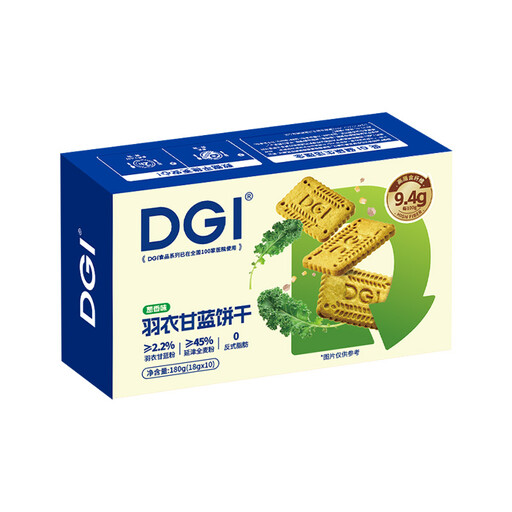 Image unavailable
DGI kale biscuits with onion flavour, 180 g
The savoury flavour could work with savoury crêpes, but these aren’t a substitute for a sweet biscuit to crumble over them. This product isn’t labelled “sugar-free”. Its listing mentions maltitol and warns that excessive consumption may have a laxative effect; read the ingredients before serving.
View on Joybuy
Frequently asked questions
Is Nutri-Score compulsory on biscuits in France ?
No. According to the DGCCRF, displaying Nutri-Score is voluntary in France, while nutritional information is mandatory for prepacked foods. Even if the logo isn’t shown, you can still compare the nutritional values per 100 g.
Do “sugar-free” and “no added sugars” mean the same thing ?
No. These claims don’t give you the same information about the biscuit’s total sugar content. Carrefour’s listing for Gerblé Sugar-Free Plain Biscuits notes that “sugar-free” means a maximum of 0.5 g of sugars per 100 g. For a product labelled “no added sugars”, check its own “of which sugars” figure.
Does a sugar-free biscuit always contain fewer calories ?
No: a sugar-related claim alone doesn’t tell you how much energy a product contains. Auchan lists its Gullón Fibre biscuits as containing 0.5 g of sugars, but also 431 kcal and 17 g of fat per 100 g. Compare these values for the products you’re interested in.
What should I check if I’m serving biscuits to several people ?
Check the ingredients, highlighted allergens and any “may contain” warnings on each pack. The Gerblé and Gullón biscuits reviewed have different ingredients: a “sugar-free” or “no added sugars” claim doesn’t tell you anything about allergens.


