
Livraison le jour même ou le lendemain

Qualité garantie

Débloquez vos offres de bienvenue: Livraison GRATUITE | Jusqu'à -80 % | 30 jours d'essai gratuits à JoyPlus
Téléchargez l'application
Choosing the right Pampers Premium Protection nappies is not simply a matter of counting the number of nappies in the pack. Your baby’s weight, build, changing routine and risk of leaks all affect everyday comfort. A nappy that is too large may let moisture escape, while one that is too tight can leave marks on the skin.
For parents and parents-to-be, here are the criteria to check before buying, the common mistakes to avoid and a selection of pack sizes suited to different needs.
Labels such as “newborn” or “baby” remain fairly vague. Weight is the main guide when choosing a size. Two children of the same age may need different nappies depending on their build and body shape.
Here are the main size and weight ranges available in this range:
These ranges are deliberately overlapping. If your baby falls between two sizes, check for marks on the thighs, any gaps at the back and how easy it is to fasten the tabs.
A pack of 124 or 156 nappies can reduce the cost per nappy, but only if the size remains suitable for long enough. Newborns sometimes gain weight quickly: a large stock of size 1 nappies may become too small before it has even been used.
For your first purchase, it is better to start with a small pack so that you can check:
Larger packs become more worthwhile once you know which size your baby wears comfortably.
Claims such as “enhanced protection” or “leak-proof” describe the nappy’s design, but no product can eliminate every accident. A leak may be caused by an unsuitable size, incorrect positioning, leaving too long between changes or particularly runny stools.
The Stop & Protect pocket, included on several products, is designed to help limit leaks at the back. It does not remove the need to fasten the tabs correctly or fully pull out the leak barriers.
Start by comparing your baby’s current weight with the range shown on the pack. A good nappy should fit snugly without being restrictive. The elastic should follow the contours of the thighs without leaving large gaps.
For newborn nappies, a cut-out around the cord can be useful during the first few days. It prevents the top of the nappy from rubbing directly against this sensitive area.
Pampers Premium Protection nappies contain absorbent material and micro-cells designed to draw moisture and runny stools away from the skin. This is a design feature, not a medical guarantee.
The wetness indicator is a strip that changes colour when the nappy is wet. It can help new parents identify when it is time for a change, but it does not necessarily indicate the presence of stools. Regular checks are therefore still essential.
For nappies for sensitive skin, check the list of components and the information provided on the product page. Several Premium Protection products are described as:
These statements describe the product’s characteristics. They are not medical advice and cannot predict how every child’s skin will react. If irritation persists, stop using the product and seek advice from a healthcare professional.
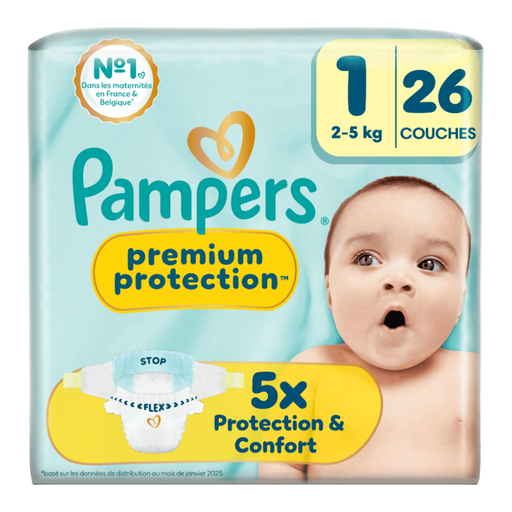
Why this choice suits this profile : This small pack lets you test the fit and comfort without tying up a significant part of your budget, particularly before the birth or when moving up from size 0.
The limited quantity reduces the risk of being left with a size that has become too small. The recommended weight is clearly stated : 2 to 5 kg.
Stop & Protect pocket, wetness indicator and materials described as fragrance-free and free from fragrance allergens listed in the EU.
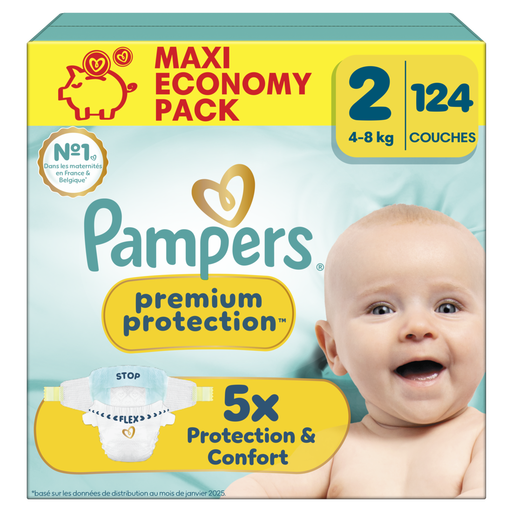
Why this choice suits this profile : This large pack is ideal for families who prefer to keep a generous supply and avoid repeated purchases while their baby remains in size 2.
The 4 to 8 kg weight range helps you avoid choosing solely based on age. Even so, check the fit before stocking up.
124 nappies per pack, advertised instant absorption, Stop & Protect pocket and Flex & Protect waistband.
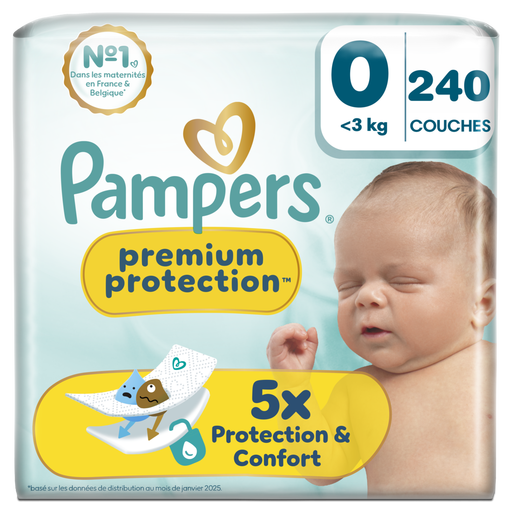
Why this choice suits this profile : This quantity may suit a maternity unit, nursery or family welcoming a very small newborn, provided their weight remains below 3 kg.
The maximum weight is clearly defined. Monitor your baby’s growth regularly so that you are not left with a supply that is no longer suitable.
Umbilical cord cut-out, wetness indicator, advertised fragrance-free design and Standard 100 by OEKO-TEX certification.
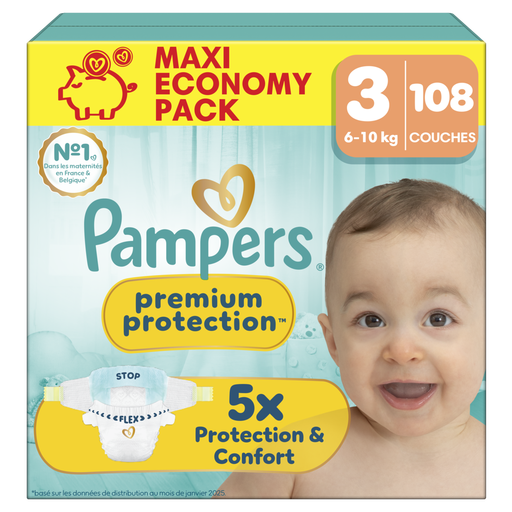
Why this choice suits this profile : Size 3 covers a stage when changes are still frequent, both at home and with a childminder or at nursery.
The pack of 108 nappies provides a practical supply without reaching the largest quantities. The 6 to 10 kg range makes it easier to keep track of the right size.
Advertised absorbent micro-cells, Stop & Protect pocket, Flex & Protect waistband and dermatologically tested indication.
We have selected a complete, real-time updated list of products that meet these demanding criteria and European safety standards.
To reduce the risk of leaks and improve your baby’s comfort:
Store packs in a dry place, away from heat and direct sunlight. Check each nappy before use and do not use a damaged product.
Size 1, designed for babies weighing 2 to 5 kg, is generally suitable for this weight. Size 0 is intended for newborns weighing under 3 kg. However, check the fit around the tummy and thighs: weight is not the only factor to consider.
Disposable nappies do not necessarily become unusable quickly if they are stored correctly, but it is best to follow the instructions on the packaging. Keep them in a clean, dry place, away from moisture, high temperatures and sunlight. Only buy a large pack once you know which size your baby wears comfortably.
Some products are described as dermatologically tested, fragrance-free and free from natural rubber latex. This does not guarantee that every child will tolerate them in the same way. If redness or irritation occurs, stop using the product and seek medical advice if necessary.