
Livraison le jour même ou le lendemain

Qualité garantie

Débloquez vos offres de bienvenue: Livraison GRATUITE | Jusqu'à -80 % | 30 jours d'essai gratuits à JoyPlus
Téléchargez l'application
Choosing Pampers nappies isn’t just about comparing how many nappies come in a pack. With different ranges, overlapping sizes and promises of overnight protection, it’s easy to end up with a product that doesn’t suit your child’s weight or daily routine.
Here are the most common pitfalls to avoid, the criteria that really matter, and a selection of products suited to different family needs.
A size 3 or size 4 nappy won’t fit every child the same way, because body shape plays a big part. The weight range on the packaging is your best guide. A nappy that’s too big can leave gaps around the thighs, while one that’s too small may press on the tummy and cause leaks.
Pampers nappies size 1 to 7 cover the different stages of growth, but the weight ranges vary between ranges. For example, size 3 generally suits babies from 6 to 10 kg, while some size 5 nappy pants are designed for children from 11 to 17 kg.
A claim like “protection for up to 12 hours” is the manufacturer’s estimate under specific conditions. It doesn’t mean you should wait 12 hours before changing the nappy. A wet or soiled nappy should be changed promptly to maintain good hygiene and your child’s comfort.
For night-time, look instead for an absorbent core, well-fitted barriers and a back pocket designed to reduce leaks. Even with anti-leak nappies, the fit and the right size are still key.
A pack of cheap Pampers nappies isn’t necessarily the most economical if the number of nappies is low or the size doesn’t fit. To compare offers, divide the price by the number of nappies and check the actual contents of the pack.
Pampers nappies in bulk packs can lower the price per nappy, but avoid building up too big a stock before you’ve confirmed the fit is right. Babies can change size in just a few weeks.
Your child’s weight should fall within the range shown on the packaging. Once the nappy is on, the fastenings should stay securely closed without pulling on the skin. The barriers around the legs should be unfolded and follow the natural creases of the groin.
For a newborn, a cut that accommodates the umbilical cord can reduce rubbing. Newborn nappies in size 0 or 1 are generally designed for smaller weights, but always check the range stated on the pack.
A fast-absorbing core helps draw liquid away from the surface that touches the skin. Some products also have a wetness indicator that changes colour. Handy during the first few weeks, this guide doesn’t replace regular checks.
The Premium Protection and Baby-Dry nappies shown below claim fast absorption and a Stop & Protect back pocket. These features are described in the product listings: they explain how the nappies are designed and don’t constitute a guarantee that works in every situation.
If your child has sensitive skin, check the list of ingredients and any mentions such as dermatologically tested, free from listed EU fragrance allergens or OEKO-TEX Standard 100, where they appear on the product page.
Eco-friendly baby nappies may include plant-based materials, FSC-certified cellulose or recycled packaging. These claims don’t necessarily mean the nappy is fully biodegradable. So it’s important to distinguish between the product’s composition, the origin of the materials and the packaging treatment.
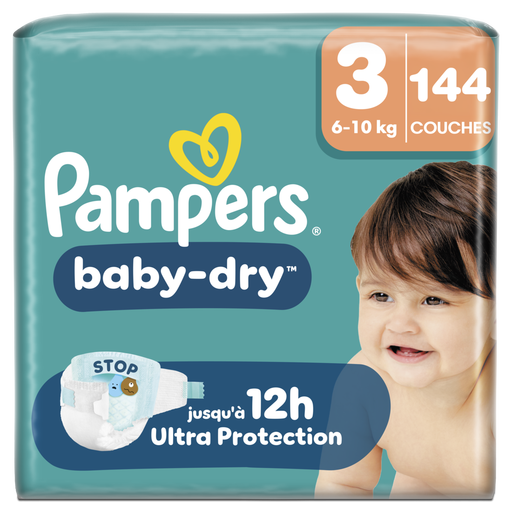
Why this choice suits this profile: This large pack is ideal for daily changes for a baby weighing 6 to 10 kg, once you’ve confirmed the fit works.
With 144 nappies, it’s easy to work out the price per nappy and reduce repeat purchases.
Fast-absorbing core, wetness indicator and Stop & Protect back pocket as stated on the product page.
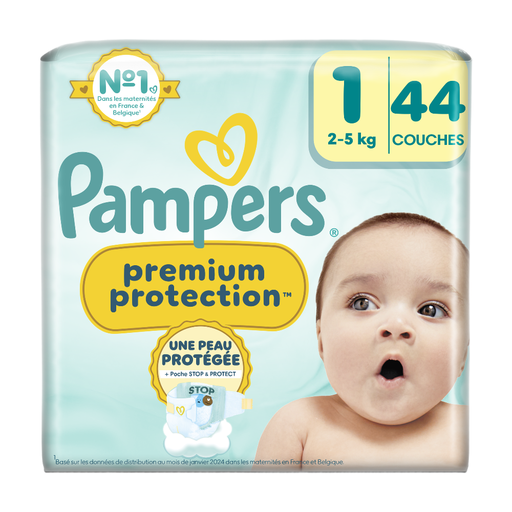
Why this choice suits this profile: This product is designed for newborns weighing 2 to 5 kg and focuses on a gentle feel and a fit suited to the first few days.
The cut designed for the umbilical cord and the repositionable fastenings make nappy changes easier in the first weeks.
Over 1,000 micro-absorbing cells claimed, soft materials and OEKO-TEX Standard 100 certification stated.
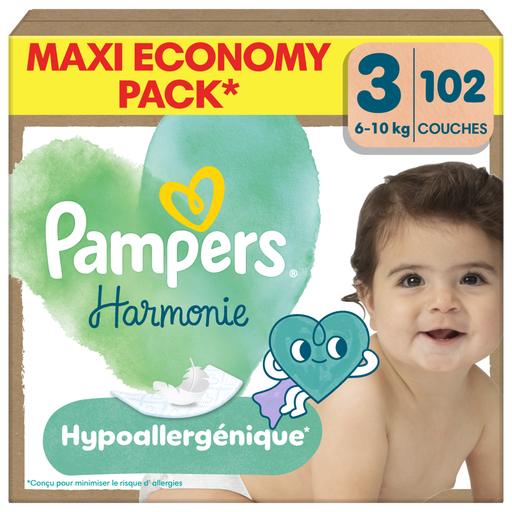
Why this choice suits this profile: An option for parents looking for nappies for babies with sensitive skin, with a proportion of plant-based materials.
The stated composition and certifications let you check the materials, rather than relying on the word “natural” alone.
Top sheet made from 50 % plant-based ingredients, cellulose from FSC-certified forests and wetness indicator.
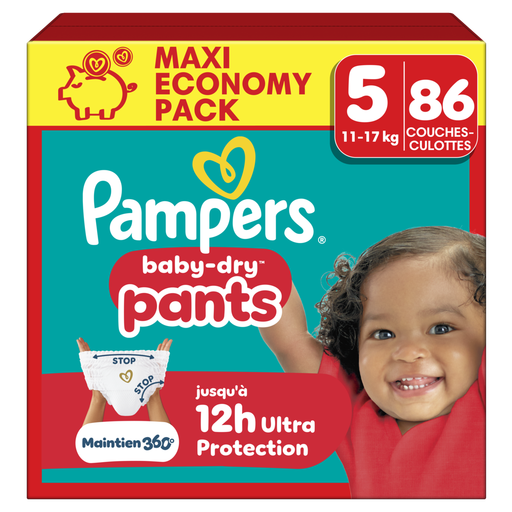
Why this choice suits this profile: This pull-on format is designed for active children weighing 11 to 17 kg, who move around a lot during nappy changes.
The stretchy waistband and leg barriers help reduce gaps caused by movement, as long as the nappy pants are positioned correctly.
One-step pull-on, tear-away sides and adhesive tape for rolling up the nappy after use.
We’ve put together a full, real-time updated selection of products that meet these exacting criteria as well as European safety requirements.
Start by checking the weight range printed on the pack. As a guide, size 1 generally suits babies from 2 to 5 kg, size 2 from 4 to 8 kg, size 3 from 6 to 10 kg and size 4 from 9 to 14 kg. These ranges can vary between ranges.
Some Baby-Dry, Premium Protection and Harmonie products claim overnight protection with a Stop & Protect back pocket. This claim doesn’t mean you shouldn’t change a wet or soiled nappy promptly. If leaks occur, first check the size, the positioning of the leg barriers and how the nappy is fitted.
They can make changes easier for a child who moves around a lot, thanks to their stretchy waistband and quick pull-on design. However, they don’t replace proper potty training. Choose the size based on weight and check that the waistband doesn’t press on the tummy.