
Livraison le jour même ou le lendemain

Qualité garantie

Débloquez vos offres de bienvenue: Livraison GRATUITE | Jusqu'à -80 % | 30 jours d'essai gratuits à JoyPlus
Téléchargez l'application
With classic Pampers nappies, Premium Protection models, Pampers Baby-Dry nappies and Pampers pull-up pants, it’s not always easy to know which to choose. A promise of all-night protection, a large economy pack or a mention for sensitive skin isn’t enough to guarantee the product will suit your baby.
Three common mistakes crop up time and again when buying:
Here are the points to check before stocking up on affordable baby nappies.
Pampers sizes are generally linked to a weight range. That’s a good starting point, but how the nappy fits your baby is still the best indicator.
A nappy that’s too tight leaves persistent marks and can restrict movement. On the other hand, a nappy that’s too loose creates gaps around the back or legs. Make sure the fastenings close without pulling too tightly and that the leak guards are fully unfolded.
Tape nappies are particularly well suited to babies who lie down or don’t move around much yet. Pampers 360° pull-up pants become more practical when your baby rolls over, stands up or refuses to stay still during changes.
According to the product descriptions, Baby-Dry Pants models feature a 360° stretchy waistband, leak guards around the legs and a Stop & Protect back pocket. They’re pulled on from the top and removed by tearing the sides. This is really handy at nursery, on outings or when starting potty training.
The absorbent core, wetness indicator and back pocket are more tangible features than a simple promise of comfort. Baby-Dry absorbent nappies, for example, boast a fast-absorbing core and, on some references, a wetness indicator.
If your baby has reactive skin, look at the ingredients and specific claims: no perfume allergens listed by the European Union, dermatologically tested or a stated certification. This information helps you better understand the product, but it doesn’t guarantee no reaction in every child. If irritation persists, stop using the product and seek advice from a healthcare professional.
The Harmonie range claims a top sheet made from 50 % plant-based ingredients, as well as cellulose from FSC-certified forests. According to the manufacturer’s description, it is also hypoallergenic and dermatologically tested. However, these marketing claims should not be confused with a medical guarantee.
A large pack is only good value if the size still fits your child’s shape. To compare two Pampers baby nappy options, divide the pack price by the number of nappies, then take into account how often you change them.
For example, a pack of 144 size 3 nappies can work well for regular daily use if that size is already the right one. Conversely, a pack of 36 nappies is better for trying out a range before buying in bulk. Formats of 86, 92 or 96 units offer a good compromise between having a stock at home and the risk of your baby quickly moving up a size.
Also, avoid stockpiling packs when your baby is already nearing the upper weight limit. A promotion can end up costing you if several nappies go unused.
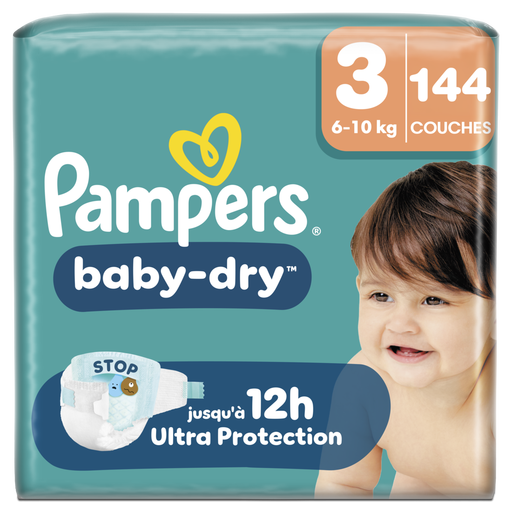
Why this choice suits this profile: Its large format is ideal for parents who already know the right size for their 6 to 10 kg baby and want to avoid buying too often.
The number of nappies is clearly stated, so you can work out the price per unit rather than just relying on the pack size.
Fast-absorbing core, Stop & Protect back pocket and wetness indicator, according to the product description.
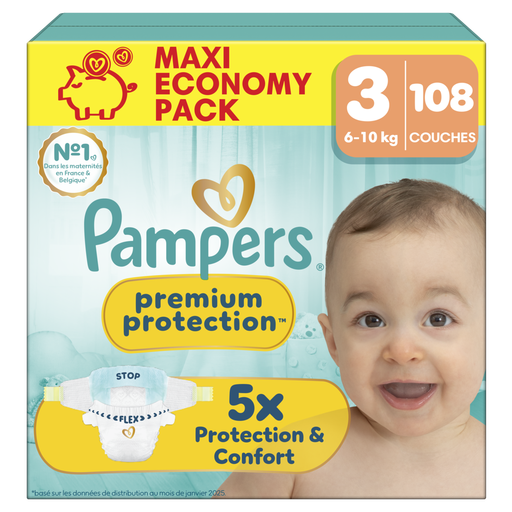
Why this choice suits this profile: This reference is aimed at parents looking for a claimed gentle feel and fast absorbency for a 6 to 10 kg baby.
The selection is based on concrete features: micro-absorbent cells, Flex & Protect waistband and back pocket.
108 units, materials described as ultra-soft and no perfume allergens listed by the EU, according to the product description.
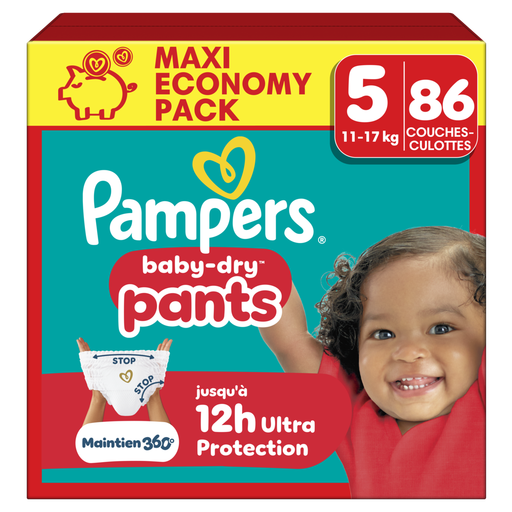
Why this choice suits this profile: Its fit works well for active children from 11 to 17 kg, especially for busy days and quick changes.
The stretchy waistband and leg barriers help reduce gaps caused by movement, without replacing a good fit.
One-step pull-on, tear-away sides, adhesive closure tape and claimed protection for up to 12 hours by the manufacturer.
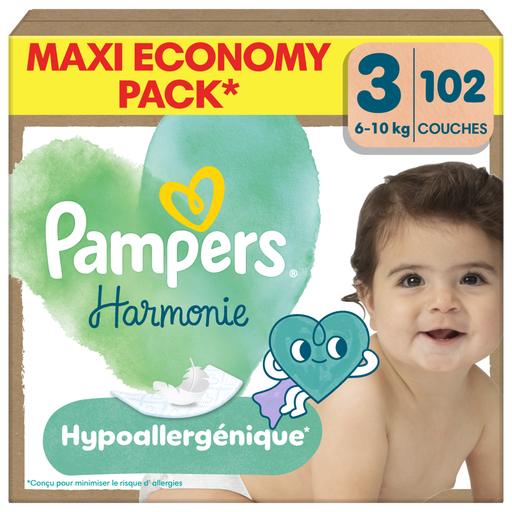
Why this choice suits this profile: This reference may appeal to parents who pay close attention to materials and claims for sensitive skin, for a 6 to 10 kg baby.
The description specifies the presence of plant-based ingredients and the stated checks, rather than relying on a vague promise of softness.
Wetness indicator, stated OEKO-TEX Standard 100 certification and Stop & Protect back pocket.
We’ve put together a complete, real-time updated selection of products that meet these demanding criteria and European safety regulations.
It really depends on your child’s mobility and behaviour, not a specific age. If your baby often stands up or wriggles during changes, Pampers pull-up pants can make life easier. Always check the weight range for the reference you choose.
The duration depends on the absorbency capacity, the amount of urine and your child’s comfort. Some Baby-Dry descriptions claim protection for up to 12 hours, but that doesn’t mean you shouldn’t change a soiled nappy or check on your baby when they wake up.
Choose the size based on weight, unfold the leg barriers properly and position the back pocket correctly. If leaks persist despite careful adjustment, try a different size or a different fit before simply using more nappies.