
Livraison le jour même ou le lendemain

Qualité garantie

Débloquez vos offres de bienvenue: Livraison GRATUITE | Jusqu'à -80 % | 30 jours d'essai gratuits à JoyPlus
Téléchargez l'application
Pampers nappies come in a range of lines, formats and closure systems. Yet relying solely on the age printed on the pack can lead to leaks, red marks around the thighs, or a stock that simply doesn’t match your child’s needs.
Before you place your order, three common mistakes keep cropping up:
The weight range is your first point of reference. In the Pampers selection on offer, you’ll find:
The ranges can overlap. In that case, look out for signs of a poor fit: repeated leaks, fastenings that pull, persistent red marks, or too much space at the back. A leak-proof nappy should stay securely in place without pressing into the tummy or thighs.
Absorbent nappies designed for the night need to spread moisture quickly through their absorbent core. Some Baby-Dry references have a wetness indicator and a Stop & Protect back pocket, which the brand says helps limit leaks at the back.
For a baby who won’t stay still, Pampers nappy pants have a 360° stretchy waistband and go on like underwear. They make standing changes easier, whether at nursery or on the go. The sides tear away for removal, and the adhesive tapes let you roll up the used nappy afterwards.
To choose a nappy for sensitive skin, it’s best to check the product page rather than rely on a marketing claim. Some references state that they are free from perfume allergens listed under EU cosmetics regulations, have passed dermatological testing, or carry OEKO-TEX Standard 100 certification.
The Harmonie range mentions a top sheet containing 50% plant-based ingredients and a core made from cellulose sourced from FSC-certified forests or controlled sources. This information describes the composition and certifications claimed by the brand; it does not constitute a medical guarantee. If redness or irritation occurs, stop using the product and seek advice from a healthcare professional.
Eco-friendly nappies can also be compared by their proportion of bio-based materials, the origin of the cellulose, environmental certification, or the recyclability of the packaging. Taken on its own, none of these criteria can confirm better performance.
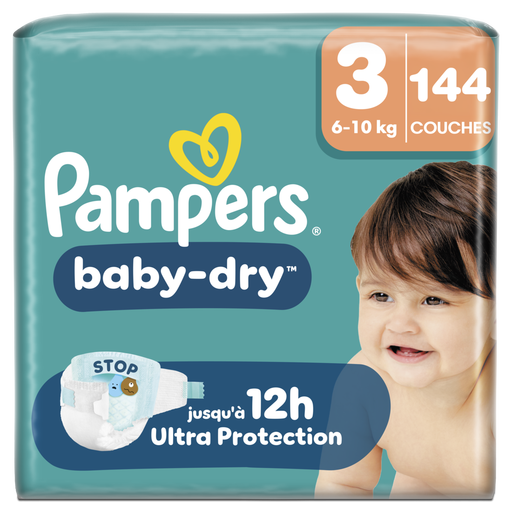
Why this suits this profile: This large pack is ideal for parents who want to avoid reordering too often for a baby weighing 6 to 10 kg.
The size is clearly linked to a weight range, and the nappy has a wetness indicator – handy for not putting off a change for too long.
144 nappies per pack, a claimed fast-absorbing core and a Stop & Protect pocket at the back.
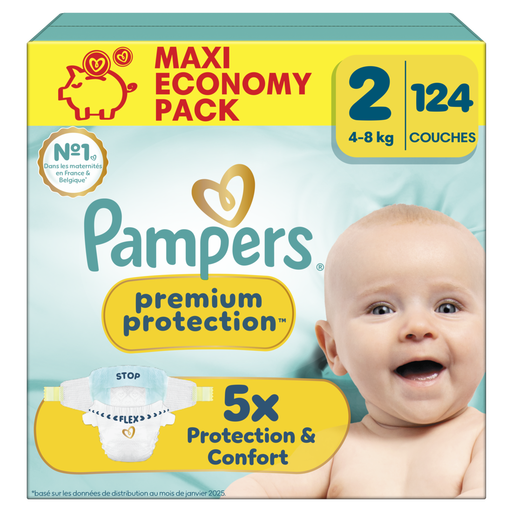
Why this suits this profile: This reference is aimed at the first few months, when the fit around the tummy and the feel of the top sheet against the skin are given extra attention.
The product page specifies size 2, the 4 to 8 kg weight range and the presence of a back pocket, rather than relying solely on a comfort promise.
124 nappies, claimed micro-absorbent cells, Flex & Protect waistband and no listed perfume allergens under EU regulations according to the product page.
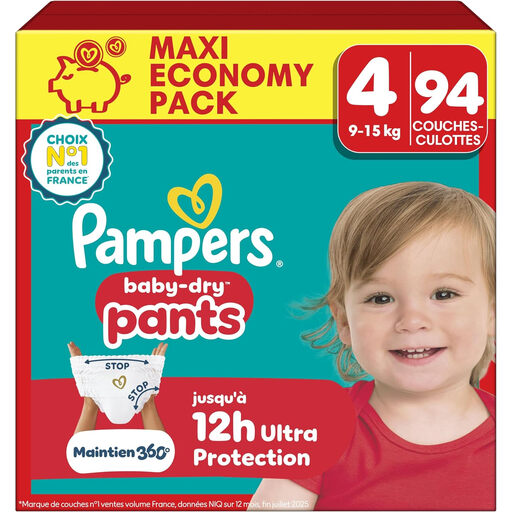
Why this suits this profile: Parents of a very active baby will appreciate the quick pull-on design, especially for changes at nursery, on outings or just before bed.
The 360° stretchy waistband and claimed leak barriers help reduce accidents caused by movement, while the tear-away sides make removal easy.
Economical pack of 94 pieces, claimed day and night protection and adhesive tapes to seal the nappy after use.
We’ve put together a full, real-time selection of products that meet these exacting criteria as well as European safety regulations.
At 9 kg, a baby can be on the borderline between sizes 3 and 4, depending on their build and the cut of the model. Start by checking the weight range on the pack, then see how the nappy sits around the thighs and back. If leaks continue despite regular changes, try the next size up.
It all depends on the amount of wee, whether there are any poos, and the sensitivity of the skin. A wet or soiled nappy should be changed promptly. Night-time nappies with an absorbent core and back protection are designed for overnight use, but there is no universal duration that suits every child.
The product pages for these ranges mention hypoallergenic or dermatologically tested nappies, along with various details about fragrances, materials and certifications. They let you know the claimed features, but they do not replace medical advice. If irritation persists, stop using the product and consult a healthcare professional.