
Livraison le jour même ou le lendemain

Qualité garantie

Débloquez vos offres de bienvenue: Livraison GRATUITE | Jusqu'à -80 % | 30 jours d'essai gratuits à JoyPlus
Téléchargez l'application
Choosing Pampers nappies for your baby is not simply a matter of picking the biggest pack or the range with the most promises. From tab-fastened nappies and pants to value packs and models designed for night-time use, costs can quickly mount up if the size or type does not match your child’s needs.
Parents often make three mistakes:
Weight is still the best starting point. Pampers size 2 nappies are generally suitable for babies weighing 4 to 8 kg, while Pampers size 3 nappies are usually aimed at children weighing 6 to 10 kg. For larger sizes, the guidance may vary depending on the range:
These weight ranges are based on the product listings. Always check the packaging you receive: the same size may cover a slightly different range from one product line to another.
Also look out for signs of a poor fit: marks that do not fade, fastening tabs that almost meet, gaps around the thighs or repeated leaks even when the nappy has been put on correctly.
Traditional tab-fastened nappies are especially practical for babies and for changes while they are lying on their back. They allow you to adjust the waistband and sides precisely.
When your child starts pulling themselves up or becomes more active, Pampers Baby-Dry Pants often make dressing easier. They are pulled on over the legs, removed by tearing the sides and include an adhesive strip for rolling them up before disposal. Available in sizes 4, 5 and 6, they are therefore better suited to mobile children than newborns.
For everyday use, prioritise features that are genuinely useful:
Nappies with a wetness indicator change colour when they come into contact with urine. This guide does not replace checking the nappy or changing it regularly, but it can help new parents know when it is time for a fresh one.
For baby nappies for sensitive skin, take the time to read the information on the packaging. Several products featured here state that they contain none of the fragrance allergens listed under European cosmetics regulations. If persistent redness or a skin reaction occurs, stop using the product and seek advice from a healthcare professional.
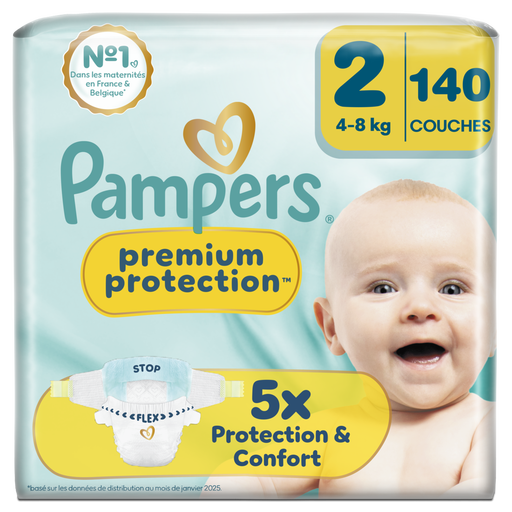
Why this choice suits this profile : its large pack size suits parents who already know the right weight and fit for a baby weighing 4 to 8 kg.
The weight range is clearly stated, and the pack size makes it possible to compare the cost per nappy rather than just the price of the pack.
Advertised instant-absorption core, Stop & Protect back pocket and ultra-soft materials, according to the product listing.
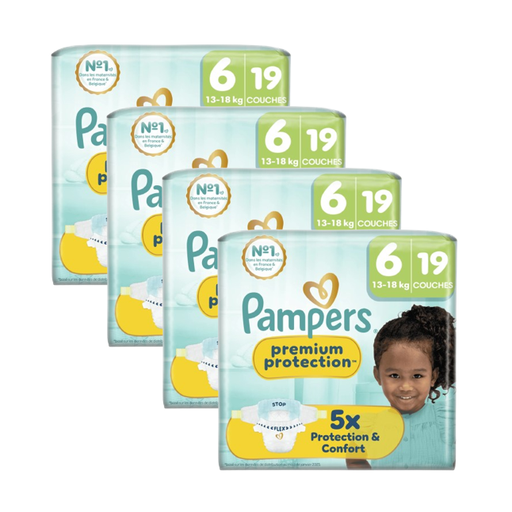
Why this choice suits this profile : this product is aimed at families who prioritise a soft feel and a design focused on moisture management.
The product states a range of 13 to 18 kg ; this helps prevent choosing size 6 based solely on age.
Advertised absorbent micro-cells, Stop & Protect back pocket and no fragrance allergens listed by the EU, according to the product listing.
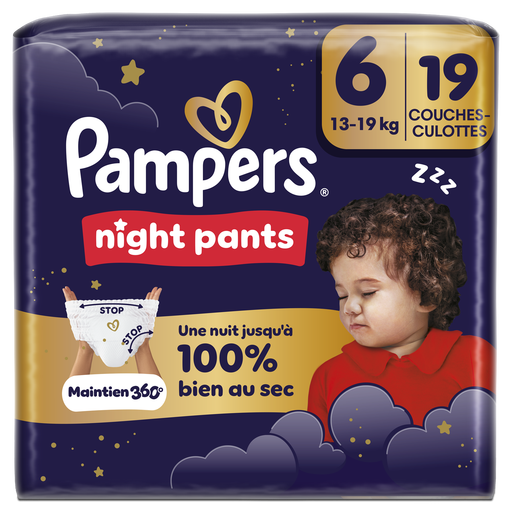
Why this choice suits this profile : these pants are designed for mobile children who need a practical solution while sleeping.
The stretchy waistband and barriers around the legs move with your child at night, without requiring a tab-fastened nappy for a child who is getting up.
Advertised night-time protection, 360° fit and removal by tearing the sides.
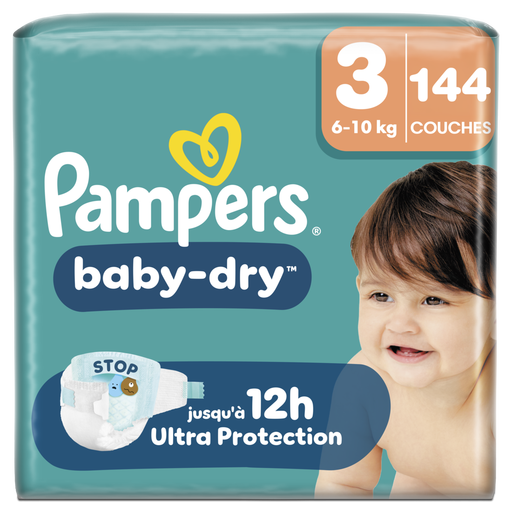
Why this choice suits this profile : size 3 and the large pack are suitable for the frequent changes required by a baby weighing 6 to 10 kg.
The wetness indicator provides a visual guide, while the back pocket is a reminder that careful fitting is still essential to help prevent leaks.
Fast-absorption core, integrated wetness indicator and ComfortTouch outer layer, according to the product description.
We have put together a complete, real-time updated selection of products that meet these demanding selection criteria and European safety regulations.
Before ordering a multipack, pay particular attention to how often your baby is usually changed and how quickly they are moving up through the sizes. For a newborn, a medium-sized pack is often a safer choice than a very large one. Conversely, when the size is stable, packs of 76, 94, 120 or 144 nappies can reduce the cost per nappy — provided you check the delivery time and have enough room to store them.
Keep packs in a dry place away from sources of heat. A nappy should never be flushed down the toilet. Packaging must be kept out of children’s reach to prevent the risk of suffocation or strangulation.
Start by checking the weight stated on the pack. Size 2 is generally suitable for 4 to 8 kg, size 3 for approximately 6 to 10 kg, size 4 for approximately 9 to 15 kg and size 6 for approximately 13 to 18 or 19 kg, depending on the range. If you notice leaks or marks, also assess the cut and fit, not just the size number.
They can suit mobile children because their stretchy waistband moves with them. Baby-Dry Night Pants models are specifically presented for night-time use. However, no model replaces a good fit and suitable changing routines.
Keep nappies in their packaging, in a dry place at room temperature. It is best to buy a large pack only if your baby is still regularly wearing the size concerned. A rapid change in their body shape may leave some of the stock unusable before it has all been used.