
Livraison le jour même ou le lendemain

Qualité garantie

Débloquez vos offres de bienvenue: Livraison GRATUITE | Jusqu'à -80 % | 30 jours d'essai gratuits à JoyPlus
Téléchargez l'application
Choosing Pampers nappies for babies is not simply a matter of comparing the number of nappies in each pack. A nappy that is too large may allow stools or urine to escape, while one that is too tight can leave marks on the skin and restrict movement. The range, fit and fastening system also have a direct impact on everyday comfort and your nappy-changing budget.
Before choosing Pampers nappies in sizes 2, 3, 4, 5 or 6, here are the main points to check to avoid any unpleasant surprises.
Age only provides a very general indication. Your baby’s weight is the most reliable guide, as two children of the same age can have very different body shapes. As a general guide, Pampers size 4 nappies are usually suitable for babies weighing 9 to 14 kg, while size 3 is generally intended for children weighing 6 to 10 kg.
A well-fitting nappy should hug the thighs and tummy without leaving any visible gap at the back.
A pack of cheap Pampers nappies is not necessarily a good deal if the fit is unsuitable for your child. Leaks mean more nappy changes, more washing and, sometimes, clothes or bedding that need replacing.
To compare pack sizes properly, calculate the price per nappy. Also take the size, type of nappy and number of changes used each day into account.
As soon as your baby starts rolling over, crawling or walking, side fastenings can become less practical. Baby pull-up nappies, such as Pampers Baby-Dry Pants, pull on over the legs and better accommodate movement. They are particularly practical for changing your baby while standing or when they refuse to lie down.
Start by checking the weight range shown on the pack, then see how the nappy sits:
If leaks continue even though the nappy is absorbing properly, try a different size or fit before switching to another range.
Absorbent nappies generally contain a core made from cellulose and superabsorbent materials. Product descriptions may also mention a wetness indicator, which is useful for knowing when to change the nappy, particularly during the first few weeks.
For night-time, look for fast absorption, a back pocket and well-adjusted leak guards. The Pampers Baby-Dry range and certain Baby-Dry Pants models advertise features suitable for both daytime and night-time use. However, this does not remove the need to change a wet or soiled nappy promptly.
If you are looking for nappies for babies with sensitive skin, take the time to read the ingredients and information shown on the packaging. Several products featured here state that they:
This information describes the features stated by the manufacturer. It does not guarantee that every child will be free from skin reactions. If irritation occurs, stop using the product and seek advice from a healthcare professional.
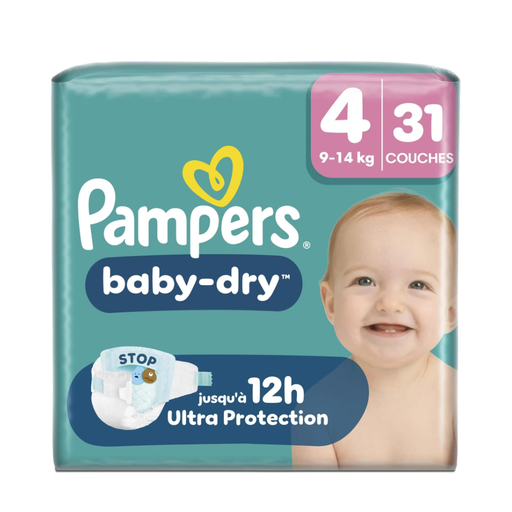
Why this choice suits this profile : This small pack lets you test the fit and your baby’s skin tolerance before moving on to a larger format.
The smaller format helps prevent you from ending up with several packs in a size that has become too tight or, conversely, too loose.
A wetness indicator, a fast-absorbing core and a Stop & Protect back pocket.
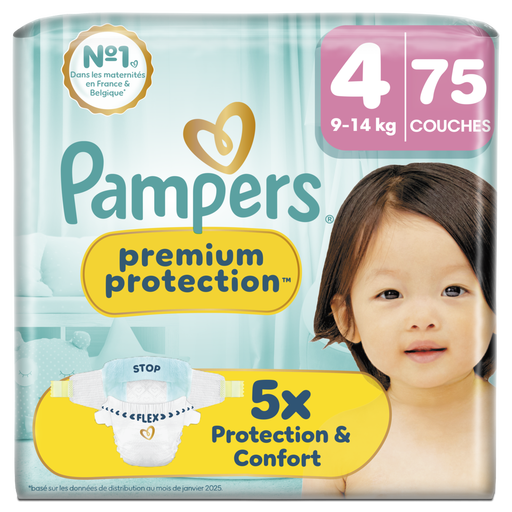
Why this choice suits this profile : An option worth considering when softness against the skin and back protection are your top priorities.
The product description sets out the softness, fast absorption and rear protection, rather than relying on a vague general promise.
Advertised micro-cells, a Stop & Protect pocket and no fragrance allergens listed by the European Union.
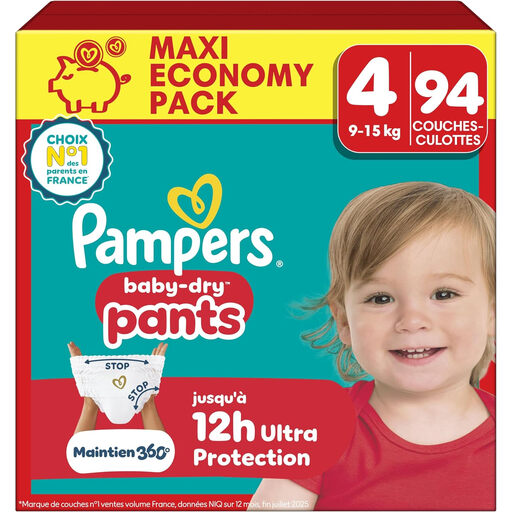
Why this choice suits this profile : This maxi pack is suitable for families who regularly use pull-up nappies and want to leave more time between orders.
The 360° stretchy waistband and side barriers are designed to follow your baby’s movements without feeling too rigid.
Quick to pull on, with tear-away sides, a back pocket and a superabsorbent core as stated in the product description.
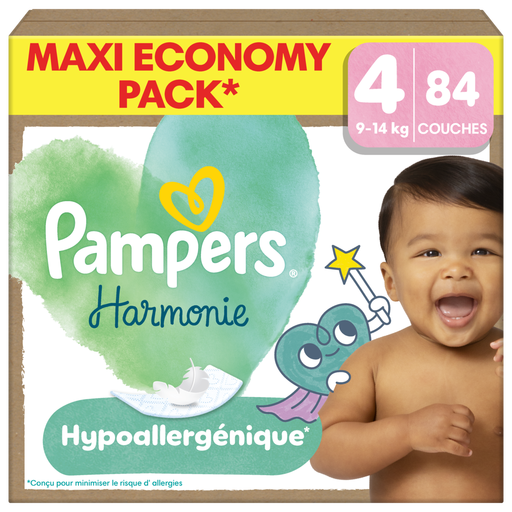
Why this choice suits this profile : This range may appeal to parents who want clear information about the ingredients and prefer a top sheet containing plant-based materials.
The product description specifies its hypoallergenic claims, dermatological testing and OEKO-TEX certification instead of making a vague promise of softness.
A top sheet made from 50 % plant-based ingredients, cellulose sourced from FSC-certified forests and a wetness indicator.
We have compiled a complete selection, updated in real time, of products that meet these selection criteria as well as European safety requirements.
Weight ranges can vary from one range to another, but the most common guidelines are as follows:
Always check the recommended weight on the pack you choose. If the nappy leaves marks on the skin or leaks at the sides, moving up to the next size is not necessarily the right answer: a different fit may be better suited to your child’s shape.
Some Pampers Baby-Dry, Baby-Dry Pants, Premium Protection and Harmonie products advertise overnight protection and a Stop & Protect back pocket. In practice, how long they last depends on the amount of urine, your baby’s sleeping position and how well the nappy fits.
Change the nappy as soon as it is wet or soiled and follow the recommendations in the instructions.
Compare the price per nappy, rather than just the pack price. Larger formats become worthwhile once you have confirmed the right size and fit. For a first trial, a small pack can help minimise waste.
Pampers size 4 nappies are often available in several pack formats: standard pack, maxi pack or pull-up nappies. Before ordering, check the number of nappies as well as the recommended weight for the relevant size.