
Livraison le jour même ou le lendemain

Qualité garantie

Débloquez vos offres de bienvenue: Livraison GRATUITE | Jusqu'à -80 % | 30 jours d'essai gratuits à JoyPlus
Téléchargez l'application
Choosing Pampers nappies for your baby is not simply a matter of counting the number of nappies shown on the pack. Your child’s weight, level of mobility, time between changes and skin sensitivity all directly affect their comfort and the risk of leaks.
Some offers can nevertheless be misleading. A large pack is not necessarily economical if your baby is likely to move up a size quickly. Likewise, a promise of overnight protection will never make up for a poorly fitting nappy. Here are the criteria to consider before ordering, along with a selection suited to several everyday situations.
Labels such as « newborn », « active baby » or « night » provide a useful starting point, but weight remains the most reliable guide. Two children of the same age may easily wear different sizes. A nappy that is too tight may leave marks and restrict movement, while one that is too large can leave gaps around the back or thighs.
Packs of 84, 92, 108 or 117 nappies may look appealing, but you need to consider how often your baby is actually changed and how quickly they are growing. For your first order, a medium-sized pack often lets you test the fit before building up a larger supply.
Claims such as « up to 12 hours » or « 360° protection » describe the features listed on certain product pages. They do not guarantee the same results for every child. Body shape, the amount of liquid absorbed and how the nappy is positioned also play a part.
To choose Pampers nappies by weight, check the range shown on the packaging or product page :
Also check the elasticated sections around the thighs and tummy. The nappy should stay securely in place without digging in. If leaks keep happening despite good absorbency, it may be time to move up to the next size.
Leak-proof baby nappies generally combine an absorbent core, elasticated barriers around the legs and a back section designed to help prevent leaks upwards. Pampers product pages mention the Stop & Protect system, as well as absorbent cells or a wetness indicator, depending on the product.
For overnight baby nappies, check which features are actually included : absorbent core, back pocket, support around the back and the stated protection time. A correctly positioned nappy should cover enough of the lower back and fit snugly around the thighs without leaving visible gaps.
When choosing nappies for sensitive skin, focus on specific information rather than relying solely on marketing claims. Some products mention dermatological testing, the absence of fragrance allergens listed under European cosmetics regulations, or OEKO-TEX Standard 100 certification covering undesirable substances.
The Harmonie range also states that its top sheet contains 50 % plant-based materials and that its cellulose comes from FSC-certified forests, according to the product pages. These details provide information about the composition and stated checks; they do not constitute a medical guarantee. If irritation persists, stop using the product and seek advice from a healthcare professional.
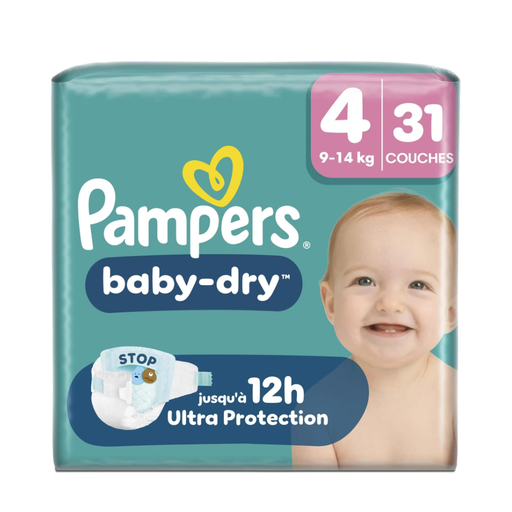
Why this choice suits this profile : With 31 nappies, this pack lets you test the fit on a baby weighing 9 to 14 kg before moving on to a larger pack.
The weight range helps you avoid choosing a size based solely on age. The wetness indicator also helps you know when it is time for a change.
The product page lists a fast-absorbing core, a Stop & Protect back pocket and a ComfortTouch outer layer.
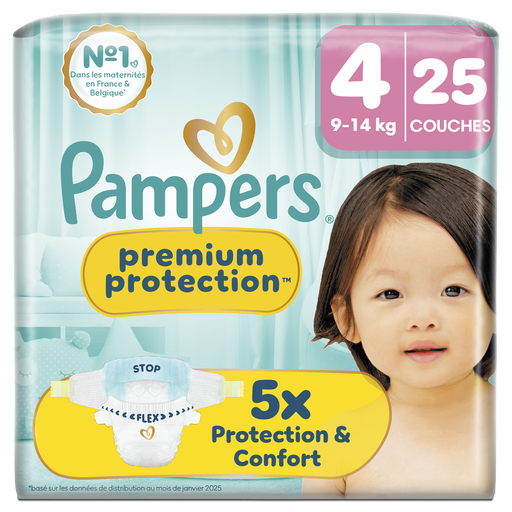
Why this choice suits this profile : This product focuses on comfort, with soft materials and a carefully designed fit around the tummy.
The 9 to 14 kg range and smaller pack let you check the fit before buying a larger quantity.
The product page mentions more than 1 000 micro-absorbent cells, a back pocket and a Flex & Protect waistband.
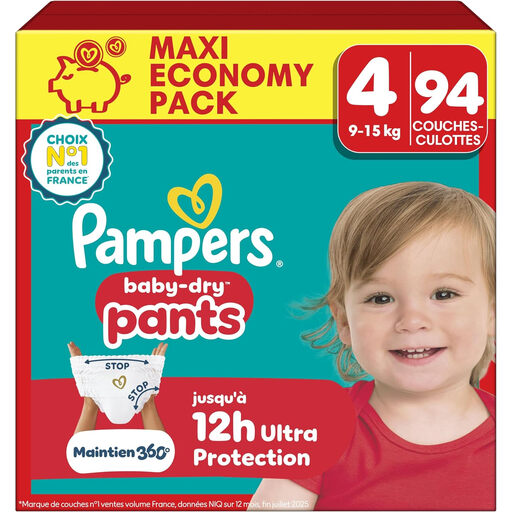
Why this choice suits this profile : When your child never stops moving, pull-up pants that are easy to put on can make trips out and quick changes much simpler.
The stretchy 360° waistband and leg barriers move with your child. However, the size must always match your child’s weight.
A pack of 94 pants, the Stop & Protect system and tear-away sides for removing the pants without having to pull them down.
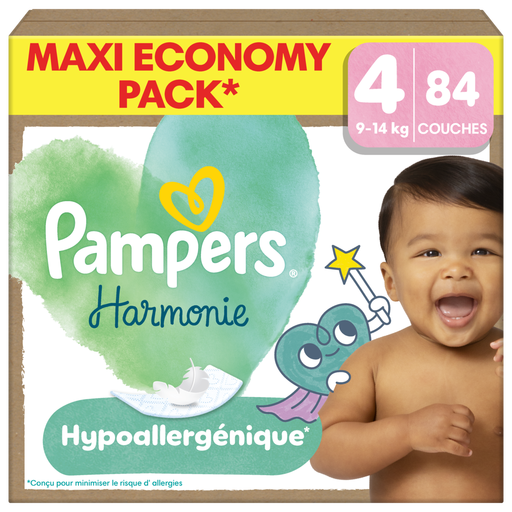
Why this choice suits this profile : This product may suit families looking for a composition described as hypoallergenic and a nappy suitable for babies weighing 9 to 14 kg.
The product page specifies that it contains no fragrance or lotion, as well as the dermatological checks and OEKO-TEX certification stated by the manufacturer.
A top sheet containing 50 % plant-based materials, FSC-certified cellulose and a wetness indicator.
We have put together a complete, real-time updated selection of products that meet these strict criteria, as well as European safety requirements.
Start with the weight range shown on the product page, then check the fit on your baby. If the fastenings pull, the marks are deep or the nappy is regularly full before it is changed, it may be time to change size. Gaps around the thighs or back may also indicate that the nappy is too large.
How often you need to change your baby depends on their age, diet and the amount of urine or faeces. A soiled nappy should be changed promptly. At night, the times shown on the product page correspond to the brand’s stated performance; they do not replace checking your child’s comfort and the condition of the nappy.
They are particularly practical when your child is standing, walking or refusing to lie down during a change. However, they may not suit every body shape. Check the weight range, the position of the waistband and whether there are any leaks before choosing a larger pack.