
Livraison le jour même ou le lendemain

Qualité garantie

Débloquez vos offres de bienvenue: Livraison GRATUITE | Jusqu'à -80 % | 30 jours d'essai gratuits à JoyPlus
Téléchargez l'application
For parents, buying Pampers Harmonie nappies isn’t simply about picking a pack with a pretty design. Your baby’s weight, how often you change them, and their needs through the night all play a key role in their comfort and in preventing leaks.
Marketing promises can, however, make the choice more complicated than it needs to be. Here are the main pitfalls to avoid before you place your order.
Two babies of the same age can have very different body shapes. A nappy that’s too small may dig into their thighs or let moisture escape. On the other hand, a nappy that’s too big can leave gaps around the back and legs.
The weight range on the packaging is therefore the best starting point. The Pampers Harmonie nappies featured in this selection cover the following sizes:
These ranges deliberately overlap. If your baby falls between two sizes, pay close attention to red marks on their skin, the fit around the thighs, and whether leaks keep happening.
Pampers Harmonie nappies for sensitive skin are described as hypoallergenic, fragrance-free and dermatologically tested, according to the product information available. That doesn’t guarantee, however, that every child will have no reaction.
Change the nappy regularly, let the skin air dry for a few moments, and keep an eye out for any persistent redness. If irritation occurs, stop using the product and seek advice from a healthcare professional.
How well a baby nappy prevents leaks also depends on how well it fits. Even a model with a back pocket can leak if it’s positioned badly, or if it’s too small or too big. For night-time use, make sure the elastic barriers are fully unfolded and that the back of the nappy covers the lower back properly.
Pampers Harmonie nappies have a top sheet containing 50% plant-based materials. Their absorbent core uses cellulose that, according to the product information, comes from responsibly managed forests and controlled sources, with a reference to FSC certification.
The OEKO-TEX Standard 100 label means the components have been tested for certain unwanted substances, according to the criteria of that standard. It’s a useful traceability feature, but this certification obviously doesn’t replace good nappy-changing habits.
Nappies with a wetness indicator change colour when they’re wet. This feature is especially handy with a newborn, during the night, or when several people are looking after your baby. It lets you quickly check whether a change is needed, without having to open the nappy every time.
The number of nappies varies depending on the size and pack format you choose. A large pack means fewer trips to the shop, but it’s best not to stock up too much when your baby is close to moving up a size. As a guide, the products featured here contain 102 nappies in size 3, 84 in size 4, 72 in size 5 and 64 in size 6.
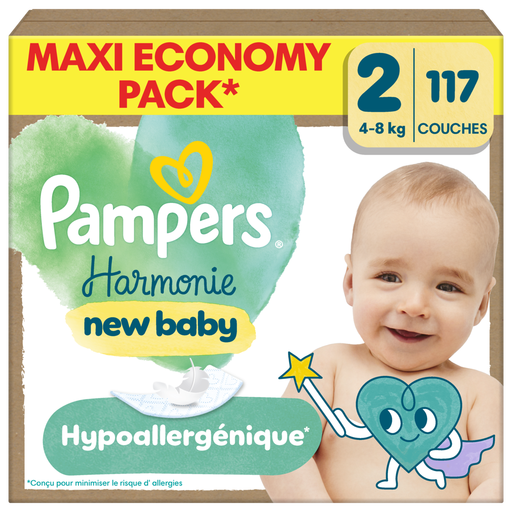
Why this choice suits this profile: With 117 nappies, this pack handles the frequent changes of the early months, as long as your baby’s weight falls within the stated range.
The weight guide helps you avoid choosing a size based only on age. The wetness indicator also makes it easier to check between changes.
117 nappies, size 2 from 4 to 8 kg, top sheet made with 50% plant-based materials and FSC-certified cellulose.
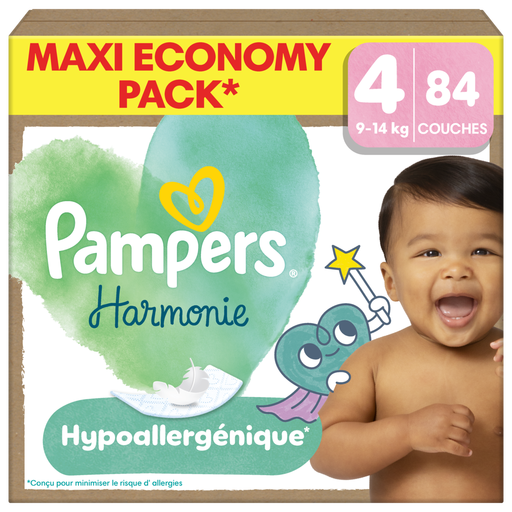
Why this choice suits this profile: This size is suitable for babies weighing between 9 and 14 kg, with a design focused on everyday comfort and night-time protection.
The Stop & Protect pocket helps hold moisture at the back – a useful feature when nights start getting longer.
84 nappies, size 4, wetness indicator, fragrance-free design according to the range’s product sheet, and cellulose from FSC-certified sources.
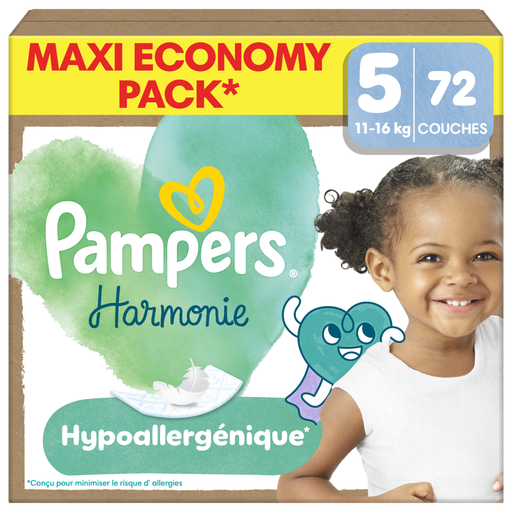
Why this choice suits this profile: This product is ideal for more mobile children and families who need a nappy that can keep up with busy days and nights alike.
The back protection and well-fitted barriers reduce the risk of relying solely on the “anti-leak” promise without checking the nappy’s positioning.
72 nappies, size 5 from 11 to 16 kg, top sheet containing 50% plant-based materials and wetness indicator.
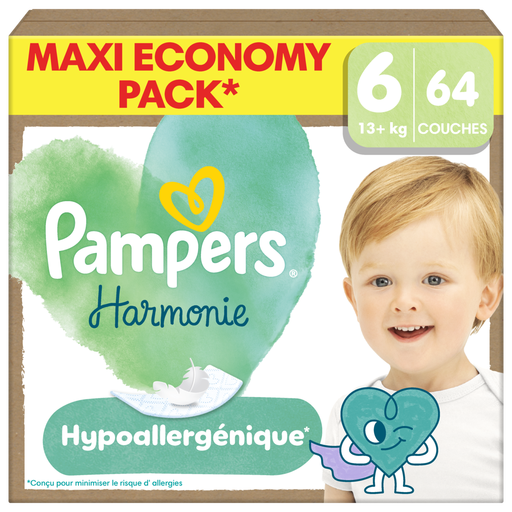
Why this choice suits this profile: This product is designed for children weighing at least 13 kg who still wear a nappy, particularly for naps or overnight.
The minimum weight of 13 kg stops you from moving up a size too early, which can lead to a poor fit and more leaks.
64 nappies, size 6 from 13 kg upwards, Stop & Protect pocket, wetness indicator and FSC-certified cellulose.
We’ve put together a full list, updated in real time, of products that meet these strict selection criteria and European safety regulations.
Size 2 is suitable for approximately 4 to 8 kg, while size 3 covers roughly 6 to 10 kg. At 7 kg, both could therefore work. Look at the fit, any marks on the skin and whether leaks occur to decide which one suits your child’s shape best.
The range is described as hypoallergenic, fragrance-free on some product sheets and dermatologically tested. An individual reaction is still possible, though. If redness or persistent irritation appears, stop using the product and seek medical advice.
How long it lasts depends on your child’s age, the amount of urine and the specific model. Some product sheets claim up to 12 hours of night-time protection, but this shouldn’t replace regular changes. Check the nappy when your child wakes up and change it straight away if it’s soiled.