
Livraison le jour même ou le lendemain

Qualité garantie

Débloquez vos offres de bienvenue: Livraison GRATUITE | Jusqu'à -80 % | 30 jours d'essai gratuits à JoyPlus
Téléchargez l'application
Choosing the right diaper for your baby can be a real challenge, even when you're loyal to a single brand like Pampers. Between the Baby-Dry, Harmonie, and Premium Protection lines, the differences aren't always obvious. In this guide, we'll break down the specifics of each line to help you find the perfect Pampers diapers for your child's bottom and your priorities as a parent.
Our mission?: to give you the keys to making the right choice, with complete objectivity and without the marketing jargon.
Before diving into our comparison of the different lines, here are the key points to check to ensure your child's comfort and security.
It all starts with the right size. This is determined by your baby's weight, not their age. Keep this in mind?: an ill-fitting diaper is the number one cause of leaks.
For example, a size 4 diaper is typically designed for babies weighing 9 to 14 kg. Always rely on the weight guidelines on the package and don't hesitate to move up a size if you notice recurring leaks or red marks on your child's skin.
Each Pampers line meets a specific need. Here’s a quick overview to help you navigate them?:
Diapers represent a significant expense for new parents. Opting for a Pampers diaper bundle in a "giga" or "mega" pack is often the best way to save money in the long run. Keeping an eye out for promotions is also a great way to lower the cost without ever sacrificing quality.
Let's take a closer look at three of the brand's flagship products, each with its own unique strengths.
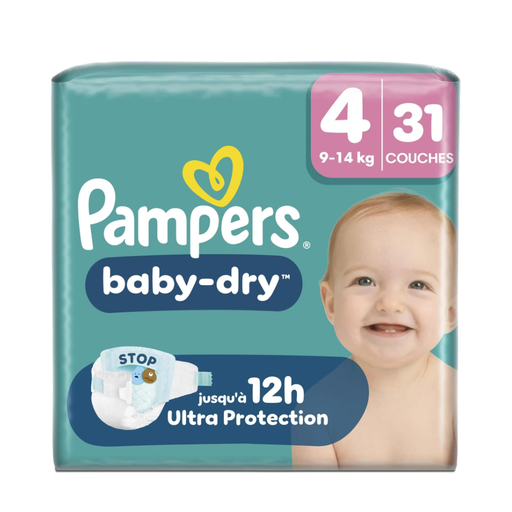
Why this model stands out
The Pampers Baby-Dry line has established itself as a trusted choice thanks to its reliability. This model features an absorbent core that locks away wetness in a flash, keeping your baby's skin dry. Its secret weapon?? The Stop & Protect pocket at the back, an extra barrier that prevents leaks up the back—a nightmare for many parents, especially at night.
Pros
Who is it for? This is the smart choice for parents seeking reliable, all-around protection for daily use, day and night, all at an excellent value.
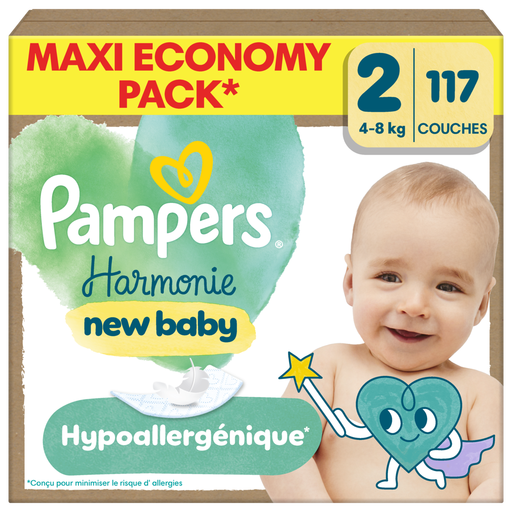
Why this model stands out
The Pampers Harmonie line stands out for its more "green" composition. Its topsheet, the layer in direct contact with the skin, contains 50% plant-based ingredients. The absorbent core is made of cellulose from sustainably managed forests (FSC certified). Hypoallergenic and dermatologically tested, these diapers are the ideal solution for the sensitive skin of little ones. For added peace of mind, the brand states they are approved by dermatologists from the Skin Health Alliance.
Pros
Who is it for? The perfect solution for parents who are mindful of ingredients and prefer more natural materials, especially if their baby has very sensitive or reactive skin.
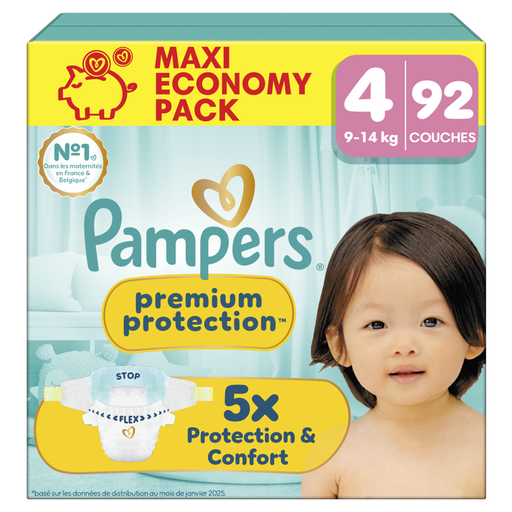
Why this model stands out
The Premium Protection line is the ultimate from Pampers in comfort and protection. It relies on ultra-soft materials to wrap your baby's skin in a cocoon-like embrace. Its unique absorption system instantly captures wetness and runny stools, pulling them away from the skin. Finally, the Flex & Protect waistband gently adapts to your baby's tummy to protect this delicate area.
Pros
Who is it for? For parents who want to make no compromises on softness and protection, especially if their baby's skin is very delicate or prone to irritation.
We've highlighted these three flagship lines, but the world of diapers is much larger. To discover other sizes, training pants, or simply compare pack formats, feel free to explore our full catalogue.
? Explore our complete Diapers & Pants category
It all comes down to priorities. Pampers Baby-Dry focuses on absorption performance and leak-proof protection for reliable daily use. Pampers Harmonie, on the other hand, concentrates on a more natural composition with plant-based materials and reassuring certifications (FSC, OEKO-TEX), making it ideal for sensitive skin.
As a general rule, it's recommended to change your baby's diaper every 2 to 3 hours, and of course, as soon as it's soiled. Newborns often require more frequent changes. Pro tip?: most Pampers diapers have a wetness indicator (a line that changes colour) that signals when it's time for a change, without you even having to undress your baby.
Here are a few tell-tale signs?: