
Livraison le jour même ou le lendemain

Qualité garantie

Débloquez vos offres de bienvenue: Livraison GRATUITE | Jusqu'à -80 % | 30 jours d'essai gratuits à JoyPlus
Téléchargez l'application
As a parent, you want the absolute best for your baby. But when you're standing in the baby wipe aisle, making a choice can be overwhelming. A newborn's skin is so thin and delicate that every skincare product matters.
This article breaks down the different ranges of Pampers baby wipes for you. Our mission: to give you everything you need to choose the perfect product for your child's needs with complete confidence.
Before diving into our comparison of the different ranges, keep these essential criteria in mind. They will help you make a smart and informed choice.
For a baby wipe for sensitive skin, a short ingredient list is often a tell-tale sign of quality. Opt for formulas designed to minimise the risk of irritation. Alcohol-free wipes are a must-have, as alcohol can dry out a baby's fragile skin. Likewise, hypoallergenic and dermatologically tested wipes offer an extra layer of assurance.
The skin has a natural protective barrier with a slightly acidic pH. A product that disrupts this balance makes it more vulnerable to redness and irritation. Wipes that help restore the skin's natural pH are therefore invaluable for preserving this barrier, diaper change after diaper change.
You'll go through a lot of wipes. Opting for a multipack of baby wipes or a bulk pack of Pampers wipes is a win-win: you'll never run out at the worst possible moment, and you'll make significant savings on the cost per unit. It's a practical tip for managing your stock at home or at the childminder's.
Each Pampers range has its own specialty. To help you find the right one, here's our breakdown of three standout options.
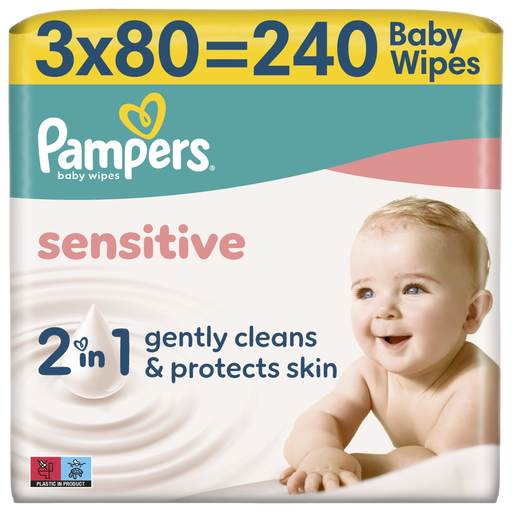
What they offer: Pampers Sensitive wipes are designed for a dual purpose: to gently cleanse and to actively protect the skin. The brand highlights their unique formula that helps restore the skin's natural pH to protect it from redness. They are formulated without alcohol or perfume.
Key features:
Who is it for? Ideal for parents of newborns and babies with very sensitive skin who are looking for maximum protection against irritation.
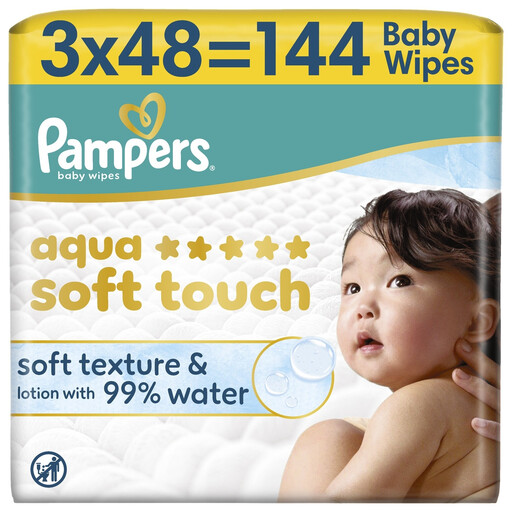
What they offer: Purity above all. These water-based wipes stand out for their ultra-minimalist formula. Made with 99% water, they provide an incredibly gentle clean. Their texture is specially designed for the comfort of the most delicate skin, right from birth.
Key features:
Who is it for? Perfect for parents who prefer the simplest, most natural formulas possible, especially for a baby's first few months.
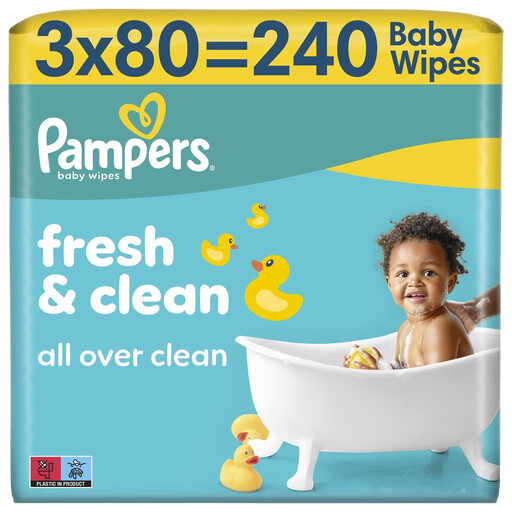
What they offer: The multi-purpose refreshing wipe. Fresh & Clean wipes are your partner for a complete clean: bottom, hands, face... they can handle it all. They leave a pleasant feeling of cleanliness and freshness thanks to a light scent, while respecting the skin's balance with their alcohol-free formula.
Key features:
Who is it for? The ultra-practical option for parents of growing babies and young children, perfect for quick clean-ups after meals or play sessions.
Choosing the right products, like wipes, is one way to simplify life with a baby. In the same vein, other innovations can make your daily routine easier, especially at night. Getting up for a bottle or a diaper change in complete darkness can feel like an obstacle course.
To help you move around without waking the whole household, smart lighting solutions are available. Take a look at our selection of motion-sensor LED lights for a safer and more convenient environment.
The key difference is in the formula. Pampers Aqua wipes focus on minimalism with 99% water. Pampers Sensitive wipes, on the other hand, include a protective lotion in addition to cleansing agents. Their goal is to actively help preserve the skin barrier and prevent redness.
Yes, the Pampers Sensitive and Pampers Aqua ranges are specially designed for the fragile skin of newborns. You can use them with confidence from day one. However, always remember to check the information on the packaging.
Absolutely not! As clearly stated on the packaging, baby wipes should never be flushed down the toilet. Unlike toilet paper, they do not break down and can clog your pipes and sewage systems. The only correct place for them is the bin.