
Livraison le jour même ou le lendemain

Qualité garantie

Débloquez vos offres de bienvenue: Livraison GRATUITE | Jusqu'à -80 % | 30 jours d'essai gratuits à JoyPlus
Téléchargez l'application
Choosing the right Pampers baby nappies is not simply a matter of counting the number of nappies in a pack. Your child’s weight, mobility, skin sensitivity and how often they need changing all have a direct impact on their comfort, as well as on the family budget.
However, some marketing claims can be confusing. A product advertised as offering long-lasting protection does not mean you can avoid changing the nappy regularly. Similarly, a large pack is only good value if the size genuinely suits your child’s build.
Labels such as ‘newborn’, ‘active baby’ or ‘junior’ provide a useful starting point, but weight remains the most reliable guide. Two babies of the same age can have very different body shapes. If a nappy is too large, moisture may escape around the thighs; if it is too small, it can press on the tummy and leave marks on the skin.
Claims such as ‘up to 12 hours’ or ‘up to 100%’ refer to the performance claimed by the manufacturer under certain conditions. They do not guarantee that every child will remain leak-free. Sleeping position, the amount of urine, the time between changes and how the fastenings are adjusted also play a part.
A maxi pack can reduce the cost per nappy, but a size can quickly become unusable as your child grows. Before building up your supplies, check the weight range and, if possible, start with a reasonably sized pack. Always compare the price per nappy, rather than the total amount shown on the pack.
Here are some guidelines for the main sizes:
The nappy should move with your child without leaving a significant gap at the back or around the legs. Once it is on, unfold the leg cuffs outwards and adjust the fastenings enough to keep the nappy in place without pressing on the tummy.
For night-time baby nappies, look for an absorbent core, elasticated barriers around the thighs and, where included in the design, a back pocket to help prevent leaks upwards. A wetness indicator can also make it easier to keep track of changes, particularly during the first few weeks.
The Baby-Dry and Premium Protection products featured below highlight fast absorption and a Stop & Protect system. These features describe the product design; they do not replace changing the nappy as soon as it is wet or soiled.
For nappies for sensitive skin, look closely at the information that is actually available:
A nappy described as hypoallergenic will not necessarily suit every baby. If redness, itching or irritation persists, stop using the product and seek advice from a healthcare professional.
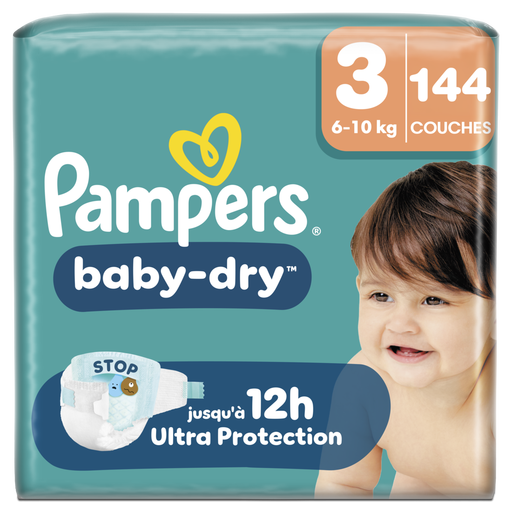
Why this choice suits this profile : With 144 size 3 nappies, this large pack may suit parents who want to reduce repeat purchases for a baby weighing 6 to 10 kg.
The size and weight range are clearly stated, helping you avoid choosing based solely on age or pack size.
144 nappies, a wetness indicator, fast-absorbing core and Stop & Protect pocket, according to the product page.
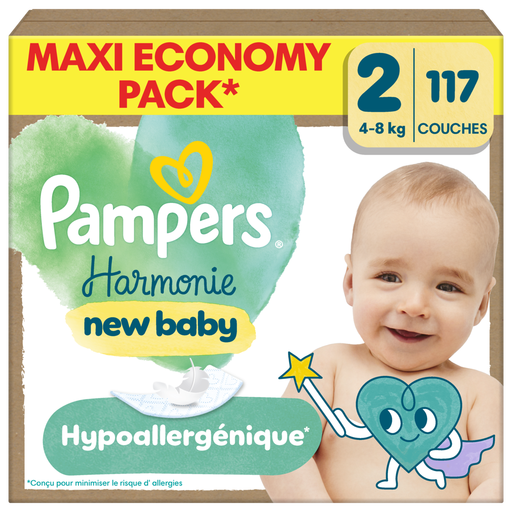
Why this choice suits this profile : A product worth considering for parents who pay particular attention to materials in contact with the skin and compliance information.
The product page mentions a hypoallergenic design, dermatological testing, OEKO-TEX Standard 100 certification and cellulose sourced from FSC-certified sources.
The top sheet is stated to be made from 50% plant-based ingredients, with a Stop & Protect back pocket.
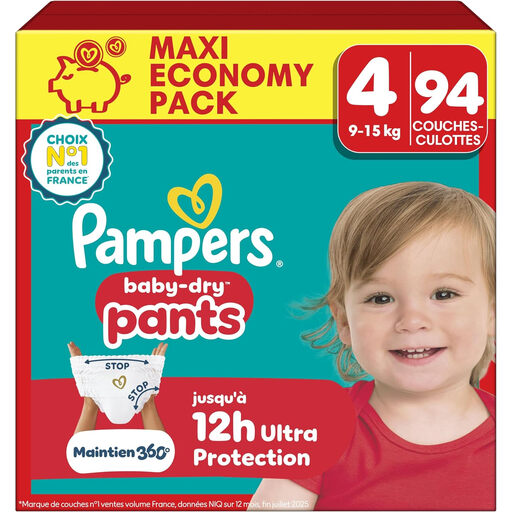
Why this choice suits this profile : This pull-up design suits children who are always on the move, particularly when out and about, at nursery or when changes need to be done standing up.
The 360° stretchy waistband and leg barriers help limit gaps that can appear as your child moves, provided the nappy is positioned correctly.
94 pull-up nappies, tear-away sides and adhesive tape for rolling up the used nappy before disposal.
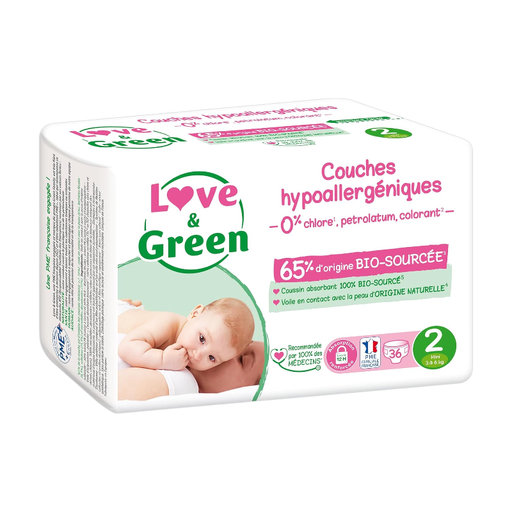
Why this choice suits this profile : This product may appeal to families who want to compare an eco-friendly baby nappy with a conventional model.
The product page details the absence of lotion, fragrance and colourants, along with FSC-certified cellulose and chlorine-free bleaching.
Size 2, suitable for babies weighing 3 to 6 kg, a naturally derived top sheet and packaging stated to be recycled and recyclable.
We have put together a complete, real-time selection of products that meet these criteria, as well as European safety requirements.
Guidelines such as 4–8 kg baby nappies or 9–14 kg baby nappies are more useful than the recommended age. A well-adjusted fit generally contributes more to comfort than a model chosen solely for its advertising claims.
Pampers size 2 nappies are often recommended for this range, although some products also cover part of the next size up. Look out for marks on the skin and repeated leaks: these may indicate that it is time to move up a size or review how the nappy is positioned.
It depends on the nappy’s absorbency, the amount of urine and your child’s comfort. The ‘up to 12 hours’ claim describes advertised performance under specific conditions. A soiled nappy should be changed promptly; also watch for any signs of irritation.
Some products state that they are fragrance-free, lotion-free or made with naturally derived materials. These details can help you compare products, but no nappy will suit every baby in the same way. Check the ingredients and stop using the product at the first sign of a skin reaction.