
Livraison le jour même ou le lendemain

Qualité garantie

Débloquez vos offres de bienvenue: Livraison GRATUITE | Jusqu'à -80 % | 30 jours d'essai gratuits à JoyPlus
Téléchargez l'application
Choosing Pampers baby nappies is not simply a matter of comparing pack prices. With different ranges, overlapping sizes and promises of daytime and overnight protection, it is easy to end up with a model that is not suited to your child’s weight or daily routine.
Parents in France often make three mistakes:
Here are the criteria to consider before choosing disposable baby nappies, followed by a selection suited to different needs.
The first information to check is the weight range shown on the packaging. Nappy sizes 0 to 6 cover several stages of growth, but the recommended size may vary according to your child’s build.
Here are the main guidelines for the range featured:
A nappy that is too large may allow moisture to escape around the back and thighs. Conversely, a nappy that is too small may press against the tummy, leave marks on the skin or reduce absorbency. If leaks occur while the nappy is regularly very wet, trying the next size up may be worthwhile, provided the barriers remain correctly positioned.
When choosing leak-proof baby nappies, look at the features actually detailed in the product description:
These features are particularly useful at night, on long journeys or on days when access to a changing table is not immediate. However, they do not mean you can leave a nappy on without checking it. Pampers recommends changing nappies regularly to help maintain skin comfort.
The Pampers Baby-Dry range focuses on absorbency and protection during extended periods. The Pampers Premium Protection range also offers a soft-feel surface, absorbent cells and, on selected references, a Flex & Protect waistband.
Parents looking for baby nappies for sensitive skin generally pay attention to the absence of perfume, natural latex and chlorine-based bleaching agents, as well as any dermatological testing mentioned by the manufacturer.
Some models specifically state that they offer:
These statements provide information about the product’s composition and the checks claimed by the manufacturer, but they do not guarantee protection against irritation. If redness persists or a skin reaction occurs, stop using the product and seek advice from a healthcare professional. If your child has a known sensitivity, also remember to check the list of ingredients.
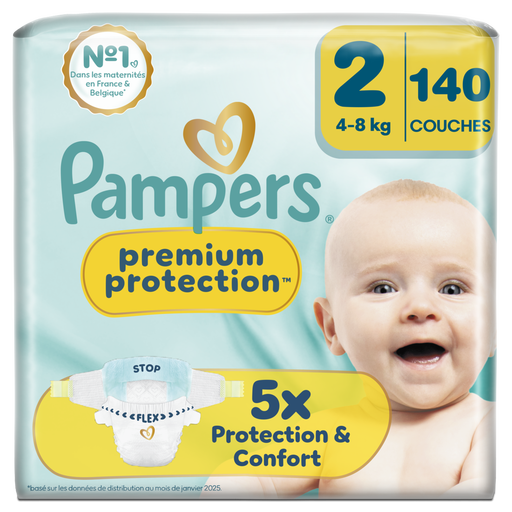
Why this choice suits them : This large pack is ideal for parents who want to shop less often for a baby weighing 4 to 8 kg, while keeping an eye on the price per nappy.
The weight range is clearly stated, and the 140-nappy pack makes it easier to compare the unit price rather than relying solely on the total pack price.
Absorbent cells, a Stop & Protect pocket and soft materials against the skin, according to the product description.
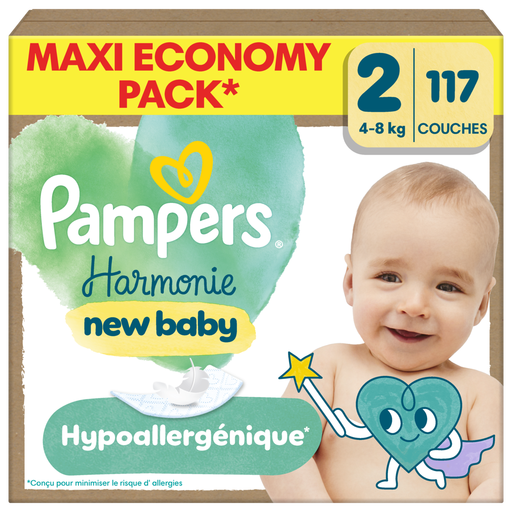
Why this choice suits them : This option is aimed at families who pay particular attention to materials that come into contact with the skin, certifications and the wetness indicator, for a baby weighing 4 to 8 kg.
The product description mentions OEKO-TEX Standard 100 certification, a dermatologically tested design and plant-based materials in the top sheet.
Wetness indicator, Stop & Protect back pocket and cellulose sourced from FSC-certified forests, according to the product description.
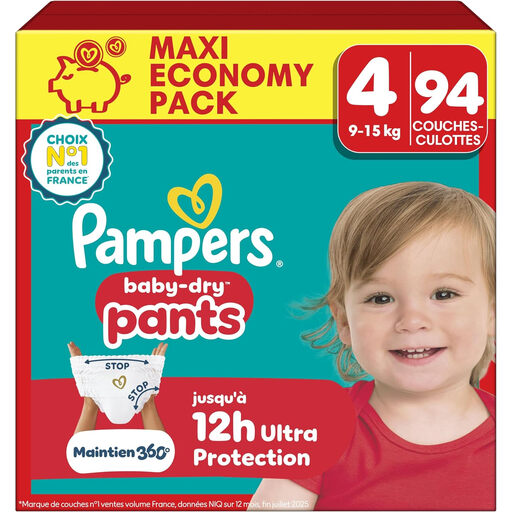
Why this choice suits them : These nappy pants are suitable for active children weighing 9 to 15 kg, particularly when getting dressed is easier while standing or when you are out and about.
The stretchy 360° waistband, leg barriers and back pocket support frequent movement without relying solely on fasteners.
Quick to pull on, tear-away sides and a 94-unit pack for regular needs.
We have put together a complete, real-time updated list of products that meet these demanding selection criteria and European safety regulations.
Pampers size 2 nappies are generally designed for this weight range. However, your baby’s build remains decisive: check the fit around the tummy, back and thighs, then move up to the next size if leaks or marks become frequent.
Some Baby-Dry references are designed for extended protection, with an absorbent core and a Stop & Protect pocket. Even so, you should check the nappy regularly and change it as soon as it is wet or soiled. A correctly fitted size remains essential for helping to prevent leaks.
Several references mention dermatological testing, the absence of EU-listed fragrance allergens or OEKO-TEX certification. This information describes the product’s features, but every skin type can react differently. If irritation occurs, stop using the product and seek medical advice.