
Livraison le jour même ou le lendemain

Qualité garantie

Débloquez vos offres de bienvenue: Livraison GRATUITE | Jusqu'à -80 % | 30 jours d'essai gratuits à JoyPlus
Téléchargez l'application
Finding the perfect palm oil-free spread—one that's both delicious and healthy—can often be a challenge at the supermarket. More and more of you are looking for an environmentally friendly alternative, but without compromising on the pleasure of a smooth, creamy spread on toast for breakfast or as a snack.
This guide is here to help. We've analysed the labels and vetted the best products on the market to help you make the right choice. Follow our advice to find the spread that will meet all your expectations.
Before you pick up a jar, a few key points can help you distinguish a good spread from a great one. Here are the three criteria to examine closely to make the right choice.
This is the number one criterion for judging a hazelnut spread: its percentage of hazelnuts. Aim for a spread rich in hazelnuts, ideally with more than 20%. This guarantees an intense and authentic flavour. A high concentration of nuts also often means less sugar and a more refined texture. It's a sure sign of quality.
Simplicity is key! In the absence of palm oil, manufacturers turn to vegetable oils like sunflower or rapeseed, which have a better nutritional profile. Avoid long ingredient lists: a short composition, free from artificial flavours and preservatives, is always a good sign. This is what brings a recipe closer to the quality of an artisanal spread.
The origin of the ingredients and the place of manufacture are also markers of quality. Brands like Lucien Georgelin champion local production with French manufacturing and hazelnuts from the Lot-et-Garonne region. Such a commitment is a guarantee of traceability and a way to support regional economies.
Enough theory, let's get to the tasting! Here are the products that caught our eye, each with its own unique strengths.
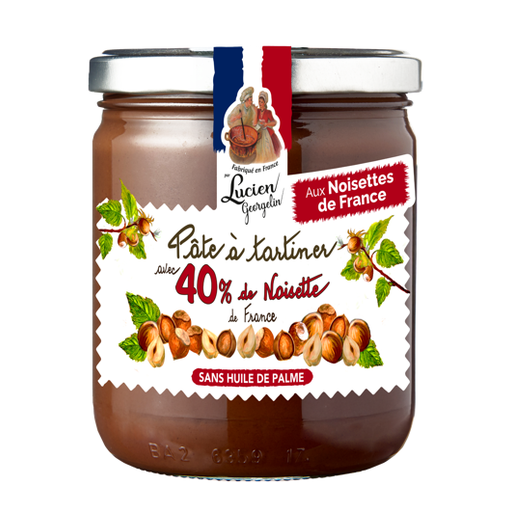
Why it stands out: This spread stands out for its exceptional hazelnut concentration. With 40% hazelnuts from the Lot-et-Garonne region, it offers an intense and authentic taste experience. Its palm oil-free recipe uses rapeseed oil and skimmed milk powder to achieve a creamy texture and a distinct cocoa flavour (7%).
Key features:
Who is it for? For purists and lovers of authentic flavour who are looking for a spread rich in hazelnuts and who value local craftsmanship. The ideal choice for those who prioritise hazelnut flavour above all else.
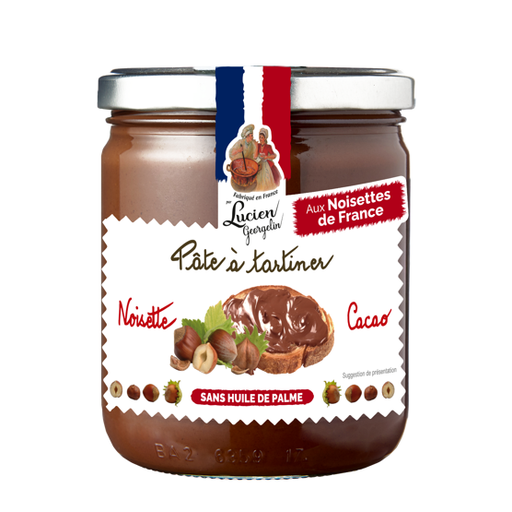
Why it stands out: This version offers an excellent balance, with an already generous hazelnut content of 25%. Made with cane sugar, sunflower oil, and a hint of natural vanilla, it delivers a smooth and balanced flavour. A perfect everyday alternative to Nutella.
Key features:
Who is it for? Ideal for families looking to upgrade from standard industrial spreads. It offers a genuine, delicious hazelnut taste and a carefully crafted recipe, perfect for breakfast or as a snack for children.
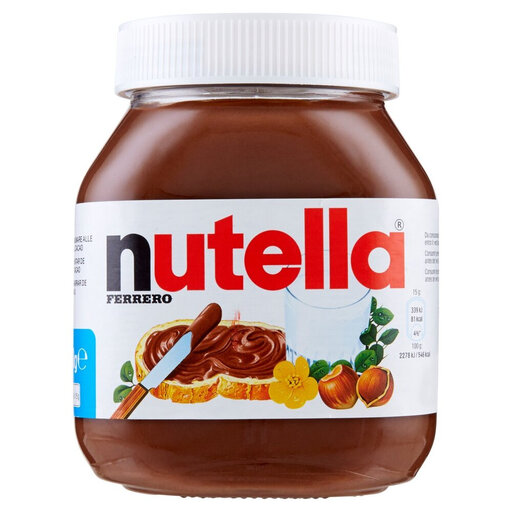
Why it's mentioned: It's impossible not to mention it: this is THE market benchmark. Everyone knows its recipe: an ultra-smooth texture and that distinctive sweet taste. In terms of composition, it contains 13% hazelnuts and palm oil, right after sugar, which remains the number one ingredient.
Points to consider:
Who is it for? For die-hard fans of its unique taste and texture, for whom the absence of palm oil is not the main purchasing criterion.
Has our selection whetted your appetite, but you still want more choice? Explore our full range to discover other gourmet gems.
Discover our collection of hazelnut products.
Choosing a palm oil-free spread often addresses a twofold concern. On one hand, there's the environmental issue: intensive oil palm cultivation is criticised for its impact on deforestation. On the other, there's the nutritional aspect: palm oil is very high in saturated fatty acids, while alternatives (sunflower, rapeseed) have a better lipid profile, with more unsaturated fatty acids.
An artisanal spread is distinguished by its ingredient list, which is generally shorter and "cleaner". It often contains a much higher percentage of hazelnuts and higher-quality raw materials (like real chocolate instead of just low-fat cocoa powder, for example). In contrast, industrial recipes frequently include more additives, flavourings, and a larger proportion of sugar and standardised fats to control costs and ensure a consistent taste.
To maintain its smooth texture, keep your spread at room temperature in a dry cupboard, away from light. Above all, avoid the refrigerator! The cold tends to harden it and alter its texture, a phenomenon that is even more pronounced in palm oil-free recipes. And of course, be sure to close the jar tightly after each use.