
Livraison le jour même ou le lendemain

Qualité garantie

Débloquez vos offres de bienvenue: Livraison GRATUITE | Jusqu'à -80 % | 30 jours d'essai gratuits à JoyPlus
Téléchargez l'application
Choosing painting and watercolour supplies seems simple enough… until you start comparing formats, pigments, accessories and age recommendations. Whether you're buying for a child as young as 3, a school pupil, a hobbyist or a lettering enthusiast, the expectations are quite different.
Some purchases end up disappointing for reasons that are easy to foresee: a palette that's too bulky, paint that's difficult to measure, or felt-tip pens that dry out quickly. Here are the criteria to consider before you fill your basket, along with a selection tailored to different needs.
A large number of paint pans or felt-tip pens doesn't guarantee a pleasant experience. A palette of 12 well-chosen colours is often enough to learn how to mix, whereas a set of 36 felt-tip pens is better suited to illustration, creative journaling or lettering.
So check whether you can mix colours, whether there's an integrated palette, and whether the product is compatible with your surface. A water-based paint designed for paper won't necessarily give the same result on card, wood or canvas.
Large-volume bottles are great for school activities or workshops, but less practical for a portable pencil case. Conversely, tubes and paint pans are easy to carry, but their contents may not be enough for a classroom or heavy use.
A lid that doubles as a palette, a sturdy box or a well-organised case reduces the risk of accidental colour mixing and makes tidying up after each session much easier.
The age stated on the packaging should be read carefully. Small lids, tips and paint pans can pose a choking hazard for children under 3. Even when a formula is described as non-toxic paint, it's still essential to follow the manufacturer's warnings: do not ingest the product, avoid contact with eyes, and supervise young children.
For activities from age 3, choose materials that are clearly labelled, easy to close and quick to wash off with water and soap when the product description confirms this.
Children's gouache is generally appreciated for its opaque, matt finish. Formats like 500 ml gouache paint are ideal for large projects, scenery or group workshops. The product descriptions for Bruynzeel 500 ml paints indicate a water-based formula, a thick consistency and suitability for use on paper, card, wood, canvas or glass, depending on the reference.
Watercolour, on the other hand, is more transparent. It's worked with water to create washes, layers and soft transitions. A tube set, such as Talens Art Creation, allows you to measure the exact amount of paint you need and keep a wide range of mixes available.
To start with, a watercolour set with 12 colours and a brush saves you from having to buy extra items. A palette with a mixing lid is practical both at home and in the classroom. More advanced users can opt for a set of 24 colours or more to reduce the need for repeated mixing.
Watercolour felt-tip pens offer a cleaner, faster approach. Double-tipped models often combine a fine tip for details with watercolour brush pens for broad strokes. However, you'll need to use paper that's thick enough to prevent warping or ink bleeding through.
Close bottles and felt-tip pens immediately after use. Watercolour felt-tip pens are generally best stored horizontally, while paint pans should be kept closed to limit dust and moisture. Clean brushes with water after each session and remove any gouache stains from fabrics promptly.
For children, an apron, a washable tablecloth and a well-ventilated space make the activity much easier to manage. Products described as washable aren't completely stain-proof, though – the speed of cleaning is still key.
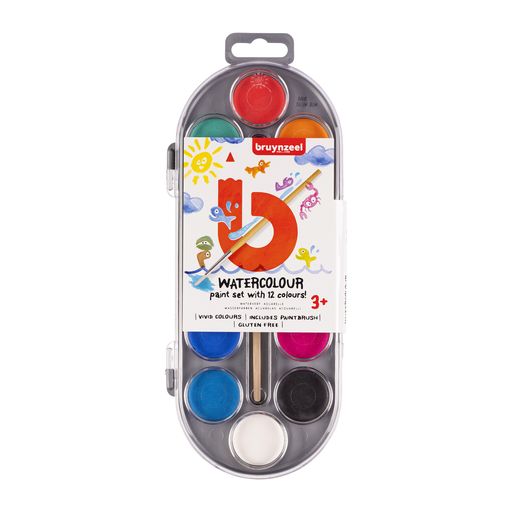
Why this suits this profile: This set includes 12 paint pans, a brush and a lid that doubles as a mixing palette. Everything you need to start creative painting without buying extra accessories.
The box protects the paint pans and limits colour mixing during storage. The recommended age is 3 years and above.
12 water-soluble colours, a brush included and a palette integrated into the lid.
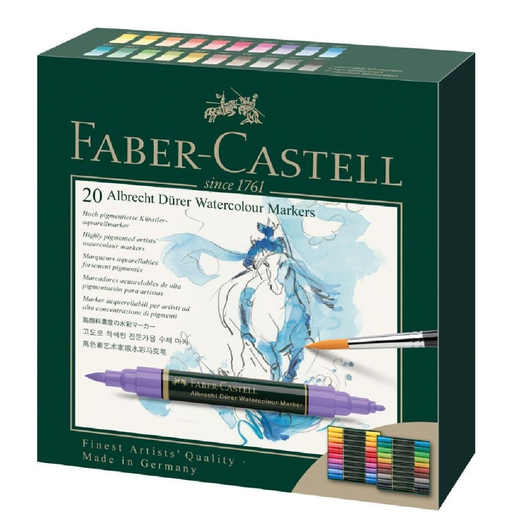
Why this suits this profile: These 20 double-tipped markers are designed for illustrators, sketch enthusiasts and anyone looking for a compact tool to create watercolour effects.
The brush tip and fine tip mean you don't need to carry several different tools. The sturdy case makes storage and travel easy.
Water-soluble ink, a flexible brush tip and a fine metal tip for details.
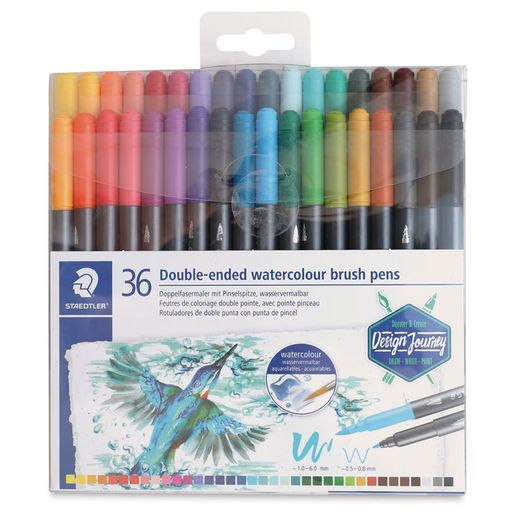
Why this suits this profile: The 36 shades offer plenty of variety for lettering, journaling, illustration and projects that need lots of colour variation.
The two tips cover fine lines and broad areas without needing to change pens. Horizontal storage helps maintain an even ink flow.
36 colours, water-based ink and blend effects achievable with a damp brush.
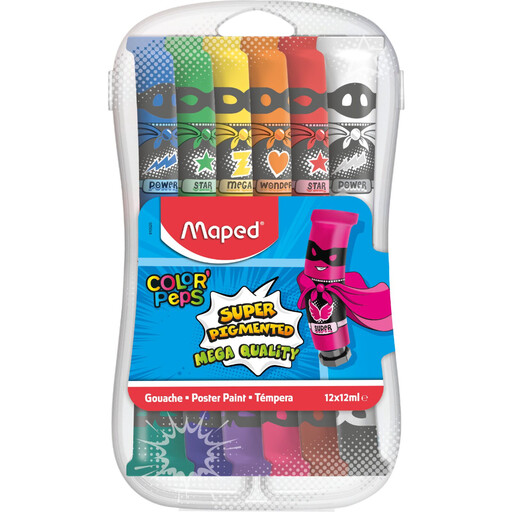
Why this suits this profile: The 12 tubes of gouache and the plastic box with mixing compartments are ideal for arts and crafts at home or at school.
The attached lids reduce the risk of losing them, and the box also serves as a palette. The product description confirms compliance with toy safety regulations.
12 mixable colours, four mixing compartments and flip caps attached to the tubes.
We've put together a comprehensive, real-time updated list of products that meet these strict selection criteria and comply with European safety regulations.
A beginner's paint set can include a palette of 12 colours, one or two brushes, watercolour paper and a container of water. As you progress, add a mixing palette and thicker paper to reduce warping. Watercolour brush pens are a practical alternative for drawing, lettering and when you're on the go.
Gouache is a water-based paint that's generally more opaque and matt. It's ideal for flat areas of colour, school projects and creations on paper or card. Watercolour is more associated with transparency and washes. The choice depends on the finish you want, the surface you're using and the age of the user.
Close each container as soon as you've finished using it, clean brushes while the paint is still wet, and put the lids back on felt-tip pens carefully. Avoid heat, direct sunlight and excessive humidity. A clean palette and regular tidying also help preserve the colours and tips.