
Livraison le jour même ou le lendemain

Qualité garantie

Débloquez vos offres de bienvenue: Livraison GRATUITE | Jusqu'à -80 % | 30 jours d'essai gratuits à JoyPlus
Téléchargez l'application
A paintbrush set can be just as useful for painting on canvas, renovating furniture, applying varnish or tackling decorating projects. But not all assortments are created equal, and they don't all meet the same needs. A poorly chosen set can mean bristles that shed, an awkward width or a laborious cleaning process.
To make an informed purchase, it's better to look at the shape, materials, dimensions and compatibility with the paint you're using, rather than being swayed by the sheer number of pieces advertised.
A generously filled box isn't necessarily the most useful. Some sets include several brushes of similar sizes, without offering a model wide enough to cover a surface quickly or fine enough for precise touch-ups.
For versatile use, examine the size distribution. A kit of 10 flat brushes offering several widths can prove more practical than a larger but poorly balanced assortment.
Synthetic paintbrushes, particularly those made from polyester or PET, are valued for their durability and relatively simple maintenance. They suit many uses, even if their behaviour varies depending on the shape and density of the filaments.
Flat brushes are ideal for block colour, edges and large surfaces. Round models are generally more manoeuvrable for details and fine lines. For watercolour, absorbency matters more than brush width. With oil paint, plan to clean with the appropriate product as soon as you finish your session.
The ferrule is the part that connects the fibres to the handle. When properly fixed, it limits deformation and bristle loss. However, pay close attention to the materials stated: a stainless steel ferrule doesn't offer the same properties as a plated iron one.
The handle should also provide a stable grip. For precision work, choose a lightweight, easy-to-manoeuvre handle. For repainting a piece of furniture or a door, a sturdier handle will often be more comfortable over a long session.
To choose brushes of different sizes, match each dimension to a specific use:
The Kinzo set presented below includes flat brushes in 12, 25, 38, 50 and 75 mm, with several pieces in certain widths. This distribution allows you to move from precision work to broader application without changing your assortment.
Synthetic fibres in PET or polyester offer good elasticity and even paint delivery. They can be used with brushes for acrylic, some brushes for oil paint, gouache, inks and decorating projects, provided you follow the recommendations on the pot.
For watercolour brushes, look above all for good absorbency and a tip that regains its shape properly. An assortment combining round and flat brushes will be more versatile for washes, details and block colour than a set made up only of wide brushes.
Brushes that are easy to clean will stay effective for longer if you look after them promptly. With water-based paint, rinse them quickly, then remove any residue trapped between the fibres. For oil paint or certain varnishes, use the cleaner or solvent recommended by the manufacturer.
Avoid leaving a brush to soak for too long: the handle may soften and the fibres can become misshapen. After rinsing, reshape the head and leave the brush to dry flat or with the fibres pointing downwards. Vertical drying with the bristles pointing upwards should be avoided.
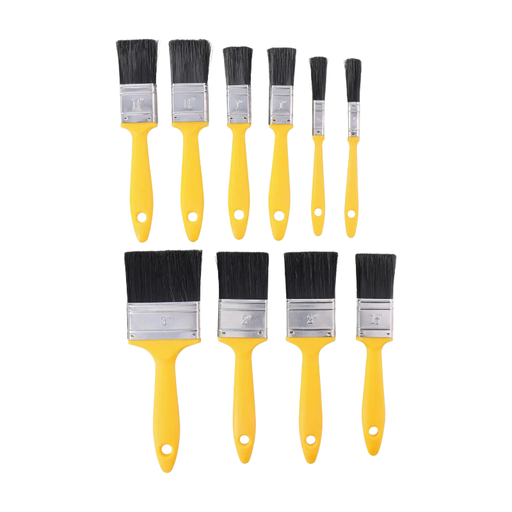
Why this choice suits this profile: This assortment brings together 10 flat brushes from 12 to 75 mm. It's suitable for first painting projects, creative hobbies and small furniture renovations alike.
The variety of widths reduces the risk of buying several brushes that look alike. The synthetic PET filaments rinse with water for water-based paints, or with the appropriate product for oil paints.
10 flat brushes, from 12 to 75 mm, with black PET fibres and gold-plated iron ferrules.
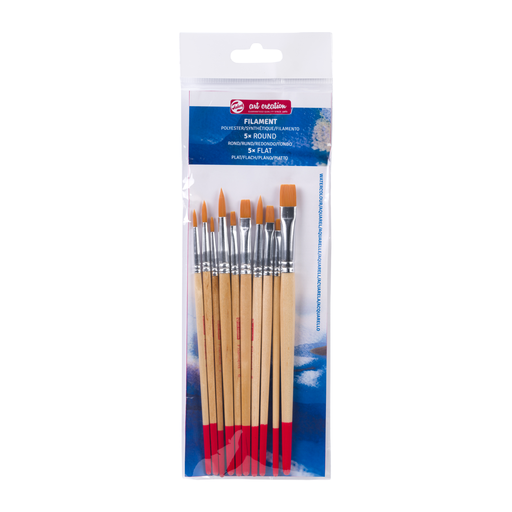
Why this choice suits this profile: Hobby artists and students who move between watercolour, ink, gouache, acrylic and oil have round and flat shapes here to vary their techniques.
The set doesn't just line up wide flat brushes. It includes 5 round brushes and 5 flat brushes, in several sizes for details, washes and block colour.
Elastic polyester fibres, stated high absorbency and an assortment of 10 brushes suited to several mediums.
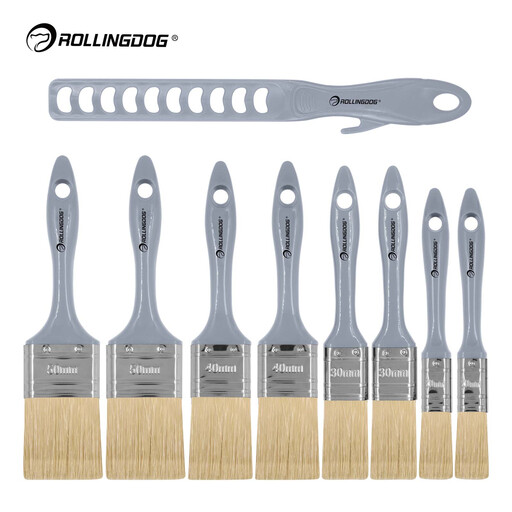
Why this choice suits this profile: This set is aimed at decorating, renovation and touch-up work on walls, doors, skirting boards, furniture and cupboards.
The four stated widths — 20, 30, 40 and 50 mm — correspond directly to edging work and the most common surfaces. The included stirrer avoids having to mix paint with an improvised tool.
9 pieces including a stirrer, stainless steel ferrules and widths from 20 to 50 mm.
We've selected a complete, real-time updated list of products that meet these strict selection criteria and European safety requirements.
The lifespan of a brush depends on the paint used, the frequency of your projects and, above all, the quality of your cleaning. Remove the paint before it dries at the base of the fibres. Then reshape the brush head and store it in a dry place, away from the weight of other tools.
For renovation work, ensure adequate ventilation, wear gloves and protect your eyes when the product you're using recommends it. Paints and solvents should be kept out of reach of children. Always check the paint label for the appropriate solvent, compatible surfaces and waste disposal instructions.
An assortment of synthetic fibres and several widths makes a practical choice for acrylic, canvas decoration and brushes for creative hobbies. Flat brushes are used for block colour and backgrounds, while finer models allow you to work on outlines and details.
This is possible with some brushes, but cleaning must be done with the product suited to each paint. For watercolour, absorbency plays an essential role; for oil, you mainly need to consider fibre resistance and the cleaning method. Avoid switching from one medium to another without carrying out a thorough clean.
Clean them immediately, rinse until all residue has disappeared, reshape the fibres, then leave them to dry properly. Don't leave them sitting in water or solvent for long periods. This simple routine helps preserve the shape of DIY brushes and furniture brushes across projects.