
Livraison le jour même ou le lendemain

Qualité garantie

Débloquez vos offres de bienvenue: Livraison GRATUITE | Jusqu'à -80 % | 30 jours d'essai gratuits à JoyPlus
Téléchargez l'application
Whether you're an artist at heart, a crafting enthusiast, or simply looking for the perfect tool to customise objects, choosing a paint marker can quickly become a headache. Faced with tempting marketing claims, it's easy to end up with markers that don't live up to their promises. An adult colouring project ruined by ink that bleeds through the paper, a tip that frays after just a few strokes, or a colour that wipes right off glass?– these disappointments are all too common.
As a Product Expert at Joybuy, I'm here to help you navigate the options. This guide breaks down the essential technical features and points you towards the right choices, so you'll never fall for the most common traps again.
Before you start shopping, let's review the pitfalls that too often lead to a purchase you'll regret.
To find the perfect marker for your drawing or crafting projects, focus on three technical parameters.
The ink's composition determines its opacity, durability, and the surfaces it will adhere to.
The tip is an extension of your hand. Its shape should match your style and needs.
A paint marker should primarily be chosen based on the final surface. For your object customisation projects, ensure the marker is designed for non-porous surfaces (glass, ceramic, plastic). Opacity is also a key criterion?– a good acrylic marker must perfectly cover a dark surface without letting the background colour show through.
To put theory into practice, here are a few models we recommend, each suited to a specific user profile.
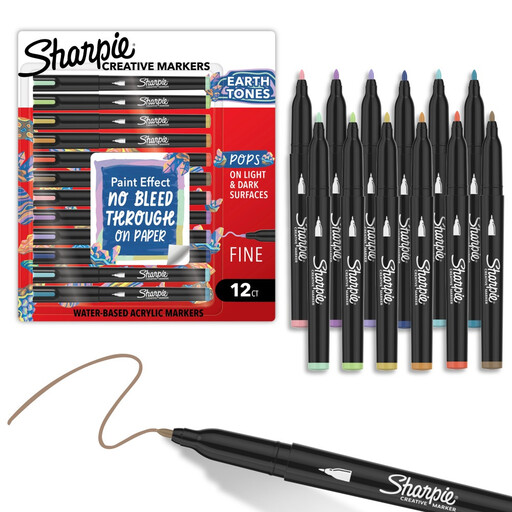
Why it's a great choice : Ideal for those who love to do it all – adult colouring, customising a ceramic mug, or decorating wood. It's a very comprehensive starter kit for exploring different facets of crafting.
Its paint-like ink is designed to be opaque on both light and dark surfaces without smudging. It thus avoids the dual pitfalls of the false "multi-surface" promise and ink that bleeds through paper.
Ready to use right out of the box, with no need to shake or prime. The colours are layerable, allowing you to easily create depth in your artwork.
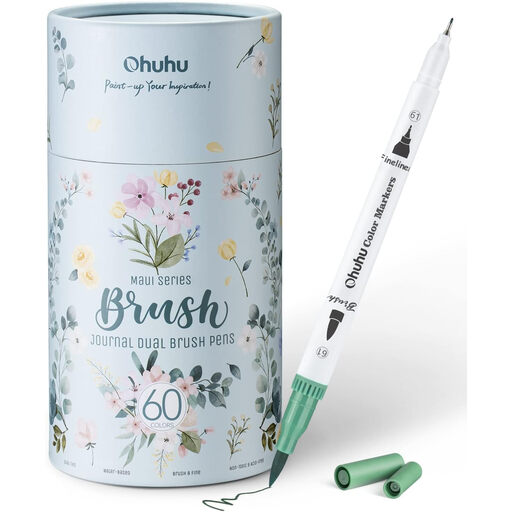
Why it's a great choice : Perfect for illustrators, *bullet journal* enthusiasts, and calligraphy lovers who demand great flexibility. The dual tip (brush and fine) and the wide range of colours make it an all-in-one creative tool.
This set saves you from buying multiple types of markers. The dual tip combines the precision of a fine nib with the expressiveness of a brush tip in a single marker.
Dual tips for maximum versatility (1-6 mm brush and 0.4 mm fine). The water-based ink allows you to create watercolour effects on suitable paper.
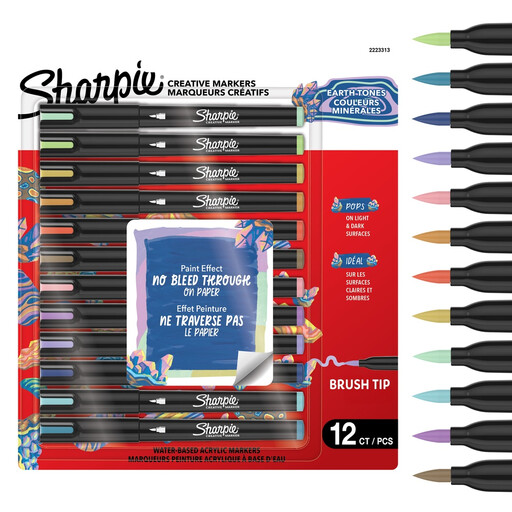
Why it's a great choice : Designed for those who want an authentic paint finish on various materials like metal, stone, or ceramic. The brush tip offers total artistic control for decorating objects.
This marker delivers on its "multi-surface" promise with an ultra-opaque acrylic ink that covers dark surfaces—a weak point for many competitors. The result is a true paint finish, not just a felt-tip look.
An opaque and vibrant paint finish on a multitude of surfaces. The brush tip provides expressive control to switch between fine and broad strokes with ease.
Explore our full selection of products that meet our strictest quality standards.
Most manufacturers, especially for dual-tip or acrylic ink markers, recommend storing them horizontally. This allows the ink to flow evenly to both tips and prevents them from drying out prematurely. And the golden rule?– always remember to cap them tightly right after use.
Yes, and that's one of the major advantages of acrylic ink. To get clean, crisp layers, simply let the first colour dry completely before applying the next. The drying time is usually very short. This technique is perfect for creating depth and texture in your artwork.
On a porous surface like paper or card, the ink will behave like permanent ink. However, on smooth, non-porous surfaces (glass, plastic, metal), it will most often wipe away with a simple damp cloth. To make your creation permanent on these types of materials, you'll need to apply a protective varnish or, for ceramics, bake the object according to the manufacturer's instructions.