Who are these criteria useful for?

Parents looking for wholemeal flour

If you want a blend of flours for a fussy eater, look for wholemeal flour clearly listed in the ingredients. The colour of the pain au chocolat, or the words ‘wheat flour’ on their own, don’t confirm that it contains wholemeal flour.

Families planning afternoon snacks

If biscuits are already being served with a drink, the weight of each pain au chocolat and its sugars per portion can help you plan what to serve. Check the ingredients list and allergens separately, too.

People who prefer to bake pastries at home

Pain au chocolat that’s ready to bake lets you choose when to put it in the oven, but you’ll need to follow the storage and preparation instructions. Don’t confuse it with a ready-to-eat product.

What should you check before choosing?

For an afternoon snack, first distinguish the flour you’re looking for from flour simply described as ‘wheat flour’. Then use the nutritional information and pack size to compare portions.

Criterion What to check Who is it for?
Wholemeal flour Look for ‘wholemeal flour’ or ‘wholegrain flour’ in the ingredients; check how much is used if it’s highlighted on the packaging. If I’m buying for a fussy eater, I want to know whether the recipe really contains the flour I’m looking for, rather than judging by appearance. Around 36% of consumers prioritise this check.
Sugars and portion size Compare the sugars per 100 g, then check the weight of one piece or the nutritional values given per portion. If biscuits are also part of the afternoon snack, I need to know how much pain au chocolat will actually be served. Around 29% of consumers prioritise this.
Pack size and storage Check the number of pieces, how they’re packaged and the storage instructions after opening. If I’m planning several afternoon snacks, I prefer a pack that’s easy to divide into portions and store. Around 21% of consumers prioritise this kind of planning.
Recipe and preparation Check the declared allergens and, for a frozen product, the storage and baking instructions. If I choose a pastry that needs baking, I need to be able to prepare it in time and check that the recipe is suitable for the people who’ll be eating it. Around 14% of consumers prioritise this.

Common pitfalls to avoid

  • Assuming ‘wheat flour’ means ‘wholemeal flour’

    Neither the colour, the presence of sourdough starter nor a general mention of wheat flour proves that a pain au chocolat contains wholemeal flour. The Carrefour Classic’, Brioche Pasquier and La Boulangère product details we reviewed don’t list wholemeal flour.

    To check this properly, look for wholemeal flour explicitly named in the ingredients list, and check its quantity if it’s highlighted.

  • Treating Nutri-Score as a summary of the recipe

    In France, Nutri-Score is optional, according to the Ministry of the Economy. Even when it’s displayed, it doesn’t tell you by itself which flour is used, what portion is served or which allergens are present.

    Check the ingredients and nutritional information per 100 g. Use the logo as additional information if it appears on the packaging.

  • Choosing a large pack without checking the number of pieces

    The total weight of a pack doesn’t tell you how much each pain au chocolat weighs when served with the other items in an afternoon snack.

    Check the number of pieces, their weight and, if provided, the amount of sugars per portion.

  • Confusing ready to bake with ready to eat

    Frozen pain au chocolat that’s ready to bake needs to be prepared before serving. For example, Bridor describes its BIO 75 g product as ready to bake, with instructions for defrosting and baking.

    Read the instructions for the product you buy before deciding when to serve it, especially the storage, defrosting and baking guidance.

Brands to compare

Carrefour Classic’

A family-sized pack of 16 pain au chocolat, weighing 720 g, according to Carrefour’s product details.

  • The product details list 40% wheat flour and 13% chocolate, among other ingredients, as well as the allergens.
  • Wholemeal flour isn’t listed in the ingredients.

Brioche Pasquier

Individually wrapped pain au chocolat, with nutritional values published per 45 g portion.

  • Brioche Pasquier lists 14 g of sugars and 4.8 g of fibre per 100 g.
  • The recipe lists wheat flour and added fibre, but not wholemeal flour; check the allergens on the pack.

La Boulangère

A six-pack of organic, all-butter pain au chocolat, offering a chance to compare an organic recipe with other pack sizes.

  • La Boulangère lists 41% organic wheat flour, 18.5% organic butter and 14 g of sugars per 100 g.
  • Wholemeal flour isn’t listed. The product details warn that it may contain traces of mustard, nuts and soya.

Bridor

According to Bridor, its BIO 75 g Pain au Chocolat is a frozen pastry that’s ready to bake.

  • The product details include defrosting and baking instructions.
  • You’ll need to manage its storage and use an oven. Bridor lists gluten, milk and eggs, as well as possible traces of other allergens.

Lidl

An all-butter pain au chocolat sold for Lidl France’s in-store bakery counter.

  • The product details list 44% wheat flour and 24% butter.
  • Wholemeal flour isn’t listed. Check whether this product is available at your local store.

An option to bake from Joybuy

This selection features pain au chocolat to bake at home for an afternoon snack. If you’re specifically looking for a blend of flours, check the ingredients and instructions for the product you choose.
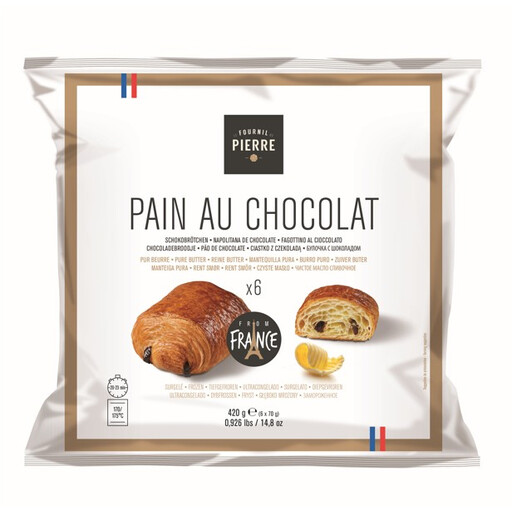
Fournil de Pierre pain au chocolat to bake, pack of 6, 420 g

Fournil de Pierre pain au chocolat to bake, x6, 420 g

Worth considering if you’d like to bake your pain au chocolat before snack time and have the time and equipment you need. The pack contains 6 pieces, weighing 420 g in total. Before choosing it to meet your wholemeal flour requirements, check the ingredients on the packaging, as well as the allergens and storage and baking instructions.

View on Joybuy

Frequently asked questions

How can I check whether a product contains wholemeal flour?

Look for ‘wholemeal flour’ or ‘wholegrain flour’ in the ingredients list. ‘Wheat flour’, sourdough starter or a dark colour aren’t enough to confirm it. For prepacked food, the quantity of an ingredient highlighted on the packaging must also be stated, according to the Ministry of the Economy.

Is Nutri-Score compulsory on pain au chocolat in France?

No. According to the Ministry of the Economy, Nutri-Score is optional. Nutritional information is compulsory for most prepacked foods, so if the logo isn’t shown, you can compare the nutritional values per 100 g and read the ingredients.

Does the tax on sugary drinks apply to pain au chocolat?

No. The provisions set out by Légifrance apply to drinks and liquid preparations for drinks, not solid pastries. To compare the sugars in prepacked pain au chocolat, check the nutritional information instead.

Which allergens should I check before serving pain au chocolat?

Check the allergens listed on the packaging of the product you buy, including any declared ‘may contain’ warnings. Ingredients and allergen information vary between recipes. For example, Bridor’s BIO 75 g Pain au Chocolat lists gluten, milk and eggs, and may contain other allergens.

Can frozen pain au chocolat be served after defrosting?

Not if it’s sold as ready to bake and the instructions say it must be baked. Bridor describes its BIO 75 g Pain au Chocolat as ready to bake. For any other product, follow its own storage, defrosting and preparation instructions.