If you’re serving pain au chocolat on Make Music Day, start by considering the equipment available: a packaged, ready-to-eat product means no baking, while a frozen product that needs baking requires an oven, preparation time and suitable storage. If sourdough is your main priority, check the recipe: the presence of sourdough doesn’t prove that the pastry is made exclusively with sourdough or by an artisan producer.
Who are these formats for?
Organisers without an oven on site
For easy serving on Make Music Day, a ready-to-eat product means you don’t need to arrange any baking. Before serving, check how many pastries are in the pack, the date shown on the packaging and the storage instructions.
Those looking for sourdough
Sourdough recipes are worth comparing ingredient by ingredient. The presence of sourdough in a packaged pain au chocolat isn’t enough to describe it as artisan-made or exclusively sourdough-fermented.
Hosts with the facilities to bake frozen pastries
If you have an oven and can store the product as directed before serving, a bake-at-home option may suit you. Allow enough time too, following the instructions for the product you choose.
What should you check before buying?
Start by considering where and when you’ll be serving them, then compare the recipes and labels of the formats that fit your plans.
| What to consider |
What to check |
Who is it for? |
| Serving and format |
Work out how many pastries you need and distinguish between ready-to-eat products and those that need baking. Carrefour France, for example, lists a Carrefour Classic' pack of 16 pastries weighing 720 g. |
If I need to serve a group somewhere without an oven, I choose a format I can hand out at the planned time. Around 38% of consumers prioritise ease of serving and pack format. |
| Sourdough recipe |
Check the type and proportion of sourdough, and look for yeast too. Carrefour France’s product listings show that the Pasquier and Carrefour Classic' recipes mentioned here contain both sourdough and yeast. |
If I’m specifically looking for a sourdough recipe, I want to know exactly what that claim means before choosing. This is a priority for around 31% of consumers. |
| Label and allergens |
Check the allergens and any possible traces on the exact packaging. To compare nutritional information, use the same basis each time, such as per 100 g or per portion. |
When sharing with people who have dietary requirements, I need to be able to check each product’s ingredients and allergens. Around 31% of consumers prioritise these checks and nutritional information. |
What should you watch out for?
-
Assuming “sourdough” means “artisan-made”
The Pasquier and Carrefour Classic' recipes listed by Carrefour France contain sourdough, but also mention yeast. So the sourdough claim alone doesn’t prove that the pastries are exclusively sourdough-fermented or artisan-made.
If this is a key reason for your purchase, compare the ingredient lists and ask for more details about how the pastries are made rather than relying on the front of the pack.
-
Choosing a bake-at-home product without the right equipment
Frozen pain au chocolat can make serving difficult if there’s no oven at the venue or you can’t store the product as directed. Bridor, for example, lists a proof-and-bake product, which requires different planning from a ready-to-eat option.
Before deciding how many pastries to serve, check the exact product’s preparation method, equipment requirements and storage instructions.
-
Confusing Nutri-Score with nutritional information
The DGCCRF describes Nutri-Score as a voluntary system in France. Its absence doesn’t replace checking the nutritional information, and isn’t enough on its own to judge a product.
If Nutri-Score is shown, use it as one of several points of comparison when comparing relevant products; check the ingredients and nutritional values too.
-
Applying the “soda tax” to a viennoiserie
The French Ministry of the Economy describes this levy as applying to sugary drinks. It isn’t a tax-related factor to consider when choosing pain au chocolat.
To compare two viennoiseries, look instead at their ingredients, allergens and nutritional information.
Brands to know
Brioche Pasquier
A packaged option labelled “sourdough pain au chocolat”, worth considering if you need to serve pastries without baking on site.
- Carrefour France’s listing for the 2 × 360 g format states that it contains 5% wheat sourdough and provides nutritional values per 45 g portion.
- The same recipe also lists yeast, wheat, butter, milk and soya. Check the label if any of these ingredients matter to your choice.
Carrefour Classic'
A packaged format of 16 pain au chocolat, weighing 720 g, listed by Carrefour France for serving a group.
- The product listing states that it contains 8.4% sourdough; the number of pastries is specified to help you plan how to serve them.
- The recipe also lists yeast and palm oil. It contains eggs and milk, and may contain traces of soya and sesame. Check the label on the pack you buy.
Bridor
A range of pain au chocolat that includes options for those who can store and prepare frozen products.
- Bridor offers several formats. Its listing for an 85 g pain au chocolat describes a butter pastry that is ready to prove.
- This product requires you to follow its storage and preparation instructions. Bridor doesn’t describe it as sourdough pain au chocolat.
A bake-at-home option on Joybuy
This product suits anyone looking for pain au chocolat to bake, with an oven and suitable storage available. If you’re mainly looking for a sourdough recipe or a ready-to-eat product, check those criteria separately.
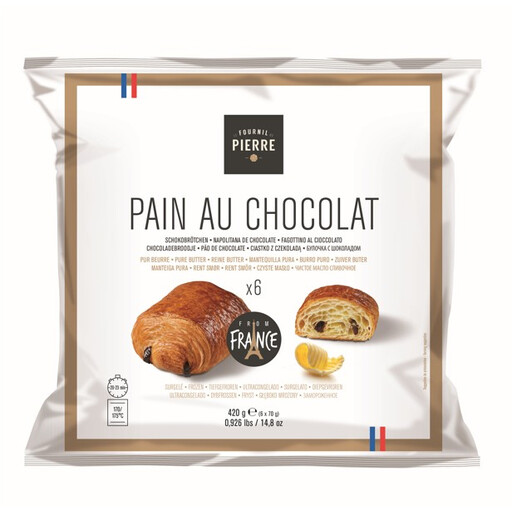 Image unavailable
Fournil de Pierre pain au chocolat to bake × 6, 420 g
This pack of six is a good choice if you can bake the pastries before serving them. Check the preparation and storage instructions on the packaging; do not refreeze the product after defrosting. If you’re looking for sourdough or need to consider allergens, check the ingredients on the exact pack before buying.
View on Joybuy
Frequently asked questions
Is sourdough pain au chocolat always artisan-made?
No: the sourdough claim describes an ingredient, not the method of production on its own. The Pasquier and Carrefour Classic' listings from Carrefour France also state that the recipes contain yeast. If this is important to you, check the recipe and look for details about how the pastries are made.
Is Nutri-Score compulsory on pain au chocolat in France?
No. The DGCCRF describes Nutri-Score as a voluntary system, although prepacked foods carry nutritional information in line with the rules that apply to them. If a product displays a score, compare it with relevant products, while also checking the ingredients and nutritional values.
Which allergens should you check before sharing pain au chocolat?
Read the ingredients list and any warnings about traces on the exact product. The Pasquier and Carrefour Classic' listings from Carrefour France mention wheat and milk, among other ingredients or possible traces depending on the recipe. Don’t assume that one product has the same ingredients as another.
Can you serve pain au chocolat after the date shown on the pack?
First check whether it’s a best-before date or a use-by date. The DGCCRF says that going past a best-before date isn’t the same as going past a use-by date, which must not be exceeded. Also follow the storage instructions and check that the packaging is in good condition.


