Smaller households looking to avoid leftovers
You eat one or two pastries at a time. The number of pain au chocolat in a pack, their total weight and the storage instructions matter more than the pack’s apparent size when you’re choosing.


If you’re buying for one or two people, start by thinking about how many you’ll eat and how much you’ll need to store once the pack is open. A small pack of ready-to-eat pastries means you won’t have to deal with a larger pack. Frozen pain au chocolat needs a freezer and an oven, while a bakery counter may let you buy a single pastry, if available.
You eat one or two pastries at a time. The number of pain au chocolat in a pack, their total weight and the storage instructions matter more than the pack’s apparent size when you’re choosing.
You want to compare the sugar, fat, ingredients or allergens. For pre-packed products, check the nutritional information per 100 g and look at the label for the exact recipe.
You can bake one at home or buy a single pastry from a bakery counter now and then. Preparation time, freezer space and the facilities available in store will help you decide.
If you’re buying for yourself, start with how much you’ll need to store, then check the recipe and how it’s prepared. These factors can help you choose between three formats that serve different needs.
Choose this if: you want several pastries without having to bake them. Auchan, for example, stocks a pack of 4 weighing 220 g.
Bear in mind: even a small pack leaves pastries to store if you only eat one.
Choose this if: you have an oven and freezer and don’t mind baking the pastries before you eat them.
Bear in mind: Carrefour says its pack of 6 Carrefour Classic’ pastries takes 18 to 20 minutes to bake and must be stored at −18 °C.
Choose this if: you want to buy just one pastry without having to store a pack at home.
Bear in mind: Lidl says the product mentioned is available at stores with an in-store bakery counter that stock it.
| What to consider | What to check | Who is it for? |
|---|---|---|
| How much you’ll need to store | Number of pastries, net weight and storage instructions once opened. | If I only eat one or two at a time, I want to avoid leaving a large pack open. Around 50% of consumers put the amount they’ll need to manage first. |
| Ingredients and allergens | Sugars and fats per 100 g; ingredients and allergens in the exact recipe. | Before choosing, I want to compare recipes and spot any ingredients that don’t suit me. Ingredients are the priority for around 33% of consumers. |
| Preparation and availability | Whether it’s ready to eat or needs baking, the equipment required and what the store stocks. | I’m looking either for a pastry that needs no preparation or one I can bake at home whenever I like. For around 17% of consumers, how they get their pastry is the main consideration. |
When it comes to pain au chocolat, this phrase tells you neither the number of pastries nor the pack weight. Two packs described as small can therefore leave you with different amounts to store.
Compare the number of pastries and the net weight, then choose based on how often you’ll eat them and the storage instructions.
The DGCCRF explains that displaying the Nutri-Score is voluntary. If it appears on a product, it doesn’t replace the detailed nutritional information or ingredients list.
For pre-packed products, compare the sugars, fats and salt per 100 g, then consider the weight of the portion you plan to eat.
The frozen Carrefour Classic’ pack mentioned needs to be baked in the oven and stored at −18 °C. Carrefour also advises against refreezing it once defrosted.
Check the instructions for the product you’re buying and make sure you have the necessary equipment before choosing it.
Baking takes time and means you’ll need to use the oven.
What’s available from an in-store bakery depends on the equipment and the local range. The ALDI product mentioned also contains crème pâtissière, so it isn’t the same recipe as a plain pain au chocolat.
Check that the product is available at the store you plan to visit and confirm its name before you go.
These examples show different pack sizes and preparation methods. The details apply to the specific products mentioned, not to every pastry sold by each retailer.
Bridor lists a 75 g pain au chocolat to bake in its professional « Les Savoureux » range.
Carrefour stocks, among other products, packs of 6 Carrefour Classic’ pain au chocolat to bake, as well as a La Fournée Dorée product in a pack of 8 with individually wrapped pastries.
E.Leclerc stocks Eco+ pain au chocolat in packs of 10, with a total weight of 450 g.
Auchan stocks a pack of 4 pain au chocolat weighing 220 g, as well as a separate gluten-free product weighing 2 × 100 g.
Lidl offers a butter-rich pain au chocolat, baked in store and sold individually.
ALDI offers an in-store bakery pastry combining pain au chocolat with crème pâtissière.
This product is for baking pain au chocolat at home, rather than buying a pastry that’s ready to eat. As it comes in a pack of six, you’ll need to plan what to do with the remaining pastries.
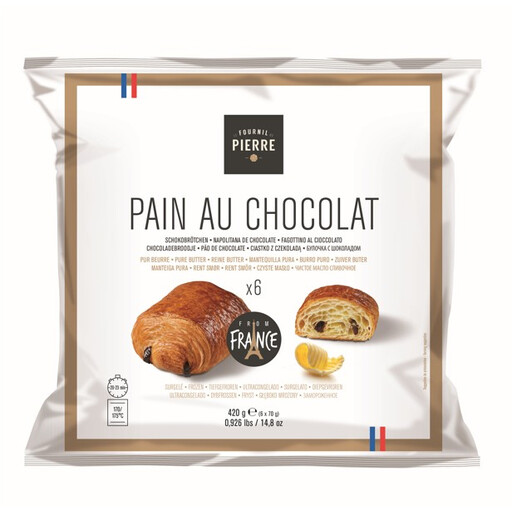 Image unavailable
Worth considering if you plan to bake your pain au chocolat at home and can store a pack of six. Before buying, check the baking instructions to see if you can bake just some of the pastries at a time. Don’t assume they’re individually wrapped.
No. The text published on Légifrance concerns drinks and liquid preparations for drinks, not solid pastries such as pain au chocolat. To check the sugar content, look at the product’s nutritional information.
No. The DGCCRF describes the Nutri-Score as a voluntary label. To compare pre-packed products, check their nutritional information, particularly the sugars and fats per 100 g, rather than relying on whether the logo is present.
Read the ingredients and the allergens highlighted on the packaging of the exact product. The recipes mentioned may differ: the gluten-free label on one Auchan product doesn’t apply to the retailer’s other pain au chocolat.
Follow the instructions on the pack you’ve bought. For its pack of 6 Classic’ pastries, Carrefour specifies storage at −18 °C, a baking time of 18 to 20 minutes and that they shouldn’t be refrozen after defrosting. These instructions may not apply to other products.
No. Lidl says its product depends on whether the store has an in-store bakery counter and stocks it. ALDI limits its product to participating stores with baking facilities. Check the recipe too: the ALDI pastry mentioned contains crème pâtissière.