Who are these formats for?

Parents preparing several lunchboxes

If there’s little time before you leave in the morning, a ready-to-eat product saves you having to bake it. The individual wrapping on the La Boulangère product featured by Auchan also makes it easy to pop in a bag.

Families who need to check allergens

Check the recipe and any warnings about traces for each product. If you’re buying a freshly baked pastry from a shop, ask for the information specific to that store too, and check the rules at your child’s school.

Shoppers planning for a special occasion

A recipe made with pure butter or prominently featured ingredients might matter for an occasional treat. However, Manger Bouger, the programme run by Santé publique France, advises limiting pastries as part of children’s everyday snacks.

What should you look for when choosing one for school?

First decide whether the pastry needs to be ready to go in the morning or whether you can bake it in advance. Then check the label on the product you’ve chosen.

Ready to eat and individually wrapped

Choose this: when you need to pack the lunchbox quickly, as with the individually wrapped La Boulangère pains au chocolat featured by Auchan.

Bear in mind: convenient wrapping doesn’t mean you can skip checking the allergens and nutritional information.

Frozen and ready to bake

Choose this: when you can allow time to defrost and bake it before packing the lunchbox.

Bear in mind: the preparation steps and storage instructions make this format less convenient when you’re in a rush.

Freshly baked in store

Choose this: when you’re buying on the day from a shop that bakes these pastries on site.

Bear in mind: check what your local shop offers and, if needed, ask for its allergen and traces information.

What to consider What to check Who this matters to
Ingredients and how often you eat it Compare the sugar, fat and salt per 100 g, then take into account the weight of the pastry you’ll pack. To give my child a varied range of snacks, I want to compare products beyond the ‘made with pure butter’ claim. Around 31% of consumers put ingredients and how often a product is eaten first.
Allergens and school rules Read the allergen information and any warnings about traces for the exact product, and check the rules that apply at your child’s school. If my child needs to avoid an ingredient, I need to know the recipe and whether there may be traces before putting it in their bag. Around 31% of consumers say whether a product meets this requirement is their top priority.
Preparation and carrying Check whether the product is ready to eat or needs baking, and how it’s packaged. On mornings when I’m preparing several lunchboxes, I prefer something I can pack without having to bake it at the last minute. Nearly 23% of consumers prioritise this convenience.
A recipe for a special occasion Check the ingredients and their proportions, where these are given, rather than assuming that the word ‘premium’ means it’s nutritionally better. For a special meal, I might choose a product for its recipe rather than its packaging alone. This is the main consideration for around 15% of consumers.

Common misconceptions to avoid

  • Assuming ‘made with pure butter’ means it’s nutritionally better

    This describes the recipe, not the product’s overall nutritional value. Two products made with pure butter may also come in different portion sizes.

    Compare the information per 100 g and the weight of the portion you plan to pack, rather than relying on this claim alone.

  • Thinking Nutri-Score has to appear on the packaging

    In France, Santé publique France says displaying it is voluntary. The DGCCRF states that prepacked foods must carry a nutrition declaration, subject to applicable exemptions.

    If Nutri-Score is shown, read it alongside the detailed nutritional information. If it isn’t, use the nutrition table to compare products.

  • Forgetting about possible traces and shared preparation areas

    Allergens vary by recipe. Lidl France says that products in its bakery range are handled in the same preparation area, which is important to consider when checking for possible traces.

    Check the packaging or the information available in store for the exact product, then confirm the school’s rules before packing it for a child with an allergy.

  • Treating a frozen product that needs baking as ready to pack

    Auchan’s product information for its frozen pains au chocolat says they need to be defrosted before baking. They can’t be prepared in the same way as a pastry that’s already baked.

    Save them for a day when you can follow the instructions. If you’re in a hurry, choose a ready-to-eat product.

    Allow time for preparation and make sure you have access to an oven.

Brands to consider

Bridor

Bridor offers, among other products, an 80 g pain au chocolat that needs to be prepared before baking.

  • The weight of each pastry is specified for this product.
  • Check how the product you’re considering needs to be prepared before adding it to a lunchbox.

Carrefour Classic'

Carrefour offers frozen pains au chocolat made with pure butter, ready to bake. The pack contains 6 pastries and weighs 420 g.

  • Carrefour’s product information details the ingredients.
  • The product needs baking. Check its allergen information before buying too.

Epi d'Or

E.Leclerc offers a box of 6 frozen pains au chocolat made with pure butter under this brand. The pack weighs 450 g.

  • E.Leclerc’s product information lists 21% butter, 11% chocolate and the nutritional information for this product.
  • Its Nutri-Score E applies to this product. Check the nutritional information and preparation instructions for the way you plan to use it.

Auchan

Auchan offers a frozen pain au chocolat made with pure butter, ready to bake. The pack contains 6 pastries and weighs 450 g.

  • Its product information includes defrosting and baking instructions.
  • It lists wheat, milk, soya and eggs, and may contain traces of nuts.

La Boulangère

The product featured by Auchan contains 8 pains au chocolat made with pure butter, individually wrapped, and weighs 400 g.

  • The individual wrappers make it easier to pack a lunchbox.
  • Check the allergens and nutritional information for this product, regardless of how convenient the format is.

Lidl

Lidl France lists a pain au chocolat made with pure butter among the pastries baked in store.

  • This format can work for a same-day purchase when it’s available in store.
  • Lidl says its bakery range is prepared in a shared area. Check the allergen and traces information for the product you’re considering.

ALDI

ALDI France says it bakes pains au chocolat on site and features a product available in store.

  • An in-store baked pastry can suit an occasional same-day purchase.
  • If you need to avoid certain ingredients, ask for the ingredient and allergen information for the product sold at your local store.

A bake-at-home option on Joybuy

This selection is for a bake-at-home option when you can prepare the lunchbox in advance.
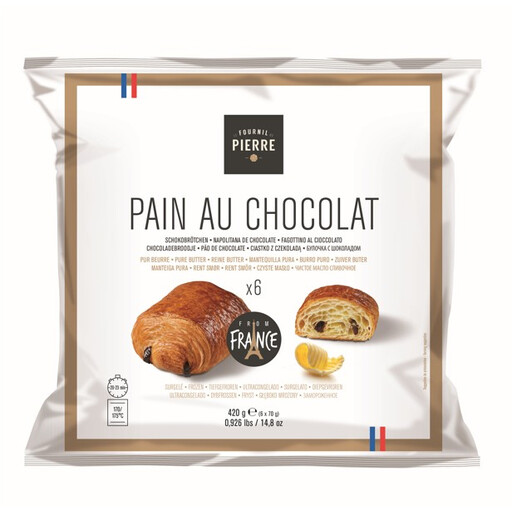
Fournil de Pierre pains au chocolat to bake, 6 pastries, 420 g

Fournil de Pierre, pains au chocolat to bake, 6 pastries, 420 g

Consider this if you can bake the pastries before packing the lunchbox, rather than relying on a ready-to-eat option. The pack contains 6 pastries and weighs 420 g. Check the baking instructions and allergens for this product before buying.

View on Joybuy

Frequently asked questions

Is Nutri-Score compulsory on pain au chocolat in France?

No. Santé publique France says displaying it is voluntary. The DGCCRF states that prepacked products must carry a nutrition declaration, subject to applicable exemptions. Compare the values per 100 g, whether or not Nutri-Score is shown.

Which allergens should you check before packing pain au chocolat in a lunchbox?

Check the information for the exact product, including any warnings about traces. The products mentioned here contain wheat and, depending on the recipe, milk, eggs or soya. Some may contain traces of nuts. If you’re buying a product without packaging, ask the shop for its allergen information.

Which format means you don’t have to bake pain au chocolat in the morning?

Choose a ready-to-eat product, ideally individually wrapped, or a pastry that’s already been baked and bought on the day. A frozen product that needs baking, such as the Auchan option mentioned here, requires you to follow the steps on its packaging.

Is pain au chocolat suitable as an everyday snack?

Manger Bouger, the programme run by Santé publique France, advises limiting pastries and other foods high in fat and sugar as part of children’s everyday snacks, and offering them a variety of options. You could save pain au chocolat for a special occasion rather than making it your regular choice.

Is the ‘soda tax’ relevant when choosing pain au chocolat?

No. The DGCCRF guidance cited on this subject relates to non-alcoholic soft drinks, including fizzy drinks, and doesn’t apply this classification to pain au chocolat. To compare the sugar content, check the nutrition declaration on prepacked products.