To serve warm pain au chocolat after a raclette, choose frozen, ready-to-bake pastries if you have an oven and can plan ahead. If you want to serve dessert without baking, opt for a ready-to-eat pack. Either way, compare the recipe, number of pastries and labelling rather than relying on the word ‘premium’ alone.
Who are these formats for?
Hosts who want to serve them warm
If the oven is free after raclette, frozen, ready-to-bake pain au chocolat lets you plan dessert around the baking time. Allow for the time stated on the pack and make sure you have room in the freezer before the meal.
Shoppers who prioritise the recipe
For a special meal that doesn’t call for any extra baking, ‘all-butter’ labelling and the proportion of chocolate can help you choose between ready-to-serve products. The weight of each pastry and its packaging also matter when serving your guests.
Guests who pay close attention to labels
If any of your guests need to check the ingredients, keep the pack handy until dessert is served. The Carrefour and Auchan products described here list ingredients including wheat, milk or butter and eggs. Check the product you choose for information about soya and possible traces of nuts, too.
What should you look for?
For dessert after raclette, first decide whether you want to bake the pastries or serve them without any preparation. Then compare the recipes and formats to find the right option for your guests.
| What to consider |
What to check |
Who is this for? |
| Serving them warm |
Look for ‘ready to bake’ labelling, baking instructions and storage requirements. |
If I want to serve warm pain au chocolat after raclette, I need to be able to free up the oven and allow time for baking. Around 31% of consumers prioritise this way of serving them. |
| Recipe |
Read the ingredients list, check the proportions of butter and chocolate if stated, and note the weight of each pastry. |
To make the meal feel special, I look for a recipe with clearly listed ingredients, without assuming that ‘premium’ guarantees a particular taste. Around 31% of consumers are said to prioritise this. |
| Labelling |
Check allergens and any warnings about traces; compare sugars, saturated fatty acids and salt per 100 g. |
If a guest needs to check the ingredients or I want to compare nutritional information, I put the label ahead of the format. Around 23% of consumers would put this check first. |
| Quantity |
Compare the number of pastries, net weight and, if needed, individual wrapping. |
For a small group, I want to choose a pack that suits the number of guests rather than end up with too many portions. This is said to be the main consideration for around 15% of consumers. |
Mistakes to avoid
-
Assuming Nutri-Score is compulsory
In France, Nutri-Score is voluntary, according to the Ministry for the Economy. The nutrition declaration on prepacked foods is compulsory, however, according to the DGCCRF. So if there’s no logo, you still need to read the nutritional information.
Compare the figures per 100 g and the ingredients list. If the pack displays a Nutri-Score, use it as extra information, but don’t assume on that basis alone that the product is suitable for your guests.
-
Assuming ‘all-butter’ means it has a favourable nutritional profile
This describes the recipe, not the overall nutritional content. For its 400 g product, La Boulangère lists 22 g of fat, including 14 g of saturated fatty acids, and 15 g of sugars per 100 g.
If you’re looking for an all-butter recipe, check the nutritional information and portion size on the pack you buy separately.
-
Buying frozen pastries without planning how to prepare them
Ready-to-bake pain au chocolat can’t be served straight from the pack like a ready-to-eat product. For its six-piece pack, Auchan says to store the pastries at −18 °C and not to refreeze them after defrosting.
Before you buy, check that you have room in the freezer, that the oven will be available after the meal and that you’ve read the baking instructions for the product you choose.
-
Throwing away the packaging before serving
Recipes and warnings about possible traces vary between products. You can’t assume that an all-butter pain au chocolat is suitable for a guest’s dietary requirements based on that description alone.
Ask your guests which ingredients they need to avoid, read the label on the pack you’re actually serving and keep it until the meal is over.
Brands to compare
Bridor
A professional bakery brand to consider if a retailer stocks its 80 g pain au chocolat.
- Bridor describes this product as having all-butter layers and a cocoa recipe.
- Ask the retailer about the pack size and preparation instructions for the product on offer.
La Boulangère
A 400 g pack to consider if individually wrapped portions would make serving easier.
- La Boulangère lists 19.5% butter and 14.5% chocolate in this product, which is individually wrapped.
- To compare the ingredients, check the nutritional information per 100 g as well; ‘all-butter’ doesn’t tell you everything.
Carrefour
Carrefour Classic’ all-butter pain au chocolat comes in a six-piece, 420 g pack, making it a useful option to compare for serving several guests.
- Carrefour lists 21% butter and 11% chocolate in this product.
- The product information lists ingredients including wheat, eggs and soya, and warns of possible traces of nuts. Check the label on the pack you serve.
Auchan
This frozen six-piece, 450 g pack of all-butter pain au chocolat is a good fit if you plan to bake dessert after the meal.
- For this product, Auchan recommends defrosting for 15 minutes, then baking for 15 to 20 minutes at 180 °C.
- Store at −18 °C and don’t refreeze after defrosting, as instructed by Auchan.
Pain au chocolat to bake on Joybuy
This Joybuy selection features frozen, ready-to-bake pain au chocolat for serving warm after raclette. Check the pack instructions before deciding when to serve dessert.
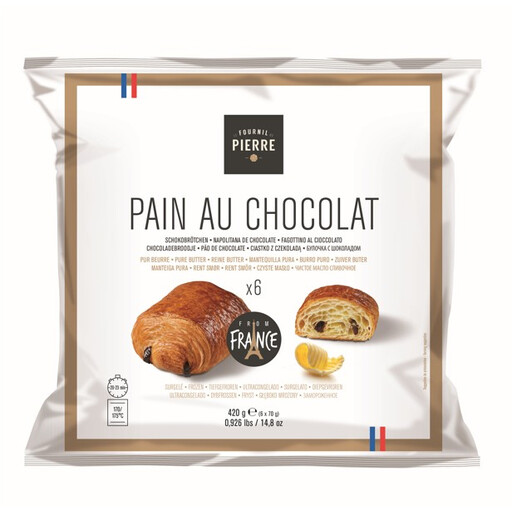 Image unavailable
Fournil de Pierre, ready-to-bake pain au chocolat, 6 pieces, 420 g
This frozen pack of six pastries is a good choice for serving warm after raclette if you have an oven and allow time for preparation.
Before planning when to serve them, check the pack for the baking temperature and time, storage instructions and allergen information.
View on Joybuy
Frequently asked questions
Does the ‘soda tax’ apply to pain au chocolat?
No. The levy described by Légifrance applies to drinks and liquid preparations for drinks, not solid viennoiseries. To compare pain au chocolat, check the sugar content in the nutritional information instead.
Does the packaging have to display Nutri-Score?
No. The French Ministry for the Economy says that Nutri-Score is voluntary. The DGCCRF states that a nutrition declaration is compulsory for prepacked foods, so you can compare the figures per 100 g even if there’s no logo.
Which allergens should you check before serving your guests?
Read the ingredients list and any warnings about traces on the pack you choose. The Carrefour and Auchan products featured here list ingredients including wheat, milk or butter, eggs and soya, and warn of possible traces of nuts. The DGCCRF says that allergenic ingredients must be highlighted on the labels of prepacked foods.
When should you prepare frozen pain au chocolat after raclette?
Follow the instructions for the product you buy and plan oven use accordingly. For its pack of six pain au chocolat, Auchan recommends defrosting for 15 minutes at room temperature, then baking for 15 to 20 minutes at 180 °C. Don’t use these timings for another product without checking its packaging.


