For Music Day, choose frozen, ready-to-bake pain au chocolat if you have an oven, freezer and time to prepare them. If you need to serve them without baking at home, opt for pastries baked in store. To compare products, look at the number and weight of the pastries, the recipe, allergens and storage instructions rather than relying on the word ‘premium’ alone.
Who are these formats for?
Organisers with an oven and freezer
If you’re preparing several portions to serve after baking, check the number of pastries, their weight and the preparation instructions. You’ll also need to keep frozen products at the stated temperature until you’re ready to use them.
Shoppers looking for pastries ready to serve
If you won’t have access to an oven on the day, pastries baked in store mean you won’t need to bake them at home. However, check that your chosen shop has an in-store bakery and stocks the product you want.
Shoppers who pay attention to recipes and allergens
When putting together a sharing platter, details such as ‘pure butter’, the proportion of chocolate and the ingredients list are more informative than a ‘premium’ label. Check the allergen information for each product you actually buy.
What should you look for when choosing a platter?
First, work out whether you’ll be able to bake the pastries before serving. Then compare recipes and formats that suit your plans.
| Criteria |
What to check |
Who it matters to |
| Recipe |
The type of fat listed, the proportion of chocolate and the weight of each pastry, comparing like-for-like formats. |
If I’m putting together a platter based on a particular recipe, I want to know what each pastry contains rather than rely on the word ‘premium’; around 36% of consumers put the recipe at the top of their list of criteria. |
| Serving and storage |
Whether it’s ready to bake, the preparation instructions and the storage requirements. |
If I might not have enough time or access to an oven during the celebration, I need to choose a format that suits how I plan to serve it; serving method is the top priority for around 29% of consumers. |
| Ingredients and nutrition information |
Allergens and ‘may contain’ warnings for the product you buy; values per 100 g and the Nutri-Score, if shown. |
For a sharing platter, I want to be able to tell my guests about the ingredients and allergens; around 21% of consumers prioritise this information. |
| Quantity |
The number of pastries, the pack’s net weight and the weight of each portion. |
If several people are helping themselves, I need enough pastries in a format that’s easy to share; quantity comes ahead of other criteria for around 14% of consumers. |
Things to keep in mind
-
Relying on the word ‘premium’ alone
This label doesn’t tell you what type of fat is used, how much chocolate the pastry contains or how much it weighs. Even products described as made with pure butter can have different ingredients and come in different sizes.
Compare the ingredients and stated proportions of the exact products, then choose a format that suits the number of people you’re catering for.
-
Confusing ready to bake with ready to serve
With a frozen product, you’ll need to plan for storage and preparation. Defrosting and baking instructions vary from product to product.
Read the pack instructions before deciding when to serve, and make sure you’ll have access to an oven and freezer.
-
Ruling out a product because it has no Nutri-Score
According to Santé publique France, Nutri-Score is a voluntary label that supplements nutrition information. Its absence is therefore not enough to judge a pastry or determine whether it meets requirements. The levy on sugary drinks outlined by the Ministry of the Economy is not a relevant buying criterion for pain au chocolat either.
To compare similar products, check the available nutrition information, particularly sugars per 100 g, and use the Nutri-Score if it’s shown.
-
Losing track of allergen information when serving
Product information for some Carrefour, Auchan and Lidl items lists wheat, milk, eggs or soya, among other allergens. ‘May contain’ warnings vary by product. If your platter includes several products, make sure you can tell them apart.
Keep the packaging or take a clear photo of the labels, and check each product if a guest needs to avoid an allergen.
Brands to consider by format
Bridor
A 70 g ready-to-bake option to consider if you can plan ahead for baking.
- Bridor recommends storing this product in the freezer at −18 °C before use.
- This format requires a freezer and an oven; check how to buy it for your event.
Carrefour
Carrefour Classic’ frozen pain au chocolat gives you a six-piece pack to compare by recipe and format.
- Carrefour states that this product contains 21% butter and 11% chocolate.
- Its product information lists wheat, milk, eggs and soya, and says it may contain traces of nuts; check the packaging of the product you buy.
EPI D’OR / Marque Repère E.Leclerc
A frozen, pure-butter pack of six weighing 450 g, suitable for serving several portions.
- E.Leclerc’s product information states that this option contains 21% butter and 11% chocolate, and has a Nutri-Score of E.
- E.Leclerc recommends checking availability with your local store.
Auchan
A frozen, pure-butter pack of six weighing 450 g, which you can bake as part of your party preparations.
- Auchan states that this product contains 16% butter and 11% chocolate, and should be baked for 15 to 20 minutes at 180 °C.
- Follow the defrosting instructions and store at −18 °C. Auchan says not to refreeze the product once defrosted.
Lidl
A pastry baked in store to consider if you want to avoid baking at home.
- Lidl states that the pain au chocolat featured on its product page contains 24% butter and 11% dark chocolate.
- This option is available at supermarkets with an in-store bakery that stock the product.
ALDI
An individual 60 g pastry to consider if you’re buying items ready to serve.
- The individual format makes it easy to count how many pastries you’ll need for the platter.
- ALDI’s offer is limited to participating stores with baking facilities; check the recipe and allergens for the pastry on offer.
A ready-to-bake option on Joybuy
If you’re preparing several pain au chocolat before serving, this six-pack is a good choice for a ready-to-bake format. Check the preparation instructions before deciding when you’ll serve the platter.
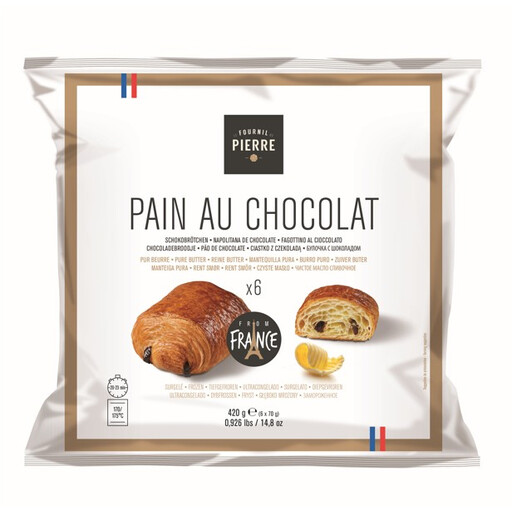 Image unavailable
Fournil de Pierre, ready-to-bake pain au chocolat x6, 420 g
This six-pack is handy for serving several portions if you can plan ahead for baking. Check the pack for preparation instructions, and review the allergen information for anyone who needs it.
View on Joybuy
Frequently asked questions
Does the sugar tax apply to pain au chocolat in France?
The levy described by the Ministry of the Economy applies to sugary drinks, not pain au chocolat. You can compare the sugar content shown in the pastries’ nutrition information, but this isn’t related to that levy.
Is Nutri-Score compulsory on pain au chocolat?
No. Santé publique France describes Nutri-Score as voluntary information that supplements the nutrition declaration required under the EU regulation on consumer information. If it appears on the packaging, it can help you compare similar products; its absence alone doesn’t mean the product is non-compliant.
Which allergens should you check for a sharing platter?
Check the labels on the products you plan to serve. The Carrefour and Auchan pain au chocolat product pages mentioned here list wheat, milk, eggs and soya, among other allergens, and warn of possible traces of nuts. Information may vary from product to product.
How should you bake frozen pain au chocolat?
Follow the instructions for the product you’ve bought and allow enough time before serving. For its six-pack, Auchan recommends defrosting for 15 minutes, then baking for 15 to 20 minutes at 180 °C. The product information says to store it at −18 °C and not to refreeze it after defrosting; don’t apply these instructions to a different pack.


