
Livraison le jour même ou le lendemain

Qualité garantie

Débloquez vos offres de bienvenue: Livraison GRATUITE | Jusqu'à -80 % | 30 jours d'essai gratuits à JoyPlus
Téléchargez l'application
Whether you're preparing for a move, shipping a valuable package, or managing your e-commerce store's shipments, the choice of packaging tape might seem like a minor detail. But that's a mistake: low-quality adhesive is the source of many headaches. Boxes that pop open mid-transit, wasted time, frayed nerves... To prevent your parcels from arriving in poor condition, it's crucial to know how to avoid the common pitfalls and understand the criteria that truly make a difference.
As the Head of Product Recommendations at Joybuy, my mission is to help you see things more clearly. Let's cut through the marketing jargon and focus on the facts to properly secure your shipments.
Before you make a decision, beware of these common frustrations that can turn a simple packing session into a real headache:
To make the right choice, three technical parameters need to be examined. They determine the tape's strength, durability, and suitability for your specific use.
The tape's material is the first indicator of its performance.
The performance of a parcel tape depends primarily on its adhesive. There are three main types:
The standard width for sealing a box is 48?mm or 50?mm. A narrower width should be reserved for lighter-duty applications. The length, often 66?m or 100?m, affects how long your roll will last. For moving, opting for a bulk pack of tape with a long roll length is often a smart move.
To guide you, here are recommended options that cater to specific user profiles, all while avoiding the pitfalls we've discussed.
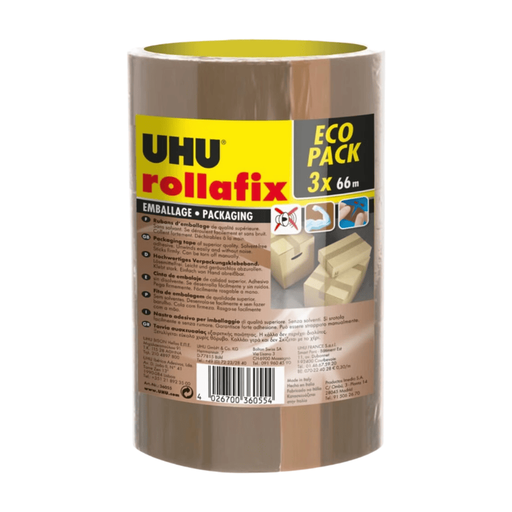
Why we chose it: This three-roll pack is perfect for a move or for always having some on hand. Its solvent-free formula ensures good adhesion on standard cardboard boxes, and it unrolls quietly.
Its high-adhesion, solvent-free formula sticks effectively to clean, dry cardboard. The fact that it's hand-tearable puts an end to the frustration of tape splitting during application.
Economical pack of 3 x 66m rolls. Easy and quiet unrolling. Hand-tearable, no scissors needed.
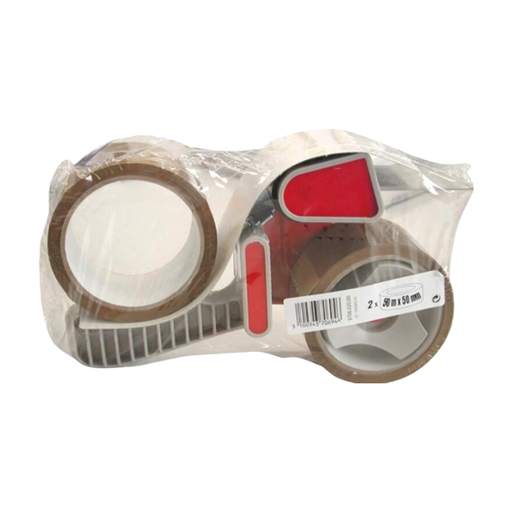
Why we chose it: For professionals, every second counts. This kit includes a dispenser that allows for fast, clean, one-handed application. A real time-saver for preparing packages.
The dispenser ensures constant tension and a clean cut, eliminating the risk of the film splitting. The PP tape provides reliable adhesion for standard logistics needs.
Ready-to-use kit with 2 rolls and 1 dispenser. Fast and professional application. Ideal for high-volume use.
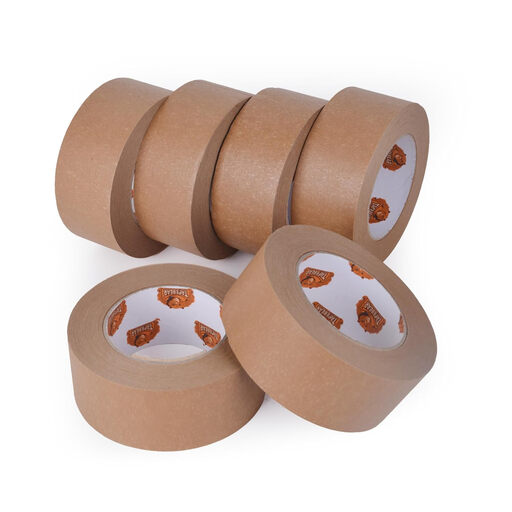
Why we chose it: For those looking to reduce their plastic footprint, this kraft paper tape is an excellent solution. It is biodegradable and recyclable, offering a sustainable alternative without compromising on strength.
It counters the "greenwashing" trap by being made from 100% kraft paper, with no plastic components. Its adhesive is also designed to be compatible with recycling streams.
100% paper material, biodegradable and recyclable. Writable surface for easy labelling. High tensile strength.
We've compiled a complete list of products that meet our demanding selection criteria and current standards.
PP (polypropylene) tape is the most common and is suitable for most uses. It is lightweight and unrolls more smoothly and quietly. PVC, on the other hand, is thicker, more elastic, and more resistant to punctures. It is therefore better suited for very heavy boxes or difficult transport conditions. Its main drawback: it is generally more expensive.
To preserve their adhesive power, store your rolls in a dry place, away from direct sunlight and extreme temperatures. Ideally, keep them in their original packaging at an ambient temperature between 15°C and 25°C (59°F and 77°F).
Not necessarily. For a kraft paper tape to be fully recyclable with the cardboard, its adhesive must also be compatible with the recycling process (often starch-based or natural rubber). It also must not be coated with a thin film of plastic (polyethylene). Be sure to check the product's technical data sheet to confirm it is 100% recyclable.