
Livraison le jour même ou le lendemain

Qualité garantie

Débloquez vos offres de bienvenue: Livraison GRATUITE | Jusqu'à -80 % | 30 jours d'essai gratuits à JoyPlus
Téléchargez l'application
Buying a pack of Monster Energy drinks lets you stock up at home, share a few cans with friends, or bring down the cost per can compared to buying individually. But with different ranges, formats and recipes to choose from, the decision can quickly become trickier than it looks. A fruity 50cl can, a sugar-free version or a tea-based drink all serve different purposes.
Before ordering a Monster Energy pack, check three things: the caffeine content, the amount of sugar and the actual volume included. These details are far more useful than the can design or generic energy claims.
A Monster sugar-free recipe can still contain a high amount of caffeine. Some Ultra varieties, for example, contain around 30 mg of caffeine per 100 ml, which is nearly 150 mg for a 50cl can. Removing the sugar does not mean the drink is free of caffeine.
If you are sensitive to caffeine, always check the label and take into account all sources consumed during the day: coffee, tea, cola drinks or supplements.
Names like Monster Juiced, Monster Ultra or Monster Rehab give you a general idea, but they are no substitute for reading the label. A Juiced recipe usually contains fruit juice and sugar, while an Ultra focuses on a sugar-free formula. Monster Energy recipes can also vary depending on the country of manufacture and the distribution market.
A pack of 12 Monster Energy cans at 50cl each gives you 6 litres of drink. In comparison, a pack of four 33cl cans contains just 1.32 litres. The listed price alone is not enough to compare two offers: calculate the total volume, the number of cans and the price per litre.
Also remember to check the best-before date, the condition of the packaging on delivery and the storage requirements. Cans should be kept in a cool, dry place away from direct light.
Energy drinks are subject to specific labelling when they have a high caffeine content. On product pages, typical values are around 30 to 32 mg/100 ml, although some listings state the amount per can directly.
A Monster Energy 50cl can with 32 mg/100 ml therefore contains around 160 mg of caffeine. Avoid drinking several cans in quick succession and always follow the warnings on the packaging. These drinks are not recommended for children, pregnant or breastfeeding women, or people sensitive to caffeine. Mixing them with alcohol is also not advised.
Compare the values per 100 ml, then scale them up to the total volume of the can. A drink with 10 g of sugar per 100 ml contains around 50 g in a 50cl format. On the other hand, the Ultra range and some sugar-free varieties may have only a few kilocalories per can, while using sweeteners.
Check the commercial name on both the product page and the can. A product may be labelled as "Zero Sugar" while the catalogue description lists a different composition. If there is any discrepancy, the labelling on the product you receive is what counts.
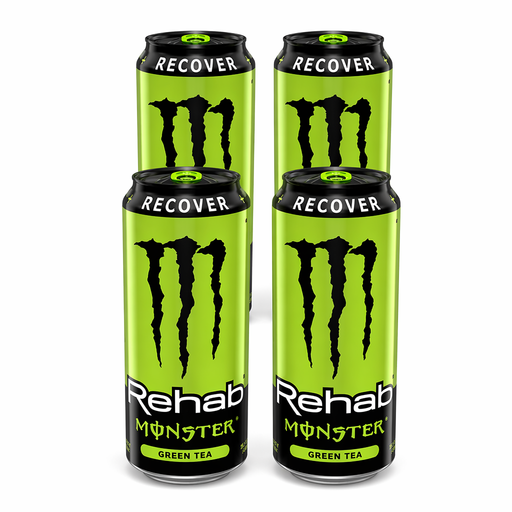
Why this choice suits this profile: Its pack of 4 x 33cl cans lets you try a tea-based recipe without committing to 12 cans straight away. The drink is still and contains 33 kcal per 100 ml according to the information provided.
The smaller pack size reduces the risk of overstocking and lets you check the taste, sugar and caffeine levels before moving to a larger purchase.
4 x 330ml format, green tea and black tea recipe, still drink.
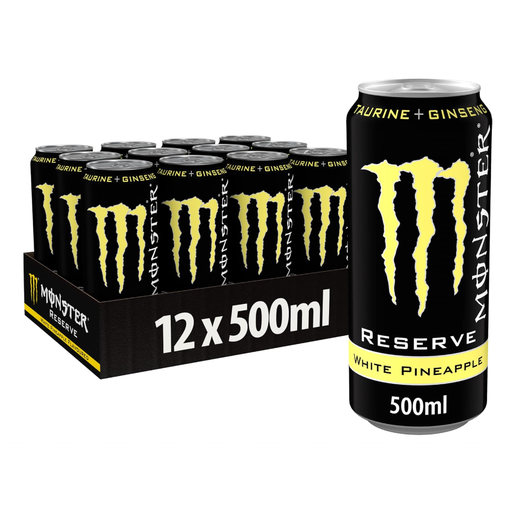
Why this choice suits this profile: Its pineapple profile and 12 x 50cl pack are aimed at consumers who want a fruity flavour that stands out from the crowd, along with a generous supply.
The product page clearly states 2 kcal and 0 g of sugar per 100 ml, as well as 150 mg of caffeine per can – precise enough data to compare the product properly.
Pineapple flavour, sweeteners listed, 6-litre pack total.
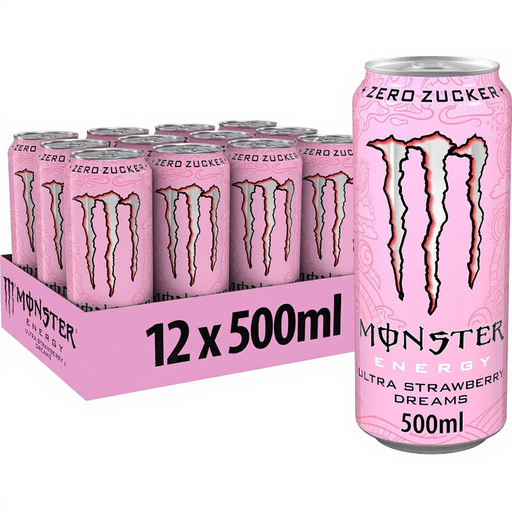
Why this choice suits this profile: The pack of 12 x 50cl cans is ideal for regular stocking up, whether at home, at work or for planned gaming sessions.
The product page specifies 0 g of sugar and around 30 mg of caffeine per 100 ml. This helps avoid confusing a sugar-free recipe with a drink that has no stimulant.
Strawberry flavour, 12 x 500ml cans, sugar-free recipe according to the product page.
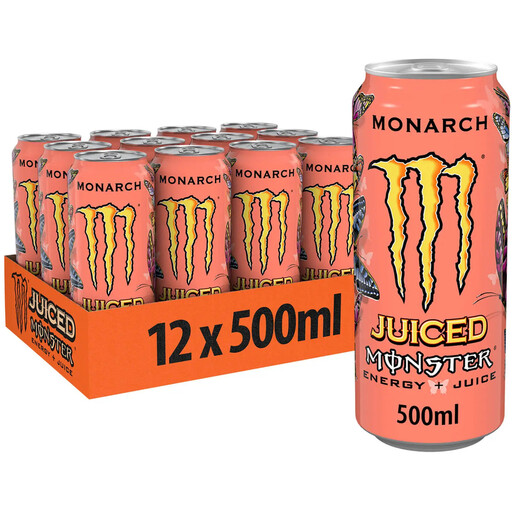
Why this choice suits this profile: This Monster Juiced variety combines peach and nectarine with 5% juice from concentrate. It is aimed at those who prefer fruity flavours over lemon or caffeine-heavy profiles.
The product page shows 10 g of sugar and 44 kcal per 100 ml. The nutritional profile is therefore known before purchase, without confusing the presence of fruit with a light recipe.
Pack of 12 x 500ml, 5% juice from concentrate, peach and nectarine flavours.
We have listed the products that fully meet these strict selection criteria and European safety regulations, in a complete, real-time updated list.
The best-before date is usually printed on the bottom of the can or on the packaging. Before opening, store the drinks in a cool, dry place away from sunlight. Once opened, a can should be kept in the fridge and consumed quickly.
The Monster Ultra range and some Zero Sugar varieties are made without sugar, according to their product pages. However, always check the "of which sugars" line, the presence of sweeteners and the caffeine content. A sugar-free recipe is not necessarily less stimulating.
The price per can can be better than buying individually, but compare the price per litre, the volume and the best-before date. A pack of 12 x 50cl is mainly suitable if you already know the flavour and storing 6 litres is not an issue for you.