How do the different appliances compare?
First decide whether you need an oven cavity for baking and roasting, several zones for saucepans, or an appliance for occasional extra use. Then check the available space and power supply before comparing features.
Built-in oven
Consider this if: you have a compatible housing unit and regularly cook dishes or several batches in the oven.
Bear in mind: the niche dimensions and power supply must meet the requirements in the instructions for the model you choose.
Freestanding oven
Consider this if: your kitchen doesn’t have a built-in niche and a freestanding oven would better suit its layout.
Bear in mind: even without a built-in niche, you’ll still need to check the position, power supply and requirements specific to the appliance.
Electric hob
Consider this if: cooking in saucepans and frying pans is your priority, with an existing oven or one chosen separately.
Bear in mind: with a built-in hob, you’ll need to check the worktop cut-out and circuit. Induction also requires compatible cookware.
Compact appliance
Consider this if: you need an extra appliance or want to meet specific cooking needs when space is limited.
Bear in mind: a portable hob has fewer zones than a multi-zone model, while a combi oven may not offer the capacity of a full-size oven.
| Criteria |
What to check |
What matters to consumers |
| Installation |
Compare the available dimensions with the diagram for the exact model, and have its power supply checked. For a gas appliance, also check the applicable installation and ventilation requirements. |
When the niche, worktop or circuit limits my choice, I want to rule out incompatible appliances before comparing their features. Around 29% of consumers put this compatibility at the top of their list. |
| Cooking capacity |
For an oven, check its usable capacity in litres and the number of levels you can use for the dishes you usually cook. |
If I regularly prepare several dishes or batches, I need a suitable oven cavity rather than a long list of programmes. This capacity is the top priority for around 29% of consumers. |
| Energy use |
Compare kWh per cycle for ovens with similar capacities and the same cooking mode. For a hob, look at the model’s specifications and how you plan to use it. |
When cooking cycles are repeated, I’d rather compare documented energy use than assume a technology will save energy based on its name. Around 24% of consumers prioritise this criterion. |
| Space and features |
Decide whether the appliance will replace your main cooking equipment or provide extra capacity, then compare its size and capacity. |
In a small kitchen, I may prefer an appliance that covers my essential needs without taking up the space required by a larger set-up. For around 18% of consumers, saving space and versatility are the main priorities. |
When comparing two ovens, kWh per cycle figures are most useful when they relate to the same cooking mode and similar capacities. The annual benchmarks published by ADEME are based on average usage; they don’t predict how much energy a particular household will use. The same caution applies when choosing a compact appliance: in the oven tests reviewed by INC and reported by ADEME, the combi models showed no clear advantage over the fan ovens tested. Results varied depending on the dishes and models.
Brands and models to consider
These examples illustrate different oven and hob configurations. Their specifications don’t apply to every model from the same brand.
Bosch
Worth considering if you’re looking for a built-in oven and want to check its features against the dimensions of your niche.
- Bosch lists dimensions of 595 × 594 × 548 mm for the HQG572BB3F, along with fan cooking on three levels, steam addition and pyrolytic cleaning with hydrolysis assistance.
- These features and dimensions apply to the HQG572BB3F. Check the instructions and built-in dimensions before choosing this model.
Electrolux
Worth considering if you want to compare a large-capacity built-in oven or an induction hob with your existing installation.
- Electrolux lists a 72 L capacity and built-in dimensions of 590 × 560 × 550 mm for the EOD3C04K oven.
- The EIS62356IZ hob has a listed maximum power of 7 350 W, so it’s essential to check your home’s power supply. The specifications of these two models don’t represent the entire range.
Whirlpool
Worth considering if you’re comparing a multi-function built-in oven with a combi model, based on the dishes you actually cook.
- Whirlpool lists a 73 L capacity and cooking on three levels for the WBI4IS8PM1BAF. The WCT9A9PHTSBF combines a microwave, fan cooking and steam in a cavity with a listed capacity of 52 L.
- These features apply to the models mentioned. Tests reviewed by INC and reported by ADEME don’t show a general energy-efficiency advantage for combi ovens over the fan ovens tested.
Hobs and a supplementary cooking solution on Joybuy
The models below are for cooking in saucepans or frying pans: four built-in induction hobs and a portable single-zone hob for occasional extra use. If you regularly cook dishes in the oven, compare ovens separately based on available space, capacity and per-cycle figures.
 Image unavailable
TOPWISH, 60 cm built-in induction hob, four zones
Worth considering if you want several zones for cooking in saucepans or frying pans. The product name lists four zones, a Boost function, a timer and a child lock. Check the worktop cut-out and have the power supply checked before installation.
As with any induction hob you’re considering, check that your cookware is compatible and that its diameter suits the zones.
View on Joybuy
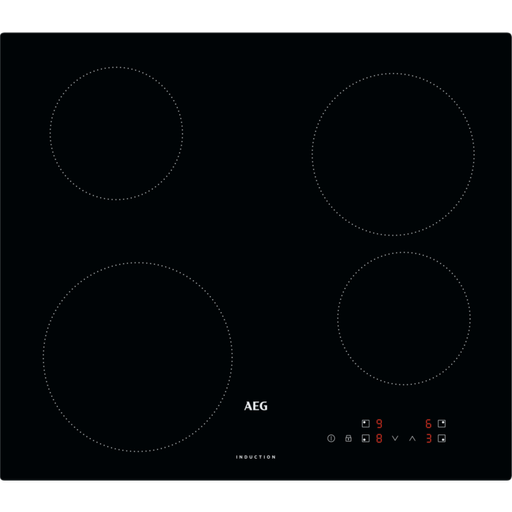 Image unavailable
AEG IBS64200CB, 59 cm induction hob
Worth considering as a replacement for an integrated hob, after checking the unit and connection. The product title specifies semi-flush installation and a two-phase Perilex connection, so don’t assume these requirements match your set-up.
Check the model’s instructions for installation dimensions, ventilation and any restrictions on appliances placed beneath the hob.
View on Joybuy
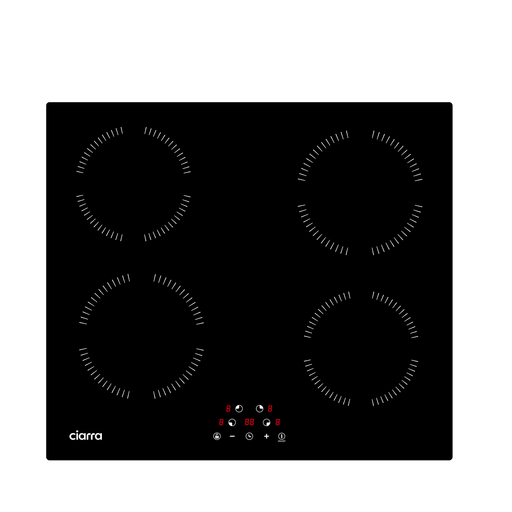 Image unavailable
CIARRA CABBIH4-A, four-zone induction hob
Worth considering if you need to use several saucepans at the same time. The model name specifies four zones and nine power levels. Before choosing this built-in hob, check that the worktop cut-out, circuit and your cookware are all suitable.
View on Joybuy
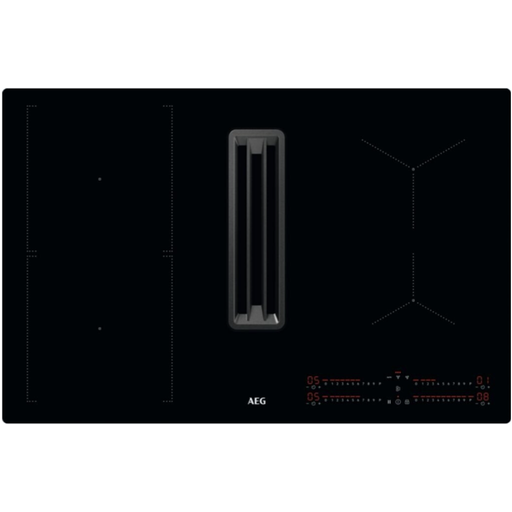 Image unavailable
AEG CCE84543CB, 80 cm induction hob with extractor
Worth considering if your kitchen project includes a hob with an integrated extractor, rather than simply replacing the cooking surface. The model name specifies a width of 80 cm. Check the instructions for the cut-out, the space needed for the extractor, and the requirements for ducted extraction or filtration.
Before buying, have the electrical connection requirements for this model checked against your home’s set-up.
View on Joybuy
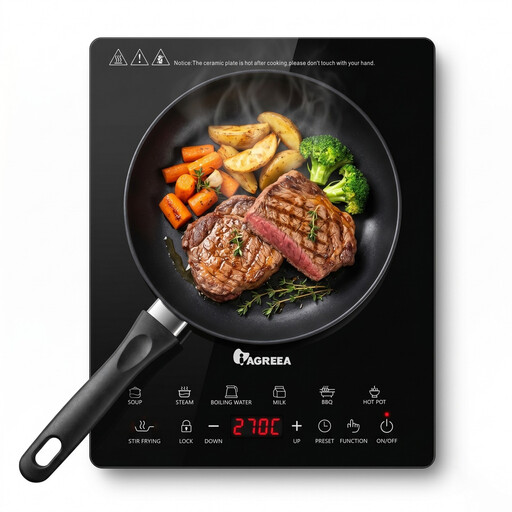 Image unavailable
IAGREEA DF200-14V10, 2 000 W portable induction hob
Worth considering if you need an extra cooking zone, but not as a substitute for the simultaneous cooking options of a multi-zone hob. The product name lists eight power levels, a three-hour timer and compatibility with cookware measuring 12 to 26 cm.
Before using it in your chosen spot, check the available worktop space and power supply requirements.
View on Joybuy
Frequently asked questions
What should I check before replacing a built-in electric hob?
Check the worktop cut-out, the instructions for the new hob and whether its power supply is compatible with your installation. Promotelec notes that specialist kitchen appliances, including ovens and hobs, need a dedicated circuit. Have the actual installation checked by a qualified person rather than assuming it’s compatible because your old hob worked.
Will my saucepans work on an induction hob?
Not necessarily: the base must be suitable for induction, and its diameter must be right for the zone you want to use. Electrolux recommends checking that a magnet sticks to the base of the pan. Then check the instructions for the hob you’ve chosen to see which diameters it accepts.
How do I compare the energy use of two ovens?
Compare ovens with similar capacities and intended uses, then check their kWh per cycle figures for the same cooking mode. For the ovens covered, the European energy label shows the capacity and energy use in conventional and fan-assisted modes. ADEME’s annual benchmarks, meanwhile, are based on usage assumptions that may differ from your own.
Does a combi oven always use less energy than a fan oven?
No. Tests of four combi ovens and ten fan ovens reviewed by INC and reported by ADEME showed no clear advantage for the combi models tested. Consider the features you need, the capacity and the documented energy use of the models you’re considering, without assuming the results apply to every oven.


