
Same-day & Next-day Delivery

Quality Guaranteed

Unlock Your Welcome Offers: FREE Delivery | Up to 80% OFF | Free 30-day JoyPlus trial
Download the APP
Switching from plastic to glass for storing, cooking, and reheating your meals is an excellent move for both your health and the planet. The oven-safe glass food container emerges as the ultimate all-in-one solution. The problem? The market is flooded with products making tempting promises that often lead to bitter disappointment in practice.
To prevent your purchase from ending up forgotten in the back of a cupboard, let's break down the most common pitfalls.
To find a true gem, you need to look beyond the marketing and focus on a few essential technical features.
To find a reliable and durable container, three points must be scrutinised. They determine the safety, practicality, and longevity of your future purchase.
For oven use, the type of glass is undoubtedly the number one criterion. There are two main types of glass used for food containers:
An airtight glass dish with a lid only lives up to its promise if its closing mechanism is well-designed. Check the following points:
The perfect container adapts to your daily life. Whether you're a meal prep enthusiast or looking for a glass lunch box, modularity is a key advantage. Containers of different sizes that are stackable to save space in the fridge and cupboards will make your life easier. A good glass oven dish must be a true all-rounder: for cooking, storing leftovers, and safely transporting your meal.
To illustrate these criteria in practice, here are a few models that meet specific needs.

Why this model? Perfect for organising your meals for the week. This set of 10 containers (five 1040ml and five 370ml) offers all the flexibility you need for main dishes and sides alike.
The dish is made from true borosilicate glass, designed to withstand heat. Its clip-locking system is robust and durable, avoiding the classic pitfall of lids that warp.
A complete kit to get started with meal prep without any guesswork. The two sizes are highly practical, and the containers stack for optimised storage.
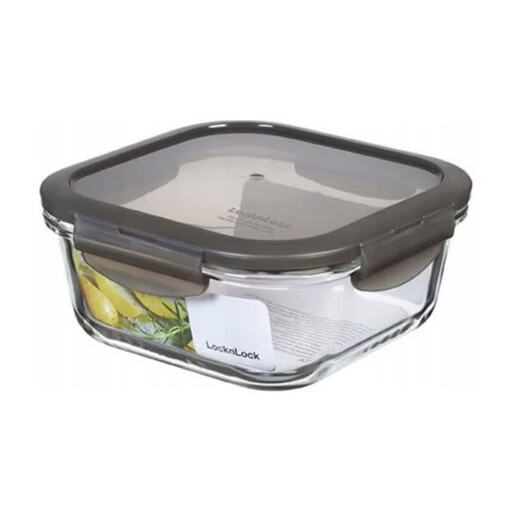
Why this model? Ideal for those looking for a single, do-it-all container: bake a small casserole, store leftovers, or pack a lunch. Its 750ml size is an excellent compromise.
The technical sheet is crystal clear: the borosilicate glass dish is oven-safe up to 400°C (without its lid). The 4-clip locking system and silicone seal guarantee a perfect, leak-proof seal.
Its high heat resistance makes it a prime choice for baking. The removable silicone seal greatly simplifies cleaning and prevents the development of bad odours.

Why this model? With its generous 2-litre capacity, this dish is designed for family meals, lasagnas, casseroles, or for storing large quantities of soup and stews.
The manufacturer highlights a thermal shock resistance of up to 200°C: precise and reassuring information that goes far beyond a simple "oven-safe" claim. The removable silicone seal ensures impeccable hygiene.
Its large size makes it an ideal serving dish in addition to its storage function. It is dishwasher, microwave (without lid), and freezer safe for maximum versatility.
We have selected a full range of products that meet our quality criteria and European safety standards.
No, this is strongly discouraged, even with borosilicate glass. Such an extreme thermal shock (going from -20°C to +200°C) can weaken or even shatter the glass. The best practice is to let the dish return to room temperature for about thirty minutes before putting it in the oven, or place it in the refrigerator for several hours before cooking.
If the silicone seal is removable, take it out after each use and wash it separately with hot, soapy water. To deodorise and disinfect it, you can also occasionally soak it in a mixture of water and white vinegar. Make sure the seal and its groove in the lid are completely dry before reassembling.
It all depends on the manufacturer: read the instructions carefully. Many lids are microwave-safe, but it is often recommended not to clip them shut (just rest them on top of the dish) to allow steam to escape. When in doubt, the safest option is to remove the lid and use a dedicated microwave cover. And never forget: a plastic lid should never go into a conventional oven.