What should you check before choosing?
First decide what matters most in your kitchen: oven capacity, the space the appliance takes up, or the ability to use two appliances at the same time. Then compare models based on the features and dimensions that will make a difference to your meals.
Fan oven
Worth considering: if large dishes and regular oven cooking are your priorities.
Bear in mind: an oven on its own won’t replace a microwave for the reheating and defrosting tasks you rely on one for.
Combination microwave and fan oven
Worth considering: if you want to combine these tasks in one appliance and its cavity is large enough for your dishes.
Bear in mind: a compact model may limit the size of your cookware and the number of dishes you can cook at once.
Separate oven and microwave
Worth considering: if you want to reheat a meal while another dish cooks in the oven.
Bear in mind: you’ll need space for both appliances and have two to maintain.
| Criteria | What to check | My needs |
|---|
| Reheating and defrosting |
Check which modes are available, whether the settings suit the food you prepare and whether there’s room for your containers. If tests are available for the model you’re considering, look at evenness and cooking time separately: UFC-Que Choisir measures these as part of its testing process. |
I often reheat a portion or defrost food, and I want to make sure my plates and containers will fit inside. |
| Capacity and cooking |
Compare the internal dimensions with your dishes, not just the capacity in litres. If you plan to cook using the oven, make sure it has a fan oven mode: a grill alone won’t do the same job. |
My large dishes need to fit in the cavity, so I don’t have to change dishes every time or cook in multiple batches. |
| Space and connection |
Check the model’s manual for the required housing dimensions, clearances and ventilation. Also check its power requirements and connection with a professional if the cabinetry or circuit needs altering. |
I want to know whether the appliance will fit my kitchen unit and work with the available power supply before I order it. |
| Energy use |
Where figures are available, compare energy use for the same type of dish and a similar cooking cycle. The annual figures published by ADEME for an electric oven and a microwave are based on different usage patterns, so they don’t on their own show which option uses less energy for every meal. |
I want to understand how much energy the programmes I’ll use consume, rather than choosing based solely on the technology’s name. |
A few examples from well-known brands
These examples show some formats you can compare; the features of one model don’t necessarily apply to the whole brand.
Bosch
Bosch offers the CMA485GB2, a 44 L microwave and hot-air combination oven, as well as the BFL550MB0, a separate 25 L built-in microwave.
- The official product pages give the dimensions of both appliances, making it easier to compare the space they need.
- Check the manual for the model you choose and make sure you have enough room in your kitchen unit; these two product pages don’t cover every Bosch appliance.
Samsung
The Samsung NQ5B6753CAK is listed by a French retailer as a built-in combination oven with a 50 L cavity.
- Its stated capacity gives you a point of comparison when checking the size of your dishes and other compact models.
- Before settling on this model, check its functions, internal dimensions and installation instructions.
Combination models to explore on Joybuy
These two models show what a combination appliance could offer for everyday meals. Compare the cavity size and confirm the cooking modes in the product details and manual. They’re no substitute for comparing a standard oven or two separate appliances.
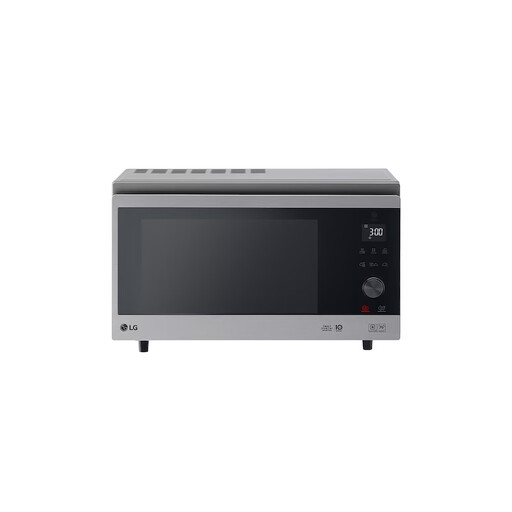 Image unavailable
LG MJ3965ACS, 39 L combination microwave, black
Worth considering if you want to bring several functions together in one appliance with a stated cavity capacity of 39 L. Compare its internal dimensions with your dishes and check the manual for the cooking modes you need and the required clearances.
View on Joybuy
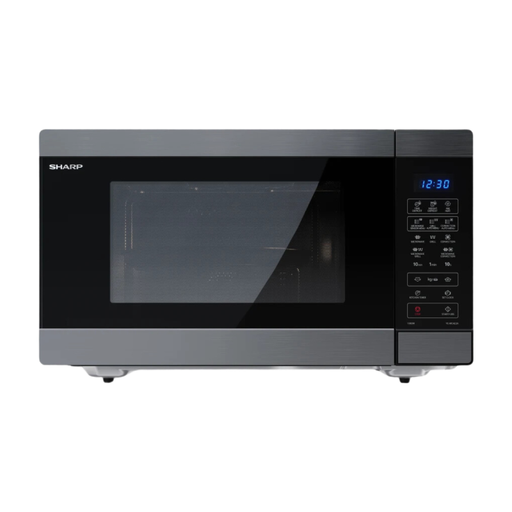 Image unavailable
SHARP YC-MC422AE-SB, 42 L combination microwave
Its stated cavity capacity of 42 L is worth comparing with the size of the dishes you usually use. Check exactly which three functions are referred to in the model name, then check the dimensions and clearances needed for its location.
View on Joybuy
Frequently asked questions
Can a combination microwave replace a standard oven?
Yes, for dishes that fit in its cavity and for the modes the model actually has, including a fan oven mode if you need one. However, it may not be suitable for larger dishes: the Institut national de la consommation and ADEME compared cooking, reheating and defrosting across four combination ovens and ten fan ovens. The technology’s name alone doesn’t tell you how each model will perform.
How do I choose between a compact cavity and a standard oven?
First measure your dishes and the space available, then compare them with the internal dimensions and housing requirements listed for each model. French catalogues include compact combination ovens of less than 50 L, while one Joybuy built-in oven model has a stated capacity of 71 L. These are formats to compare with your needs, not capacities shared by every appliance.
Can you install an oven or microwave in any kitchen unit?
No. The space must meet the requirements in the installation manual for your chosen model. Check the cut-out, clearances, ventilation and connection before ordering. If the kitchen unit needs modifying, ask a suitably qualified professional to confirm that the work is appropriate.
Should I check the electrical supply before choosing an oven?
Yes, especially if you’re creating or modifying an appliance space. Promotelec says an oven is one of the appliances to check against the requirements for a dedicated circuit. Ask a professional to check the existing circuit, power supply and connection requirements in the model’s manual.
Can I reheat food in its packaging in the microwave?
Only if the packaging is suitable for microwave use, and you follow its instructions on power and cooking time. Anses warns that using too high a power setting can increase the migration of substances from certain types of packaging. If microwave compatibility isn’t stated, use an appropriate container.


