People who prepare a variety of dishes
If you alternate between oven cooking, frying and reheating, start with the recipes you actually make regularly. One appliance may not cover all these tasks.


Start by choosing the appliance that suits the meals you usually make: a hob for frying pans and saucepans, an oven for dishes cooked in an enclosed space, and a microwave if reheating or defrosting is your main priority. A compact or combination appliance may cover several needs, provided its functions, capacity and installation suit you. Having more functions does not necessarily mean it uses less energy.
If you alternate between oven cooking, frying and reheating, start with the recipes you actually make regularly. One appliance may not cover all these tasks.
Space on your worktop or in an appliance housing matters just as much as the stated capacity. A combination model may reduce the number of appliances you need, but you should still check that it will fit.
ADEME guidance and the energy label can help inform your choice, each within its own scope. They do not allow a direct comparison between appliances used for different recipes or assessed using different methods.
Worth considering: if your menus regularly include gratins, baked goods or other oven-cooked dishes.
Bear in mind: you’ll need a suitable space and should check the installation requirements.
Worth considering: if you often reheat or defrost food. A combination model is worth looking at if you also need oven cooking modes.
Bear in mind: a microwave on its own won’t replace every type of oven cooking. The ADEME–National Consumer Institute test found no consistent advantage for combination ovens over convection ovens.
Worth considering: if most of your meals are cooked in a frying pan or saucepan, or simmered on the hob.
Check: the electrical installation and, for an induction hob, whether your cookware is compatible.
Worth considering: if its functions and capacity suit the dishes and portion sizes you prepare regularly.
Bear in mind: not all compact appliance categories have an energy label that allows a direct comparison with an oven.
| Criteria | What to check | What consumers are looking for |
|---|---|---|
| Everyday recipes | List the dishes you make regularly and check the model’s cooking modes. | If I make a variety of oven-cooked, fried and reheated dishes, I want to cover my regular recipes before adding occasional-use functions; around 36% of consumers prioritise this range of cooking options. |
| Space and installation | Measure the space and check the manual for fitting, clearance and connection requirements. | With limited space in my kitchen, I need to be able to install the appliance without compromising access or ventilation; around 29% of consumers put this compatibility ahead of other criteria. |
| Electricity use | Compare appliances in the same category, noting the unit and the measurement conditions. | I want to understand how cooking my meals affects my electricity use, without confusing power rating with annual consumption; around 21% of consumers put this comparison first. |
| Quick reheating | Check the reheating and defrosting functions, as well as the size of dishes the appliance can accommodate. | When time is short, I prioritise reheating or defrosting while keeping a solution for my other cooking needs; speed is the top priority for around 14% of consumers. |
A power rating in watts, annual consumption and an energy rating do not describe the same thing. ADEME guidance for cooking appliances is also based on different scenarios.
To compare two models, check their category, the unit shown and the measurement conditions. Don’t treat an annual benchmark as a promise of how much your appliance will use.
In the ADEME–National Consumer Institute test, the benefits of combination ovens varied depending on the dishes, models and brands, with no clear advantage over the convection ovens tested.
Compare the available modes, the size of dishes the oven can accommodate and the recipes you make most often before choosing it as your only oven.
A long list of programmes doesn’t tell you which dishes will fit inside or whether the available modes suit your recipes. An oven’s energy rating doesn’t apply to every type of compact appliance.
Check the usable dimensions, portion sizes, essential functions and cleaning instructions in the manual.
The appliance’s size alone won’t confirm whether it will fit in a housing, allow for ventilation or work with your existing connection.
Measure the cabinet, check the model’s manual and have the installation assessed if you’re unsure whether it’s suitable.
A range to consider if you’re looking for a built-in microwave combination oven and need to make sure it fits the available housing.
Worth considering if you’re looking for a built-in compact appliance that combines a microwave with oven cooking modes.
A range to consider if a freestanding multicooker is a better match for your meals than a built-in appliance.
Consider these freestanding compact appliances if their capacity and functions suit the meals you make regularly. They won’t necessarily replace a hob, oven or microwave for the uses described above.
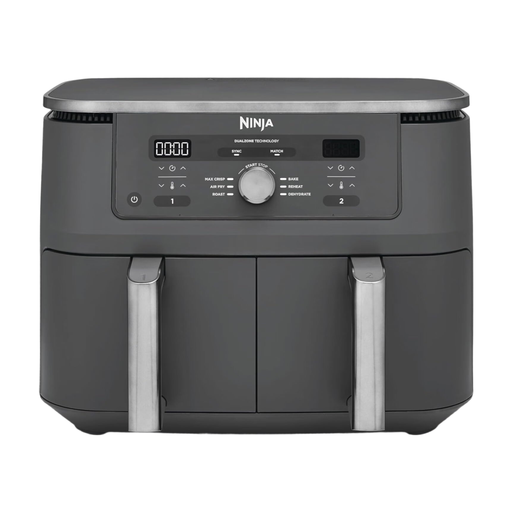 Image unavailable
Worth considering if you’d like to cook two foods in separate drawers. The model offers six functions and a total capacity of 9.5 L. Check that the drawers can accommodate the dishes you usually make and that you have a suitable surface for the appliance.
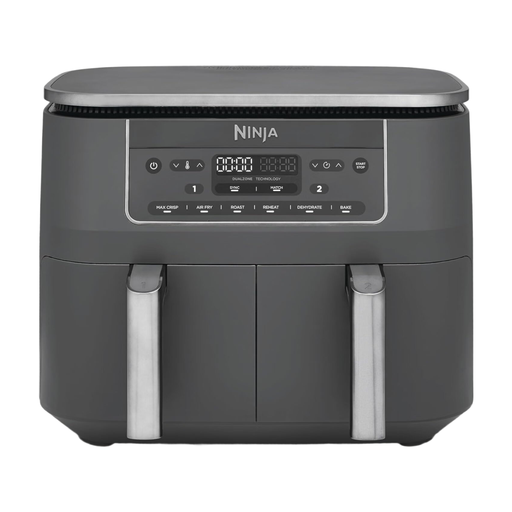 Image unavailable
Worth considering for cooking two dishes in separate compartments. The stated total capacity is 7.6 L, with six functions. Check you have enough space and that the drawers’ usable dimensions suit your portion sizes.
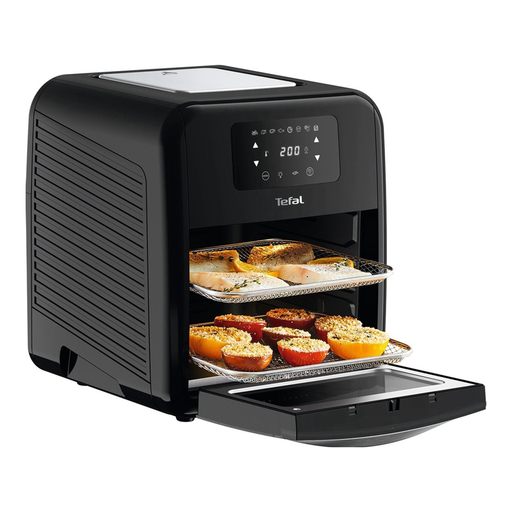 Image unavailable
Worth considering if you’re looking for a freestanding appliance for oven-style cooking or grilling. Its stated capacity is 11 L. Before buying, check the functions and the exact model reference for the variant, which is also listed as FW501815 in the product information.
 Image unavailable
Worth considering if two separate chambers suit the way you prepare meals. The stated total capacity is 9 L. Check the dimensions of the appliance and chambers, along with the functions your recipes require.
No. In France, energy labels apply to certain products, including ovens and domestic cooker hoods, according to the DGCCRF and the Ministry of the Economy. Compare labels within the relevant category, and don’t assume a multicooker or air fryer has the same rating as an oven.
No. The ADEME–National Consumer Institute test found no clear advantage for the combination ovens over the convection ovens studied. Results varied depending on the dishes, models and brands. Compare like-for-like dishes and usage conditions rather than judging energy use by the appliance’s name alone.
Check the housing dimensions, clearance and connection requirements in the model’s manual, as well as your existing installation. If you’re unsure it’s suitable, have the installation checked before choosing the appliance.
The existing ventilation and the appliance’s instructions are among the things to check before installation. France Rénov’ states that a kitchen can be an air extraction room in a ventilation system; this alone doesn’t determine which cooker hood or duct configuration is right for every home.