Households that prepare several dishes during the week
If you use the oven, saucepans and frying pans for the same meal, choose the oven capacity and number of cooking zones based on the dishes you prepare at the same time.


If you regularly prepare a variety of meals, a separate oven and hob let you choose the capacity and number of cooking zones to suit your habits, provided you have the space and suitable connections. A combination oven is better suited to situations where space is limited and microwave functions are useful, while a freestanding cooker brings the oven and hob together in one appliance. Tests by ADEME and the National Consumer Institute found no clear energy advantage for combination ovens over conventional ovens. Your choice should therefore depend on the dishes you prepare and the kitchen you’re fitting out.
If you use the oven, saucepans and frying pans for the same meal, choose the oven capacity and number of cooking zones based on the dishes you prepare at the same time.
A combination oven or cooker can bring several functions together, but you’ll need to check its dimensions, capacity and connection requirements against the space available. For example, Electrolux’s compact EVM6E46X requires a 450 × 560 × 550 mm recess.
Before choosing a built-in oven, hob or cooker, measure the existing space and have the planned power supply checked. Promotelec describes dedicated circuits for the cooking appliances concerned; the presence of a socket alone doesn’t confirm that your new model is compatible.
Consider this if: you cook in the oven while preparing several things on the hob, and want to choose the size of each appliance separately.
What to bear in mind: each appliance needs its own suitable space and connection.
Consider this if: space is limited and reheating or defrosting matters as much as cooking smaller dishes.
What to bear in mind: a compact cavity may not fit larger dishes. Tests by ADEME and the National Consumer Institute found no clear energy advantage over conventional ovens.
Consider this if: a single appliance combining an oven and hob suits your kitchen better than two built-in appliances.
What to bear in mind: the width and connection requirements depend on the configuration you choose, whether electric, gas or dual fuel.
| Consideration | What to check | Think about your needs |
|---|---|---|
| Cooking capacity | Compare the oven’s usable capacity, the dimensions of your dishes and the number of cooking zones. Also check that the zones suit your cookware. | I prepare several things at once, so I need enough room in the oven and on the hob—not just more functions. |
| Electrical installation | Identify the existing circuits and protective devices, then check the model’s instructions. For a hob on the single-phase installation described by Promotelec, the guidance is a 32 A cable outlet with 6 mm² conductors and a 32 A circuit breaker. | If I’m replacing an appliance, I want to know whether its connection is suitable for my kitchen before ordering. If in doubt, I’ll have the installation checked. |
| Energy consumption | Compare appliances and usage patterns like for like. For 409 annual electric hob cycles, ADEME gives reference figures of 200 kWh/year for ceramic glass and 115 kWh/year for induction. These figures aren’t guaranteed for any specific model. | Energy consumption matters to me, but I won’t use an annual figure for a different appliance or usage pattern to estimate the energy used to cook my meals. |
| Available space | Measure the recess or worktop cut-out and check the required clearances. Check the usable capacity of a compact model: Electrolux specifies a 42 L capacity and a 450 × 560 × 550 mm recess for the EVM6E46X. | In a small kitchen, I can combine functions, provided my usual dishes fit in the cavity and the appliance can be installed in the space available. |
The worktop cut-out and connection matter too. For a hob on the single-phase installation described by Promotelec, the dedicated circuit has a 32 A cable outlet, 6 mm² conductors and a 32 A circuit breaker.
Measure the existing cut-out and check the power supply against the model’s instructions. If in doubt, ask a qualified electrician to inspect the installation.
Microwave, grill and defrost functions don’t determine the size of the dishes it can accommodate. Electrolux specifies a 42 L cavity for its compact EVM6E46X model.
Measure the dishes and tins you use most often, then compare them with the model’s usable capacity and installation dimensions.
In their comparison of four combination ovens and ten conventional ovens, ADEME and the National Consumer Institute found no clear energy advantage for combination models. Results varied depending on the dishes and models tested.
Choose the functions that suit your recipes and compare energy data under like-for-like conditions. Don’t assume the type of appliance guarantees savings.
ADEME’s annual reference figures are based on different numbers of cycles for each category. A figure for a hob therefore doesn’t represent the same usage as one for an oven.
When comparing two models, look for data for the same appliance category and comparable usage conditions.
Bosch provides information on built-in ovens and hobs, making it easier to consider each appliance separately when fitting out a kitchen.
Electrolux’s compact EVM6E46X combination oven is an option to consider if microwave functions and the available built-in space influence your choice.
Whirlpool offers cookers that combine an oven and hob, as well as hobs in different widths, so you can compare the space each option requires.
These models cover the hob part of your decision. They can be paired with a separate oven if your kitchen has space for them. Compare their cooking technology, dimensions and connection requirements. This list alone doesn’t determine whether a separate oven and hob, a combination oven or a cooker is right for you.
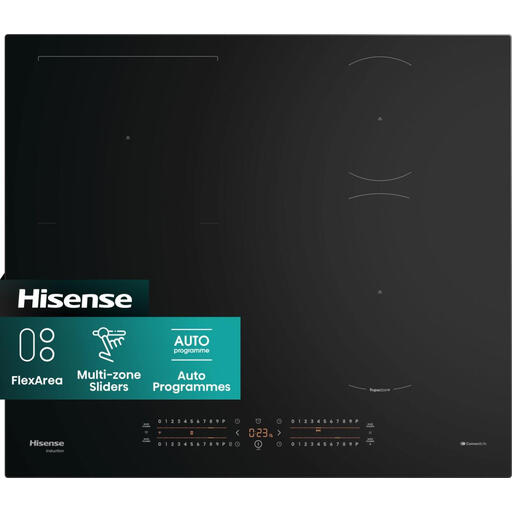 Image unavailable
Consider this built-in induction hob if you’re pairing a hob with a separate oven. Check the cut-out dimensions and connection requirements for this model against your kitchen.
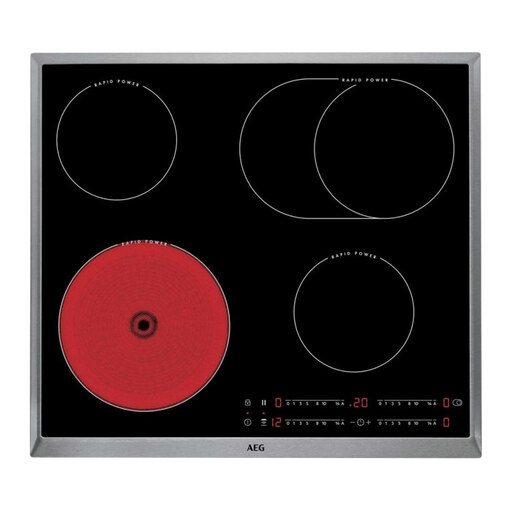 Image unavailable
A built-in ceramic glass hob to consider for a kitchen with a separate oven. Check its cut-out dimensions and connection instructions against your worktop and existing electrical installation.
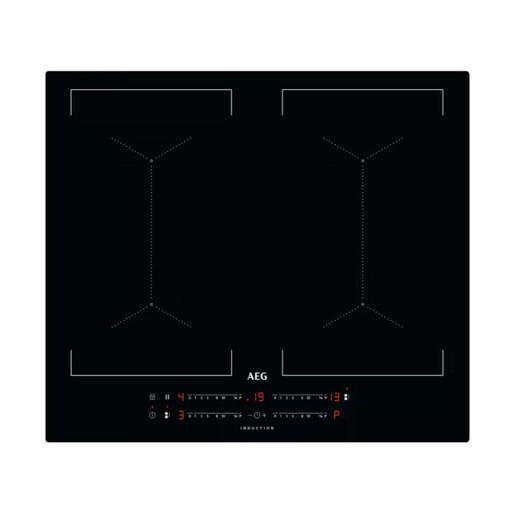 Image unavailable
Its four zones and Bridge function, as stated in the model name, are worth considering if you use several pans or a large piece of cookware. The dimensions listed for this model don’t clearly match one another. Before buying, ask for confirmation of the appliance and cut-out dimensions, as well as the connection requirements.
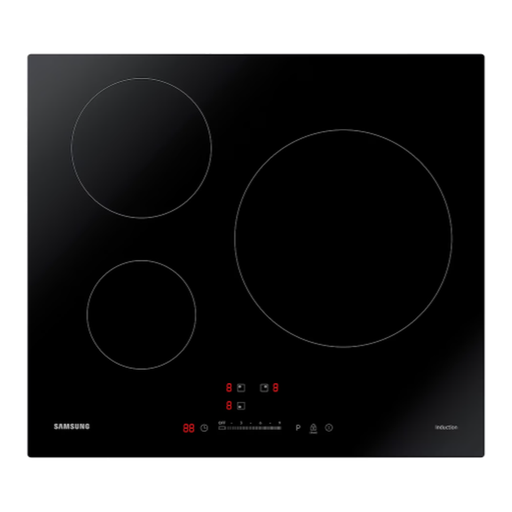 Image unavailable
The three zones listed let you compare this hob with the number of pans you use at once. Induction requires ferromagnetic cookware. The wiring information for this model specifies 4 mm² for 32 A, whereas Promotelec gives 6 mm² for a hob on the single-phase installation it describes. Before connecting it, ask a professional to check the applicable instructions and your installation.
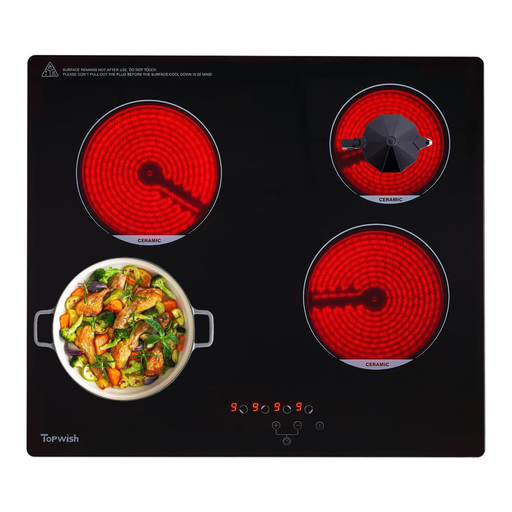 Image unavailable
Its four zones and touch controls make it a separate hob rather than an oven-and-hob appliance. The information for this model lists two different total power ratings, 6 000 W and 6 600 W. Ask for confirmation of the applicable rating and connection requirements before checking whether your installation is compatible.
Promotelec describes a dedicated circuit for hobs in the French installations concerned. For a hob on the single-phase installation it outlines, it specifies a 32 A cable outlet, 6 mm² conductors and a 32 A circuit breaker. Before buying, check the model’s instructions against your installation, especially if you’re replacing an existing hob.
Not necessarily: dimensions vary by model. Bosch specifies 595 × 594 × 548 mm for the HBA372BB4 oven, while Electrolux requires a 450 × 560 × 550 mm recess for the compact EVM6E46X combination oven. Measure the space and check the dimensions and clearances required in the installation instructions.
No. A comparison by ADEME and the National Consumer Institute of four combination ovens and ten conventional ovens found no clear energy advantage for combination models. Results varied depending on the dishes and models. Start by choosing the functions and capacity you need, then compare figures based on similar usage conditions.
No. The French Ministry for the Ecological Transition lists ovens among the cooking appliances covered, including ovens built into cookers. Check the information that applies to the model you’re considering, but don’t use it as the sole basis for directly comparing an oven, hob and microwave.