
Livraison le jour même ou le lendemain

Qualité garantie

Débloquez vos offres de bienvenue: Livraison GRATUITE | Jusqu'à -80 % | 30 jours d'essai gratuits à JoyPlus
Téléchargez l'application
Outdoor solar lighting lets you illuminate a path, patio or balcony without installing electrical cables. However, not every light is designed for the same purpose. Solar string lights intended for a festive evening are very different from spotlights installed beside a front door or bollard lights used to mark out a path.
Before ordering, it is best to avoid three common mistakes: relying solely on the number of LEDs, confusing splash resistance with the ability to be submerged, and underestimating the importance of exposure to sunlight. Here are the key points to check, along with a selection of models suited to different needs.
The number of LEDs mainly indicates how many light points there are. On its own, it does not tell you the total brightness — measured in lumens — or the width of the area illuminated. LED solar lighting made up of many small LEDs may be ideal for creating an atmosphere, but too dim to light a staircase or path properly.
For garden decoration, a gentle glow may be more than enough. To make a walkway safer, look instead at the stated luminous flux, beam direction and installation height.
IP ratings are useful, provided you know how to read them:
Terms such as “waterproof solar lighting”, “IP65 solar lights” and “IP66 solar lights” should therefore be considered alongside the manufacturer’s recommendations.
A battery life of 8 to 14 hours generally refers to favourable charging conditions. In autumn and winter, cloud cover, the panel’s orientation and shorter days can significantly reduce the length of time the lights stay on.
Avoid locations shaded by a wall, tree or roof overhang. The panel should receive several hours of direct sunlight without obstruction.
Technical specifications often state a charging time of 6 to 8 hours when there is sufficient sunlight. Compare this with the actual conditions in your garden or on your balcony. Lighting installed facing north or beneath a pergola will not perform in the same way as a panel positioned in a clear, unobstructed area.
Also check whether there is an “on/off” switch. With some string lights, you need to press the button before the first charge so that automatic dusk activation works correctly afterwards.
For outdoor solar string lights, measure the space actually available: a railing, tree, pergola or patio edge. A 12-metre model with 120 LEDs will create a different effect from an 11-metre string with 60 more widely spaced bulbs.
Solar spotlights and bollard lights should be installed without obstructing movement. A stake can easily be pushed into soil or loose gravel, but a hard surface will require a different type of fixing.
Flexible copper wire is easy to shape around a branch or railing. ABS is often used for housings and panels. Whatever the material, clean the photovoltaic surface regularly with a soft, dry or slightly damp cloth, following the instructions in the manual.
Rechargeable batteries should be used in accordance with the manufacturer’s recommendations, then taken to an appropriate recycling facility at the end of their service life.
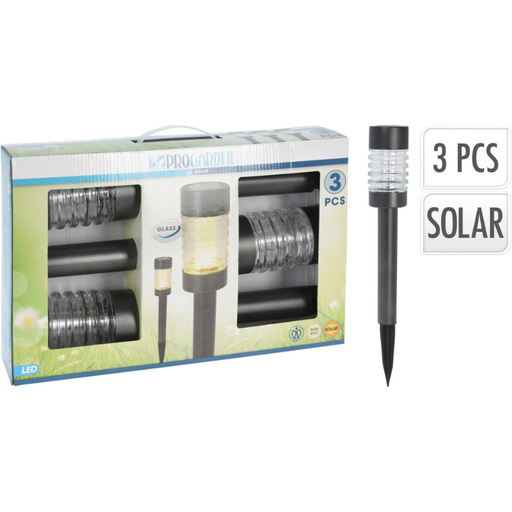
Why this suits this type of buyer: this set of three lights is ideal for a first installation around a small path, border or flower bed.
The product information states a total height of 540 mm and installation on stakes. This lets you plan the spacing and coverage area, rather than relying on the product’s appearance alone.
A set of three units, warm white LEDs rated at 5 lumens and an included rechargeable AA NiMH battery.
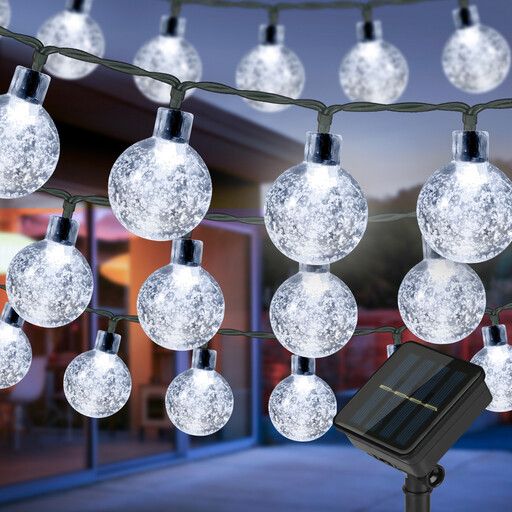
Why this suits this type of buyer: its cool white globes easily add style to a patio or balcony, and can also enhance an al fresco meal or occasional evening gathering.
The 16 feet corresponds to approximately 4.9 metres, so measure the space before buying. The product information also states that the panel must not be immersed, even though the string lights are designed for outdoor use.
30 LEDs, eight lighting modes and automatic activation after a stated 6 to 8 hours of solar charging.
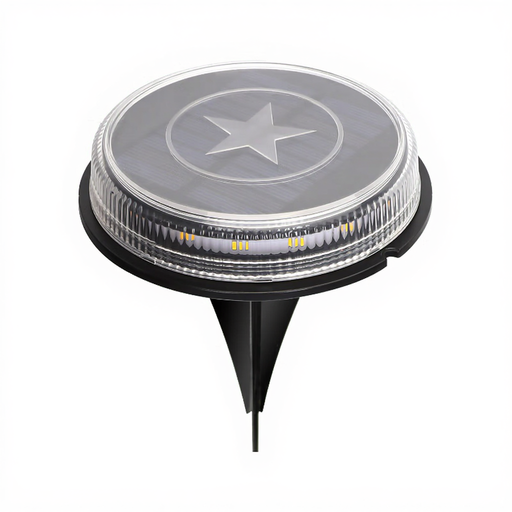
Why this suits this type of buyer: its compact design is easy to install in a courtyard, on a patio or in any outdoor area without wiring.
The IP66 rating is clearly stated, but the instructions recommend a stable surface and advise against deliberate impacts. Weather resistance and intensive use are therefore not the same thing.
A 0.6 W solar panel, a 500 mAh lithium battery, warm light rated at 3,200 K and 360° illumination.
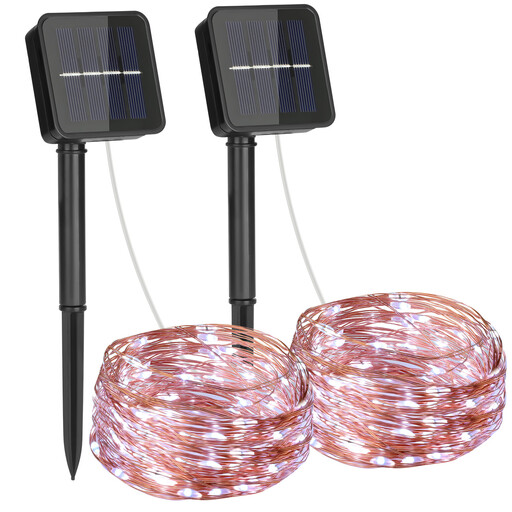
Why this suits this type of buyer: this set of two string lights is ideal for a pergola, garden, reception, wedding or Christmas decoration requiring generous coverage.
The product information states IP65 protection, while also specifying that the panel must not be immersed. Keep the housings away from puddles and make sure they receive direct sunlight.
Two 12-metre string lights, 120 multicoloured LEDs per string, eight modes and a stated memory function.
Explore a regularly updated selection of products that meet these criteria for outdoor lighting in France.
Yes, but battery life may decrease when the days become shorter or the sky remains overcast. Position the panel in a clear area, clean it regularly and avoid shaded locations. If you need lighting for a specific date, arrange a backup option if several sunless days are forecast.
Once installed, a solar light does not use electricity from the mains to recharge or operate, unlike a mains-powered model. However, you should allow for the possible replacement of the battery and the recycling of electronic components at the end of the product’s service life. The actual cost also depends on how long you keep the product and how much sunlight it receives.
It depends on the IP rating, the instructions in the manual and the condition of the cables and panel. An IP65 or IP66 model is designed for outdoor use in the conditions specified by the manufacturer, but neither rating permits immersion. Before each season, check the connections, remove any deposits from the panel and store the string lights if recommended in the instructions.