
Livraison le jour même ou le lendemain

Qualité garantie

Débloquez vos offres de bienvenue: Livraison GRATUITE | Jusqu'à -80 % | 30 jours d'essai gratuits à JoyPlus
Téléchargez l'application
An outdoor lantern can transform a patio, mark out a path or simply provide practical light during an evening outdoors. However, some purchases can quickly disappoint: underwhelming battery life, materials that are not very resistant to rain or lighting so dim that it becomes impossible to see where you are stepping.
Before choosing an outdoor solar lantern, a rechargeable lamp or outdoor LED lighting, you need to distinguish between ambient light and genuinely functional lighting. Here are the criteria to consider, the mistakes to avoid and a selection suited to different uses.
A decorative lantern fitted with a single low-power LED can create a warm atmosphere, but it may not be enough to light a path, staircase or dining table. For a patio that is genuinely pleasant to use, check the luminous flux, expressed in lumens.
As a guide, a small garden solar lamp with just a few lumens is mainly suitable for marking out paths or decoration. For reading, cooking while camping or lighting a table, it is better to look for a model offering several dozen or even several hundred lumens.
An outdoor solar lantern depends directly on how long it is exposed to sunlight. A shady position, a north-facing wall or several overcast days can reduce charging and shorten its operating time overnight.
The photovoltaic panel must receive enough natural light, ideally without being shaded. Also check the battery type, its capacity and the stated battery life. This information is much more useful than a vague promise of ‘automatic’ lighting.
The words ‘for outdoor use’ do not mean that the product can be left exposed to every type of weather. The IP rating provides a more concrete indication:
Even with an IP rating, a lantern must not be immersed unless the manufacturer explicitly permits it. Mains-powered models must also be installed in accordance with French electrical regulations, by a professional where required by law.
For everyday use, choose a lantern suited to your routine. A solar model providing several hours of light may be suitable for a garden table or border. For camping, a rechargeable USB-C camping lamp offers greater flexibility: it can be charged from a mains socket, power bank or any other compatible device.
Also check whether the battery can be replaced. Some models use a removable lithium-ion battery, while others have a built-in battery that cannot be changed. This difference can have a significant impact on the product’s lifespan.
A lantern designed to sit on a table must have a sufficiently stable base. For a pathway light, the height and fixing system are key considerations. Models with a handle are easy to move from a balcony to a patio or around the garden.
For hiking and camping, weight and bulk become the top priorities. A compact portable lamp weighing less than 250 g will be much more convenient to carry than a large, bulky decorative light.
Warm light, between 2,700 and 3,000 K, creates a soft, welcoming atmosphere that is ideal for meals or relaxing. For cooking, DIY or moving around in the dark, choose a more powerful model with several lighting modes instead.
For connected outdoor lighting, check compatibility with the required bridge or app. Some connected lights must be connected to the mains and used with a central hub sold separately.
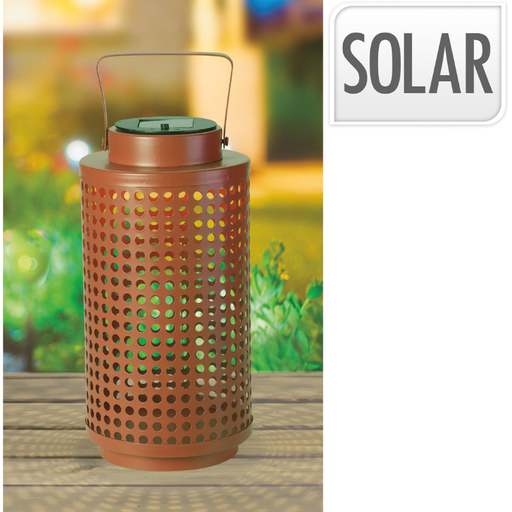
Why it suits this profile: This outdoor solar lantern can be placed in the garden, on the patio or beside a pathway in just a few seconds, with no cable or complicated installation.
The solar panel, automatic switch-on function and rechargeable battery are integrated. However, you will need to install the lantern in a sufficiently sunny location.
235 mm-high design, 145 × 145 mm base, warm white LED and stated battery life of up to 6 hours.
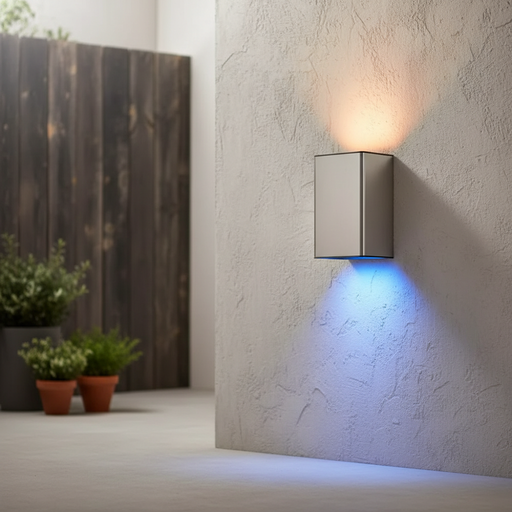
Why it suits this profile: This wall light is ideal for an entrance, exterior wall or patio where you want to enjoy connected outdoor lighting.
The product information states that installation by a qualified electrician is required. The stainless-steel frame and weather-resistant design are suitable for outdoor use.
Adjustable white or coloured LED, control via the Philips Hue app and integration with compatible smart-home systems.
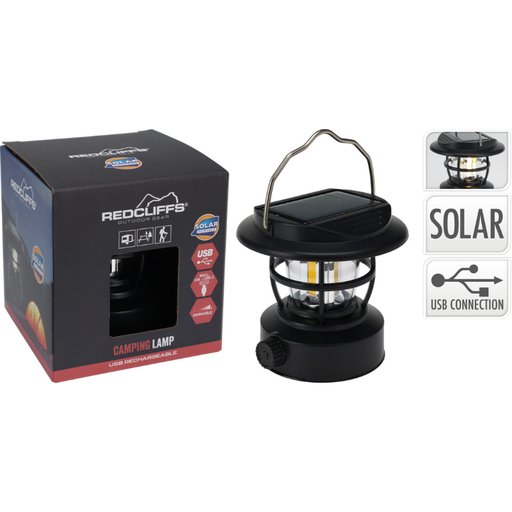
Why it suits this profile: Its compact design and handle meet the needs of camping, night-time outings and occasional emergencies in the garden.
Solar charging is supplemented by USB-C charging. This dual option reduces dependence on the weather, even though the stated charging time is up to 6 hours.
Replaceable 1,200 mAh lithium-ion battery, three COB panels and stated luminous flux of 200 lumens.

Why it suits this profile: Its flat design fits neatly along borders and pathways, where a path light needs to remain discreet and space-saving.
The IP66 rating is clearly stated in the product information, making it easier to compare with models whose water resistance is less clear.
0.6 W solar panel, 500 mAh lithium battery, warm 3,200 K light and wireless installation.
We have put together a complete, real-time updated list of products that meet these strict selection criteria and the requirements of European safety regulations.
To maintain the performance of an outdoor solar lantern, position its panel away from trees, walls and artificial lighting. Clean it regularly with a soft, slightly damp cloth to prevent dust from building up. On a patio, place the lamp on a stable surface and keep it away from areas where water tends to collect.
A USB rechargeable lamp must be kept dry while charging. With models fitted with a lithium battery, use only a compatible cable and power source. Finally, electrical devices and their batteries must be taken to the designated collection points for waste electrical and electronic equipment.
Once purchased, a solar lantern does not use electricity from the mains for everyday operation. However, its battery life depends on the amount of sunlight, how clean the panel is and the condition of the battery. USB charging uses very little electricity, generally far less than outdoor lighting that remains permanently connected to the mains.
It depends on its IP rating, the manufacturer’s recommendations and where it is installed. A lamp protected against water splashes can remain outdoors in normal conditions, but it must not be immersed. In severe frost, storms or during a long period when it will not be used, storing it somewhere sheltered will help slow down ageing.
For camping, choose a lightweight portable lamp with a handle, USB charging and a clearly stated battery life. Several brightness levels allow you to switch from simple ambient light to more effective illumination. A replaceable battery can also prove very useful during longer trips.