
Livraison le jour même ou le lendemain

Qualité garantie

Débloquez vos offres de bienvenue: Livraison GRATUITE | Jusqu'à -80 % | 30 jours d'essai gratuits à JoyPlus
Téléchargez l'application
Securing your home or business is a top priority. But with the vast array of models available, choosing the right outdoor WiFi security camera can quickly become a daunting task. Between image resolution, detection technologies, and storage options, it's easy to get lost. Don't worry! This guide is here to break down the key features and help you find the perfect model with confidence.
Before diving into our top picks, let's review the technical specifications you shouldn't overlook to make the right choice.
Image quality is the name of the game. High resolution is essential for clearly identifying important details, like a face or a license plate.
Night vision is just as crucial. Most cameras offer infrared night vision (in black and white), which is effective but basic. However, color night vision is becoming mainstream. Thanks to more sensitive sensors and sometimes a small integrated spotlight, it displays color images even in low light. This is a major advantage for identifying the color of clothing or a vehicle.
The field of view determines your camera's viewing angle. For 360° surveillance, a PTZ (Pan-Tilt-Zoom) outdoor camera is the most versatile solution. It allows you to control the lens remotely from your smartphone:
This motorization is essential for covering large spaces like a garden, courtyard, or parking lot without having to install an army of fixed cameras.
A modern camera doesn't just record continuously; it must alert you intelligently. Motion detection is a standard feature, but not all systems are created equal. The most advanced models use PIR (Passive Infrared) sensors or AI algorithms to differentiate between a human, an animal, or a car, thus putting an end to false alerts triggered by the neighbor's cat.
Two-way audio is another very handy feature. It allows you to hear what's happening and speak through the camera's speaker, whether to guide a delivery person or scare off an intruder.
Finally, the question of video storage is critical. There are two main approaches:
Now, let's move on to our selection of models that caught our eye, each tailored to a specific need.
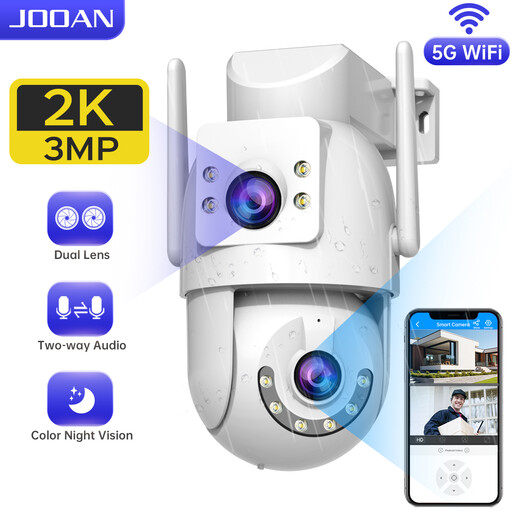
Key Selling Point: This model stands out with its dual-lens system, which allows you to display two views (one fixed and one PTZ) on a single screen in the app. Its compatibility with both 2.4 GHz and 5 GHz Wi-Fi ensures a more stable and versatile connection.
Key Features:
Who is it for? For those who want to keep an eye on the front door and the driveway at the same time, without multiplying devices, while enjoying the flexibility of a motorized camera.
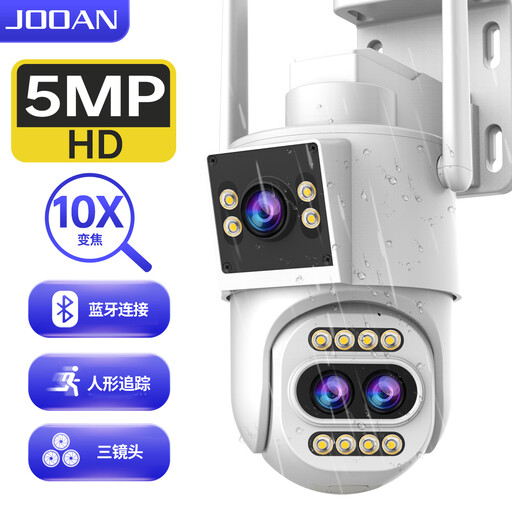
Key Selling Point: The star of the show here is the 10x optical zoom. Unlike digital zoom, which simply crops the image (and thus loses quality), optical zoom brings the scene closer without any degradation. Perfect for reading a license plate at the far end of the garden. Its triple-lens system offers impressive versatility.
Key Features:
Who is it for? Owners of large properties, courtyards, or parking lots who need maximum coverage and a powerful zoom to miss nothing, even from a distance.
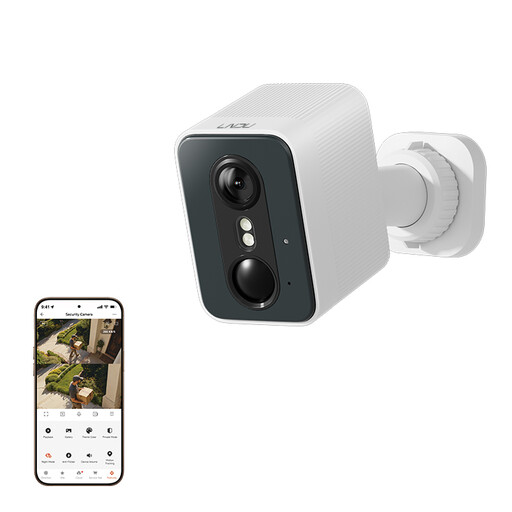
Key Selling Point: This model checks all the boxes: an ultra-sharp 4K image and a 100% wire-free installation thanks to its long-lasting battery. Its dual detection (PIR + radar) sorts real threats (humans) from false alerts (flying leaves, passing animals).
Key Features:
Who is it for? For those who want top-tier image quality without the hassle of cables. An excellent choice if you already use a voice assistant at home.
Doesn't our selection cover your specific needs? No worries, the market is full of great finds. Every home is different, and your security solution should be too.
To explore other models and find the perfect camera, take a look at our complete collection of Smart Devices. There you'll find other models and accessories to build a custom security system.
SD card storage is local: videos are recorded onto a memory card inside the camera. It's a cost-effective solution with no subscription fees. The downside? If a burglar steals the camera, they also take the evidence. Cloud storage, on the other hand, transfers your videos to a remote, secure server. Your data is safe, even if the camera is destroyed, and accessible from anywhere. This peace of mind comes at a cost, usually in the form of a subscription.
A word of caution! The term "wireless" most often refers to the data connection (Wi-Fi), not the power supply. The majority of Wi-Fi cameras still need to be plugged into a power outlet. However, there are 100% autonomous models that run on batteries, like the LNDU 4K camera in our selection, which offer a truly cable-free installation.
Absolutely not! Consumer-grade Wi-Fi cameras are designed for anyone to install. Generally, it's very simple: you mount the camera to the wall, plug it in (unless it's battery-powered), download the manufacturer's app on your smartphone, and follow the guide to connect it to your network. No need to be a DIY or IT expert.