
Livraison le jour même ou le lendemain

Qualité garantie

Débloquez vos offres de bienvenue: Livraison GRATUITE | Jusqu'à -80 % | 30 jours d'essai gratuits à JoyPlus
Téléchargez l'application
A poorly lit entrance, a terrace plunged into darkness, or a garage that’s hard to spot can make any outdoor space feel less inviting and less practical. Yet choosing outdoor wall lighting isn’t simply a matter of comparing a design or a lumen count.
Some features highlighted by manufacturers can hide very real limitations:
Luminous flux, measured in lumens, refers to the total amount of light emitted. For an entrance or a small terrace, a moderate output can be enough. A driveway, garage or area you want to keep an eye on will usually need a more powerful light.
Colour temperature also affects the atmosphere:
Also consider the direction of the beam. Light directed downwards generally reduces glare and lights the ground, steps or pathway effectively.
The IP rating consists of two digits. The first indicates the level of protection against solid objects and dust; the second relates to water resistance. An IP54 light, for example, is protected against harmful amounts of dust and against water splashes from any direction. That doesn’t mean it can be submerged.
To choose a weather-resistant outdoor wall light, check:
Galvanised steel works well in demanding outdoor environments. Glass, die-cast aluminium and polycarbonate are also very common, with differences in weight, impact resistance and maintenance.
A solar outdoor wall light recharges during the day and avoids the need to run an electrical cable. However, it must be installed in a spot that’s clear enough to receive direct sunlight. Trees, overhangs and north-facing walls can significantly reduce charging.
An outdoor light with a motion sensor turns on when it detects movement. Compare the sensor’s range, detection angle, lighting duration and available sensitivity settings.
For a mains-powered model, such as certain smart wall lights or floodlights, follow the instructions and the electrical regulations in force in the UK. Call in a qualified electrician when the nature of the connection requires it. Always switch off the power before any installation or cleaning work.
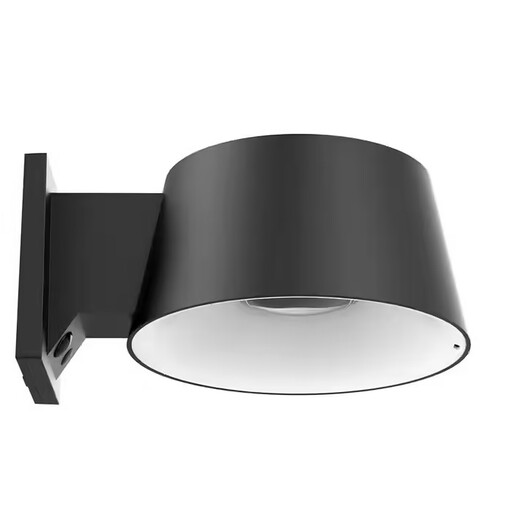
Why this choice suits this profile: This solar wall light is ideal for an entrance, balcony or small pathway if you want to avoid wiring work. Its built-in panel charges the battery during the day, and the light turns on automatically at dusk.
The product page states that the panel needs direct sunlight. You can check this before buying, rather than relying on solar charging in a shaded spot.
Built-in solar panel, downward-facing LED beam, no-wiring wall mounting and materials stated to be resistant to outdoor conditions.
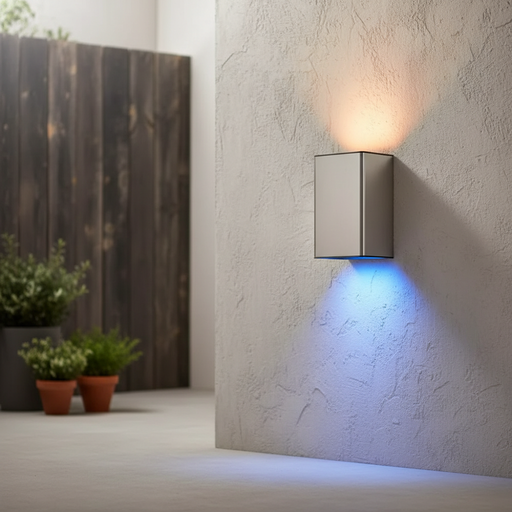
Why this choice suits this profile: This smart Philips Hue wall light is designed for those who want to control the lighting of an entrance or terrace from the Philips Hue app and integrate it into a compatible smart home system.
The product page mentions a mains power supply and the need for a Philips Hue bridge to access the smart features. These are things to plan for before ordering.
Stainless steel, glass, adjustable white or colour LED lighting, app control and compatibility with voice assistants depending on the system used.
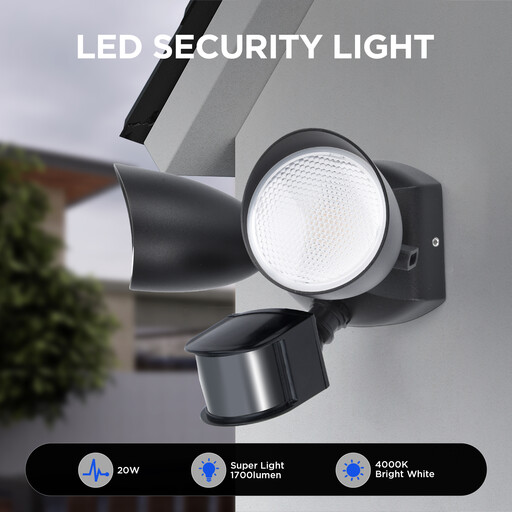
Why this choice suits this profile: This twin-head outdoor LED floodlight is aimed at homeowners who want to cover a courtyard, garden, entrance or garage with lighting that includes a motion sensor.
Its specifications clearly state a power consumption of 20 W, a flux of 1,700 lm and a colour temperature of 4,000 K. This lets you compare the lighting objectively, without relying on a simple marketing promise.
Two adjustable heads, LED technology, motion sensor and a stated luminous flux of 1,700 lm.
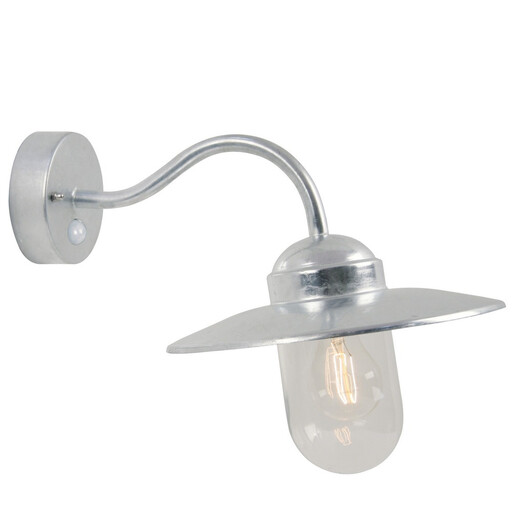
Why this choice suits this profile: This outdoor wall light is suitable for a particularly exposed façade, entrance or terrace. Its classic style, with a glass globe, complements many types of architecture.
The product page states an IP54 rating, a PIR sensor and a design suited to coastal areas. It also notes that the E27 bulb is not included – remember to add it to your budget.
Galvanised steel, glass, E27 lamp holder, motion and daylight sensor, stated range of 0 to 12 m and a 15-year guarantee against surface deterioration, according to the product page.
We’ve put together a comprehensive, regularly updated list of products that meet these demanding criteria as well as European safety standards.
Before fixing an outdoor wall light, measure the available height, the depth of the wall and the area you want to light. A lamp installed too low risks causing glare; placed too high, it will light the path less effectively.
To extend the life of your light fitting:
The running cost mainly depends on the wattage, how long the light is on and how often it operates. A sensor can reduce the lighting time, while a solar model limits mains electricity consumption, with efficiency that varies according to sunlight.
There’s no universal rating – it all depends on the location. For a sheltered façade, protection against water splashes may be enough. In a spot directly exposed to rain, go for a higher rating as stated in the technical specifications. An IP54 model, like the Nordlux wall light shown above, resists water splashes but must not be submerged.
That depends on the battery capacity, the amount of sunlight and the season. Install the panel in a clear spot and clean it regularly. In winter or after several overcast days, the battery life can drop significantly.
For a mains-powered model, the help of a qualified electrician is recommended and may be compulsory depending on the type of connection. A solar wall light with no mains connection is generally simpler to install, but a solid fixing and following the instructions are still essential.