
Livraison le jour même ou le lendemain

Qualité garantie

Débloquez vos offres de bienvenue: Livraison GRATUITE | Jusqu'à -80 % | 30 jours d'essai gratuits à JoyPlus
Téléchargez l'application
An outdoor wall light can illuminate an entrance, secure a pathway or add depth to a façade. But some purchases prove disappointing after just a few weeks: poorly directed light, material that deteriorates, a bulb that's difficult to replace or insufficient protection against moisture.
To avoid nasty surprises, it's better to compare concrete data than to rely solely on style or marketing claims. Here are the criteria to check before choosing an outdoor wall lamp for an entrance, garage, terrace or garden in the UK.
A light described as "outdoor" isn't necessarily designed to withstand all weather conditions. The IP rating must always be checked on the product page.
An IP44 wall light can work under an awning, on a covered terrace or near a sheltered door. For a façade exposed to rain and wind, an IP54 wall light offers an extra safety margin.
An integrated LED outdoor wall light can be convenient, but its replacement depends entirely on the luminaire's design. Models fitted with a GU10 or E27 base usually allow you to change the bulb separately.
Check in particular:
A 400-lumen bulb can be enough to create a pleasant atmosphere around a door. A passageway or garage will generally need more light.
The material and exposure matter just as much as the design. By the coast, salt accelerates corrosion of certain metals. On a very sunny façade, plastics and dark finishes can also age more quickly.
For a house located on the coast, look for an explicit mention of coastal use, such as a range designed for marine environments. Regular rinsing with fresh water can also limit salt deposits.
The IP rating measures neither the overall robustness of the product nor its impact resistance. It mainly concerns protection against solid objects and water. Covered entrances, patios and terraces can accommodate an IP44 light, while a directly exposed wall may justify an IP54 model.
After installation, the seals, cable glands and cable entries must remain correctly positioned. Poor installation can reduce the stated protection.
A light directed downwards mainly illuminates the ground, steps and paths. A model that distributes light upwards and downwards creates a decorative effect on the façade, while improving visibility around the entrance.
For harmonious façade lighting, several identical luminaires can be connected in parallel when the manufacturer allows it. Always respect the maximum wattage and the connection instructions.
A mains-connected light requires installation that complies with UK electrical regulations. Several products presented here are Class I and require earthing. Installation must be carried out by a qualified person, after switching off the power supply.
A solar outdoor wall light avoids mains connection, but its panel must receive sufficient direct light. Shade from a tree, balcony or neighbouring wall can reduce charging and battery life during the night.
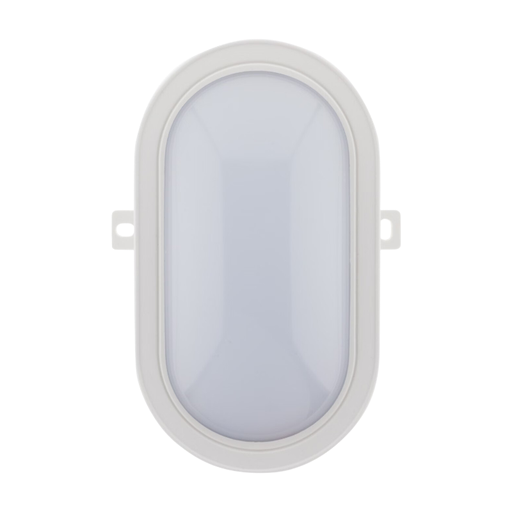
Why this choice suits this profile: Its discreet oval shape works well for an entrance, garage or covered terrace. It operates with a replaceable E27 LED bulb.
The product page clearly states IP44, 230 V and a replaceable 5 W E27 bulb, so there's no need to replace the entire luminaire when the bulb reaches the end of its life.
400 lumens, warm light at 2,700 K, protective grille and a stated two-year warranty.
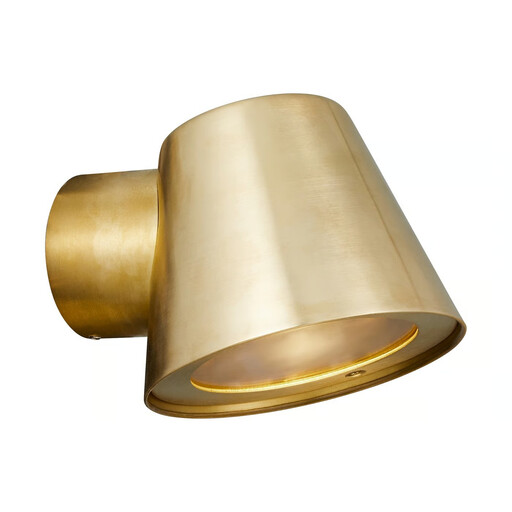
Why this choice suits this profile: This compact light is suitable for a front door, garage or driveway in a humid or coastal area.
The product page states it is intended for coastal environments and notes that natural brass patinas over time. This colour change should be considered before purchase.
Solid brass, GU10 base, IP44 rating and a stated 15-year warranty against surface deterioration.
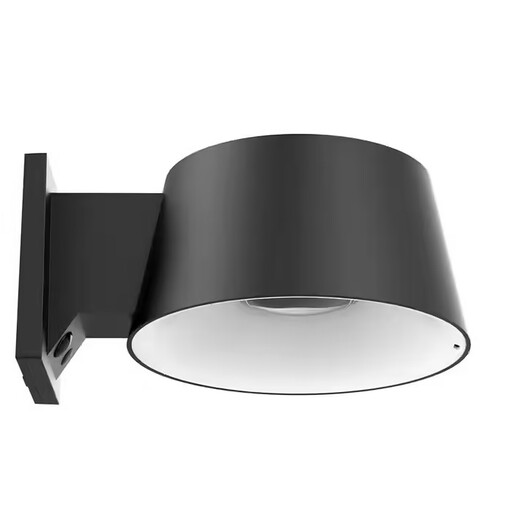
Why this choice suits this profile: This solar outdoor wall light is ideal for balconies, patios, paths and other places where running a mains supply would be difficult.
The product page states that the panel must receive direct light. So avoid shaded locations and clean the solar surface regularly.
Integrated solar panel, automatic switch-on at dusk and wall mounting without mains connection.
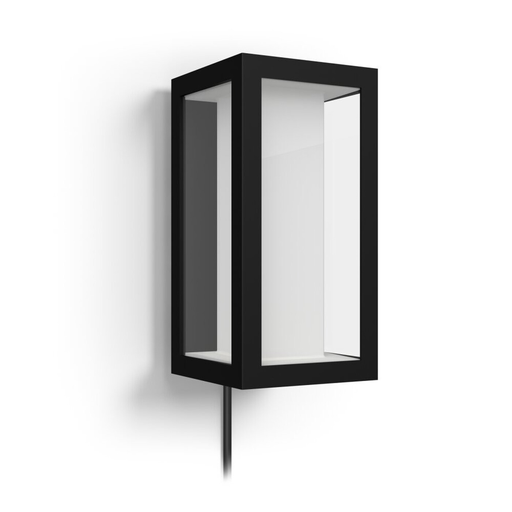
Why this choice suits this profile: This model is aimed at users who want to integrate outdoor wall lighting into an existing Philips Hue system.
The Philips Hue bridge is required but not included. So budget for this extra cost and check compatibility before purchasing.
IP44 rating, adjustable white light from 2,000 to 6,500 K and stated compatibility with the Hue app.
For an outdoor entrance light, choose a pleasant light, directed downwards or distributed upwards and downwards. A warm colour temperature, around 2,700 K, creates a welcoming atmosphere.
In a garage or passageway, it's better to go for a higher luminous flux, a sensor or precise direction. For a terrace or garden, solar simplifies installation, while smart lighting allows you to programme schedules and atmospheres.
GU10 models are interesting if you want to change the bulb's power or colour later on. However, check that the chosen bulb is suitable for outdoor use when installed in an exposed luminaire.
We've put together an updated selection of outdoor wall lights suitable for different IP ratings, styles, light sources and uses.
Wattage alone doesn't let you estimate the amount of light produced. Instead, look at the luminous flux, expressed in lumens. Around 300 to 500 lumens can work for a door or small terrace; a circulation space or garage may need more, depending on its size and darkness level.
An IP44 light resists water splashes, but it must be installed according to the manufacturer's instructions, with properly protected cable entries. For a wall directly exposed to the weather, an IP54 model may be more appropriate.
Its operation depends on the hours of sunlight, the panel's orientation, the temperature and how clean its surface is. In winter or in a shaded area, battery life may decrease. Install the panel in the spot that receives the most direct light possible.