
Livraison le jour même ou le lendemain

Qualité garantie

Débloquez vos offres de bienvenue: Livraison GRATUITE | Jusqu'à -80 % | 30 jours d'essai gratuits à JoyPlus
Téléchargez l'application
An outdoor wall light can transform an entrance, patio or façade. However, you need to choose a suitable model: a light that rusts, barely illuminates the area or requires unexpected work can quickly increase the overall cost.
Before ordering an outdoor wall lamp, check three essential points: its protection against water, its type of light source and any installation requirements. Design is important, but it should not distract from the technical specifications.
An IP44 outdoor wall light is protected against solid objects larger than 1 mm, as well as water splashes. It is suitable for many sheltered outdoor locations, such as a covered entrance or protected patio. However, it is not designed to be immersed and may not necessarily be suitable for repeated water jets.
An IP54 outdoor wall light offers enhanced protection against dust and water splashes from several directions. It may be more suitable for a façade exposed to the elements, provided that the seals are fitted and maintained correctly.
The IP rating alone says nothing about resistance to sea salt, UV rays or temperature fluctuations.
Models with a GU10 fitting let you choose the colour temperature and wattage and, in some cases, adjust the brightness. However, the bulb is not always included. You should therefore allow for this additional purchase and check the maximum wattage supported by the light fitting.
An outdoor LED wall light with an integrated light source is easier to install, but replacement depends entirely on the model’s design. For outdoor wall lighting used every day, carefully check the information about the light source and its maintenance requirements.
Several of the lights featured here are Class I and must be earthed. Any fixed installation connected to the mains must comply with the electrical regulations in force in France. Where necessary, it is best to have it installed by a qualified electrician. Always switch off the power before carrying out any work and take care not to compromise the weatherproof seals.
For an outdoor wall light installed near an entrance, on a patio or beneath a roof overhang, IP44 may be sufficient depending on the actual level of exposure. On a façade more directly exposed to the elements, IP54 provides additional protection against dust and water splashes.
In coastal areas, the IP rating is not the whole story. Choose a finish or material designed to withstand salty air, such as hot-dip galvanised steel, or a range explicitly intended for marine environments. Regularly rinsing the light with fresh water also helps remove salt deposits.
Light directed upwards and downwards creates an attractive decorative effect on a wall while also helping to illuminate the façade. Downward-facing light is better suited to lighting steps, a walkway or the area in front of a door.
For functional lighting, look at the wattage, the luminous flux where provided and the direction of the beams. To create ambience, an adjustable colour temperature or interchangeable GU10 bulbs offer greater flexibility.
Measure the available width on the wall, as well as the maximum acceptable projection, particularly near a door or in a narrow passageway. Light fittings equipped with two sockets can produce more light, but they also require two bulbs and sufficient space around the diffuser.
The parallel connection available on some models allows several wall lights to be linked together. It must be carried out in accordance with the wiring rules applicable to the installation.
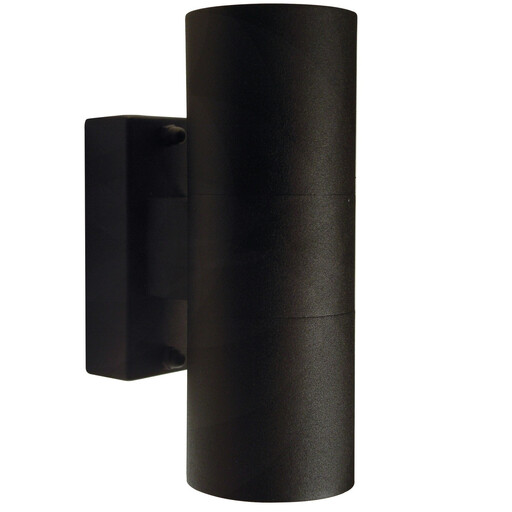
Why this choice suits this profile : Its compact design and upward and downward light distribution make it suitable for an entrance, garage, driveway or small garden.
The IP54 rating is clearly stated and both GU10 bulbs can be replaced. They are not included, so remember to include them in your budget.
Two GU10 sockets, maximum wattage of 35 W per bulb, Class I and a metal housing complemented by glass elements.
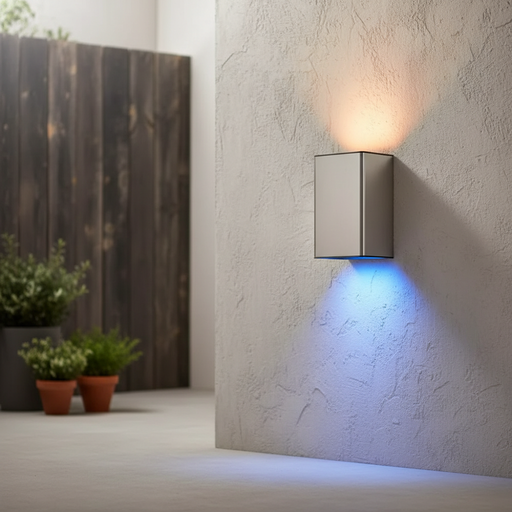
Why this choice suits this profile : This designer wall light is aimed at households already using Philips Hue who want to control their outdoor lighting from an app.
Compatibility with Philips Hue and the available control options are clearly stated. The Philips Hue Bridge, which is essential for connected features, is not included.
Integrated LED light source, adjustable white or coloured light, app control and integration with certain voice assistants.
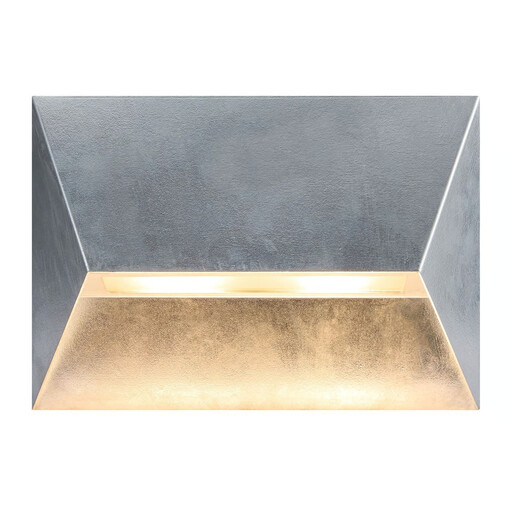
Why this choice suits this profile : Its hot-dip galvanised steel and “Designed For Seaside” construction are intended for homes exposed to salty air.
It does not rely solely on a promise of waterproofing: the material and intended use in coastal areas are specified. Rinsing with fresh water is still recommended to remove salt.
IP54 rating, two GU10 sockets, dimmable with compatible bulbs and a stated 15-year guarantee against surface deterioration.
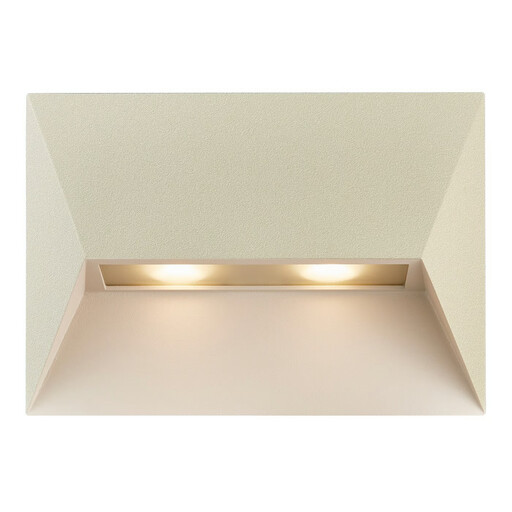
Why this choice suits this profile : Its geometric silhouette, sand-coloured finish and panel designed to display a house number are a perfect match for a contemporary façade.
The product details specify the IP54 rating, dimensions and maximum wattage. GU10 bulbs must be purchased separately.
Two GU10 sockets rated at a maximum of 25 W each, dimmable and suitable for connecting several light fittings in parallel.
We have put together a complete, regularly updated selection of products that meet these demanding criteria and European safety regulations.
It depends on how you intend to use it, the size of the area to be lit and how the light fitting distributes light. For an entrance, moderate lighting may be more than sufficient. In a courtyard or driveway, several light sources will generally distribute light more effectively than one very powerful source. With a GU10 socket, always observe the maximum wattage specified by the manufacturer.
It may be suitable in some cases, but the level of exposure must be assessed carefully. A façade directly exposed to rain and water splashes may require an IP54 model. In all cases, installation must protect the seals and prevent water from entering through the cable or mounting bracket.
Consumption depends primarily on the light source, its wattage and how long it remains switched on. Connected features may maintain a low level of standby consumption, but check the model’s technical specifications for the exact figure. Appropriate scheduling and automatic switch-off help limit unnecessary operating times.