
Same-day & Next-day Delivery

Quality Guaranteed

Unlock Your Welcome Offers: FREE Delivery | Up to 80% OFF | Free 30-day JoyPlus trial
Download the APP
As warmer weather returns, finding alternatives to screen time becomes a priority for many parents. An outdoor toy for kids is the ideal solution to encourage physical activity and develop motor skills. The problem? The market is saturated with options that don't always live up to their promises. How can you distinguish a durable, safe toy from a gadget that will be broken before the end of summer?
As a Product Specialist at Joybuy, my mission is to help you see things more clearly. Let's break down the most common pitfalls and the essential criteria for making an informed choice. The goal: to turn your purchase into hours of play, not disappointment.
Before falling for attractive packaging, beware of these recurring flaws that can quickly spoil the fun.
To avoid making a mistake, focus on a few objective technical points. These are the true guarantees of a product's quality and durability.
The "Conforms to EN 71 standard" label is a non-negotiable prerequisite. This European regulation ensures that the toy meets strict requirements for mechanical, physical, and chemical safety (absence of harmful substances).
Pay close attention to the types of plastic. A high-resistance ABS plastic is often a sign of much greater durability than standard PP plastic, as it better withstands impacts and stress. For younger children, soft materials like PU foam are an excellent option for a kids' skill game, as they prevent injuries in case of a fall.
For a good return on investment, choose toys that grow with your child. A freestanding basketball hoop with an adjustable height, for example, can be used for several years. Similarly, a set offering several games in one, like a combination of bowling and ring toss, renews interest and adapts to different ages or the number of players. It's an excellent way to provide an evolving physical activity.
For larger toys, stability is paramount. Check if the base can be weighted with water or sand: it's a simple but incredibly effective mechanism to keep the structure firmly in place. Also, ensure that all edges are rounded and that assembly is simple and safe, without requiring complex tools.
To illustrate these criteria in practice, here are a few products that meet different needs, whether for a gift for a 3- to 8-year-old or to equip your garden.
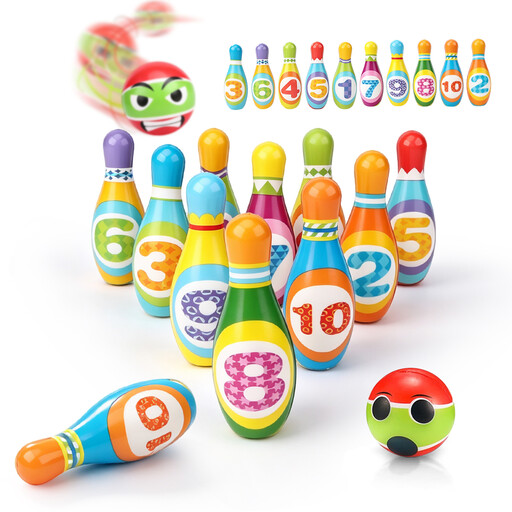
Why we love it: Perfect for toddlers, this set can be used safely both indoors and outdoors. Its soft foam design is ideal for developing coordination without the risk of injury or damaging furniture.
Its soft PU foam material eliminates any risk of breakage or injury from impact, a common pitfall with hard plastic toys for young children.
The pins, numbered 1 to 10, add an educational dimension: a fun first introduction to numbers.
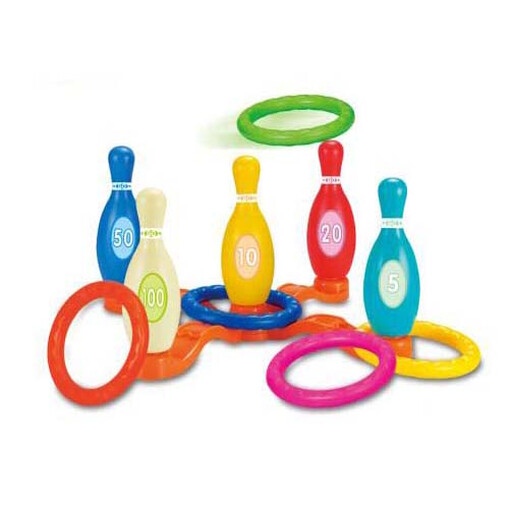
Why we love it: Perfect for afternoons with family or friends. This set combines two classic skill games, ensuring excellent replay value and adapting to all ages and skill levels.
By offering two activities, it avoids the "single-use" toy trap that quickly becomes boring. Its durable PP plastic construction is designed for heavy use.
It promotes coordination, precision, and even mental math for scoring, all in a compact and easy-to-store format.
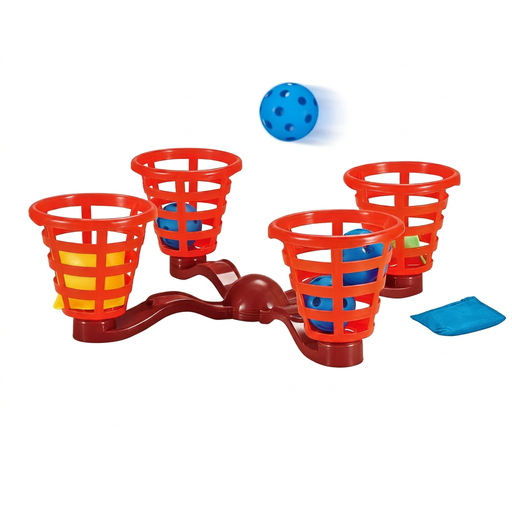
Why we love it: For kids who are bursting with energy and interested in sports. This complete kit is an excellent introduction to basketball, designed to last and adapt as they grow.
Its adjustable height from 100 to 150 cm makes it a long-lasting investment. The weighted base (water or sand) prevents the instability pitfall and ensures hours of safe play.
Made from robust ABS plastic, it's built to withstand impacts. It develops hand-eye coordination and teamwork skills.
We've put together a complete selection of products that meet these quality criteria and current safety standards.
The first step: look for the CE mark and the EN 71 standard reference on the packaging or product page. Read the warnings carefully, especially the recommended age. Before the first use, inspect the toy for any sharp edges, loose small parts, or structural weak points.
Simple maintenance can make all the difference. After each use, especially for an outdoor water toy, remember to rinse and dry the parts to prevent mould. For plastic toys, regular cleaning with a damp cloth and a little mild soap is sufficient. Ideally, store them in a sheltered place (garage, garden shed) during the winter to protect them from frost and bad weather.
Yes, provided you choose a well-designed model. Freestanding hoops with a hollow base are specifically designed to be weighted. By filling the base with water or, for maximum stability, with sand, you significantly lower the set's centre of gravity, making it very difficult to tip over during normal use.