
Livraison le jour même ou le lendemain

Qualité garantie

Débloquez vos offres de bienvenue: Livraison GRATUITE | Jusqu'à -80 % | 30 jours d'essai gratuits à JoyPlus
Téléchargez l'application
Lighting up your garden, balcony, or facade can transform an ordinary space into an enchanting one. However, choosing the right outdoor string lights can often be a real headache. Between marketing promises and technical jargon, it's easy to end up with a disappointing product—one that fails after the first rainfall or whose light dims after just a few weeks. Before you pull out your credit card, it's crucial to know how to avoid the most common pitfalls.
The 3 Mistakes to Avoid When Buying Outdoor String Lights:
To make an informed choice (no pun intended), focus on a few non-negotiable technical specifications. These are what truly guarantee the quality and safety of your setup.
The Ingress Protection (IP) rating is the only reliable data for judging a product's weather resistance. It consists of two digits: the first indicates protection against solids (dust), and the second, against liquids (water).
The choice between mains-powered and solar-powered depends on your use case.
The atmosphere you create depends on the type of light.
Here are a few models that meet specific needs, selected based on our criteria for durability and performance.
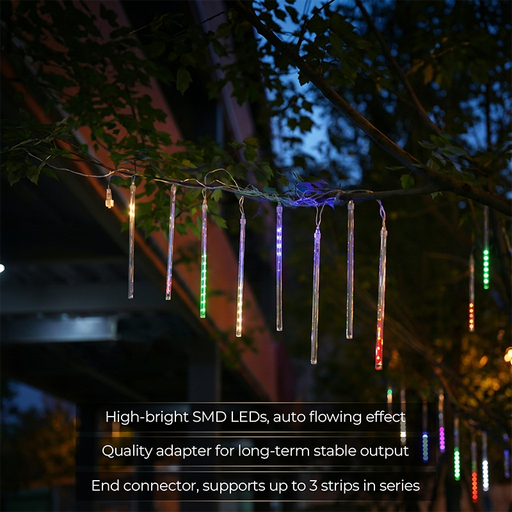
Why this model stands out: Ideal for those seeking maximum visual impact for the holidays. Its 15 tubes and 720 LEDs create a dynamic "meteor shower" effect over a large area, perfect for dressing up a large tree, a shopfront, or a long balustrade.
Its mains-powered design ensures consistent light performance, avoiding the pitfall of unreliable solar lights in winter. The IP44 rating is clearly displayed, confirming its protection against water splashes for worry-free outdoor use.
It covers a large 10-metre area with an animated, multicolour visual effect. The convenient memory function remembers the last mode used.
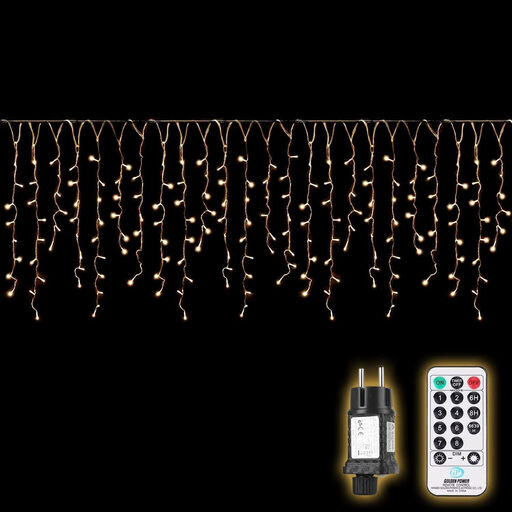
Why this model stands out: Perfect for elegantly decorating a bay window, wall, or pergola. Its "icicle curtain" format and warm white light create an atmosphere that is both sophisticated and cosy. The remote control is a real bonus for user convenience.
The description clearly distinguishes the 5m of curtain lights from the 3m of cable, avoiding the misleading length trap. The GS-certified 31V low-voltage power supply and IP44 rating are guarantees of safety and durability for outdoor use.
Full remote control with 8 lighting modes and a timer function (6h on / 18h off) for simplified and energy-efficient management.
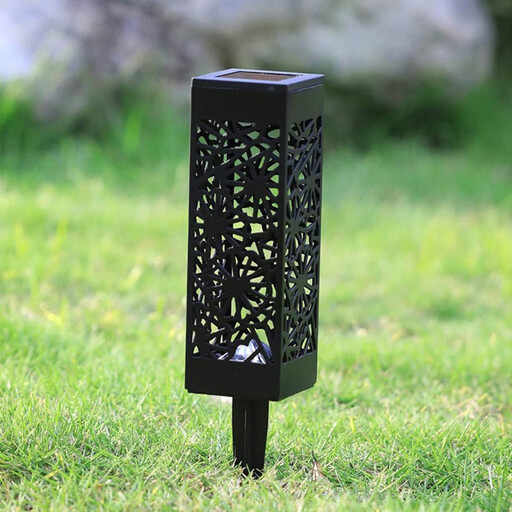
Why this model stands out: This is the ultimate wireless solution for lining a pathway, a flowerbed, or the edges of a terrace. Installation is instant (just stake them into the ground), and operation is 100% autonomous thanks to solar power and automatic dusk-to-dawn lighting.
This model sidesteps two major pitfalls: it boasts a very high IP65 protection rating, making it capable of withstanding heavy rain. It is also equipped with high-efficiency solar panels to optimise charging, even on overcast days.
The openwork design of the shade projects an elegant pattern onto the ground, adding a unique decorative touch in addition to its path-lighting function.
We have compiled a complete selection of products that meet our strict selection criteria and current safety standards.
An IP44 rating means the product is protected against water splashes (like light rain). This is sufficient for a sheltered location, such as a porch or under an awning. An IP65 rating offers much higher protection: the string light is completely dust-tight and resistant to powerful water jets. It can therefore be installed in areas fully exposed to the elements, like right in the middle of a garden.
The performance of solar-powered string lights in winter depends on their quality and the amount of sunlight. With shorter days and often overcast skies, charging is inevitably less effective. For reliable outdoor light decoration during the Christmas period, a mains-powered string light remains the safest bet to guarantee intense and consistent light every evening. Solar models are better suited for ambient lighting from spring to autumn.
Some models are indeed designed to be connected in series. This information is always specified in the product description or on its packaging. It is imperative to respect the maximum number of connectable strings recommended by the manufacturer to avoid overloading the transformer and to eliminate any safety risks.