
Livraison le jour même ou le lendemain

Qualité garantie

Débloquez vos offres de bienvenue: Livraison GRATUITE | Jusqu'à -80 % | 30 jours d'essai gratuits à JoyPlus
Téléchargez l'application
An outdoor storage box can quickly become essential for keeping cushions, toys, tools and camping accessories safe and dry. But some models focus mainly on their looks or theoretical capacity, without really considering the demands of the British outdoors: frequent rain, damp, sun, frost in winter or limited space.
Before you buy, three common mistakes keep cropping up:
For staying outdoors, polypropylene and moulded plastic are often good choices: they're lightweight and easy to clean. However, the material alone isn't everything. Make sure the manufacturer clearly mentions protection against:
A waterproof storage box also needs a well-fitted lid. For particularly sensitive items, it's still best to add bags or covers inside: condensation can form, even in a sealed container.
The capacity in litres gives you a first idea, but the external dimensions are just as important. Measure the space you have, allowing for the lid to open and enough clearance around the box.
A garden box with a lid should be placed on a stable, level surface. Unless the manufacturer clearly states otherwise, don't use it as a seat, step or support.
On a patio or balcony, side handles, the locking system and ease of assembly make a real difference. A lockable model can also prevent access to stored items, but the padlock is rarely included.
Ventilation helps limit moisture build-up. That doesn't, however, turn the box into suitable storage for electrical appliances, delicate fabrics or food. For cleaning, a damp cloth and mild soap are usually enough. Abrasive products can scratch the plastic and dull its finish.
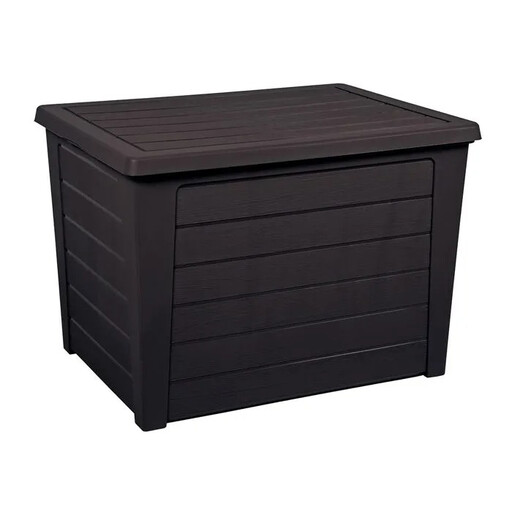
Why this choice suits this profile: With its 160 litres, this box offers a compact size for storing cushions, toys and small accessories without taking over your patio or balcony.
Its sensible capacity reduces the risk of choosing an oversized box. Its design, stated as weather and UV resistant, suits both indoor and outdoor use.
Stated as made in France, 100% recyclable plastic, water protection and assembly described as simple.
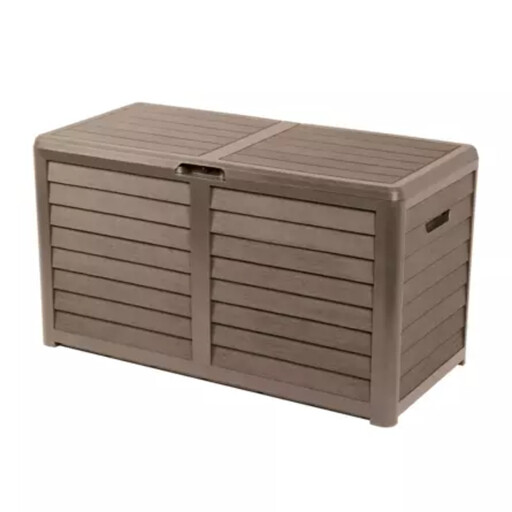
Why this choice suits this profile: Its 420 litres are aimed at larger spaces and those who want to keep gardening equipment, pool accessories and several cushions all in one place.
The product page mentions UV and frost resistance, plus permanent ventilation through the handles. The lockable lid allows you to add a padlock, which is not supplied.
420 litres, tool-free assembly stated, side handles and a wood-effect finish. The manufacturer also states the use of recycled raw materials.
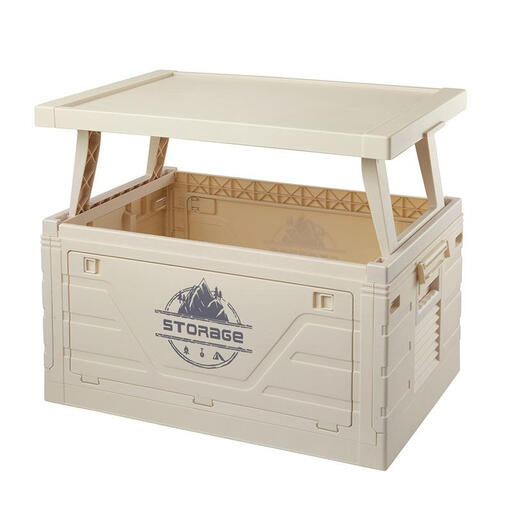
Why this choice suits this profile: This 48 × 30 × 42.5 cm format combines mobile storage with a small side table, handy for camping, a picnic or an al fresco meal in the garden.
Its integrated handles and multi-directional opening make it easy to carry and access the contents. However, please respect the maximum load and never use it as a step.
Two-tier structure, concealed handle, stated weight of 2.2 kg and no assembly required. The PP material is described as lightweight and odourless.
We've compiled a complete, real-time updated selection of products that meet these demanding criteria and European safety standards.
Outdoor furnishing isn't just about storage boxes. An outdoor planter can structure a patio or dress up a windowsill. On a balcony, a 50 cm rectangular planter uses its long shape to fit neatly against a railing or wall. The EDA TOSCANE model, in moulded plastic, is described as lightweight, requiring no assembly and made in France.
For outdoor use, check for drainage holes. The DEROMA Origin pot has a removable plug that lets you choose between draining water away or retaining it for decorative indoor use. Its product page also mentions frost and UV resistance. Even a frost-resistant flower pot should be placed on a stable surface and monitored during periods of severe cold.
It all depends on the design of the lid, the seals and the locking system. The term "water resistant" doesn't guarantee absolute waterproofing, let alone protection against immersion. Position the box in a slightly sheltered spot and add an inner cover for sensitive fabrics.
Allow around 160 litres for a few cushions and toys, 250 litres for everyday family equipment and 420 litres for bulkier garden or pool gear. In every case, compare the external dimensions with the space you actually have available.
Clean it with a soft cloth and a non-abrasive soap. Avoid placing heavy objects on the lid and don't turn the box into a seat. If possible, put it in a shaded area, while still maintaining enough ventilation to limit condensation.