
Livraison le jour même ou le lendemain

Qualité garantie

Débloquez vos offres de bienvenue: Livraison GRATUITE | Jusqu'à -80 % | 30 jours d'essai gratuits à JoyPlus
Téléchargez l'application
As warmer weather arrives, so does the desire to light up your garden, balcony, or patio to enjoy long evenings outdoors. Solar string lights have become the ideal solution: simple, eco-friendly, and hassle-free. However, the market is flooded with products of wildly inconsistent quality. The risk? Ending up with a string light that dies after the first downpour or whose meager battery life ruins the party. Before you buy, let's review the most common pitfalls and the essential criteria to check for a successful purchase.
Being dazzled by a rock-bottom price or marketing promises that are too good to be true is a surefire recipe for disappointment. Here are the key things to watch out for.
For a smart purchase, focus on a few technical specifications that make all the difference in terms of durability and performance.
The Ingress Protection (IP) rating is an international standard that classifies a device's level of waterproofing. For waterproof outdoor LED string lights, an IP44 rating is the bare minimum. It guarantees protection against water splashes (like light rain). For direct exposure to the elements, aim for an IP65 rating or higher. This is your guarantee of much more serious protection and better durability.
The performance of solar garden string lights relies on an inseparable duo:
Think about the effect you want to create. A 5m solar string light will be enough to decorate a balcony, while an entire garden will require a much greater length. The style of the bulbs, as with a bistro-style string light, sets the mood. Finally, the colour temperature is crucial for the atmosphere: a cool white creates a modern and dynamic feel, while a warm white invites relaxation with a cosier light.
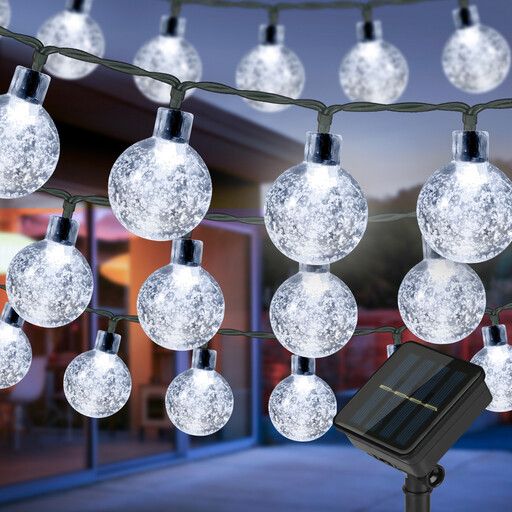
Why we love it: Perfect for decorating a patio, pergola, or tree branches. Its 8 lighting modes allow you to change the mood, from a steady, soothing glow to a festive flash for special occasions.
Its waterproof design is genuinely built for durable outdoor use, which limits the risk of moisture-related failures. The advertised runtime of 8 to 14 hours is realistic for a 6 to 8-hour charge, thanks to a decent-efficiency solar panel.
Its 100% wireless installation and automatic operation (on at dusk, off at dawn) offer maximum convenience. Set it and forget it!
Why we love it: Its nearly 5-meter length is perfect for running along a balcony railing or framing a small patio. The solar power is a real plus in an apartment, where outdoor outlets are scarce.
The remote solar panel, connected by a cable, can be placed where the sun hits, even if the string light is installed in the shade. The materials (copper wire and ABS plastic) are designed to withstand outdoor conditions.
A wireless patio lighting solution that is as practical as it is attractive for small spaces, requiring no electrical work.
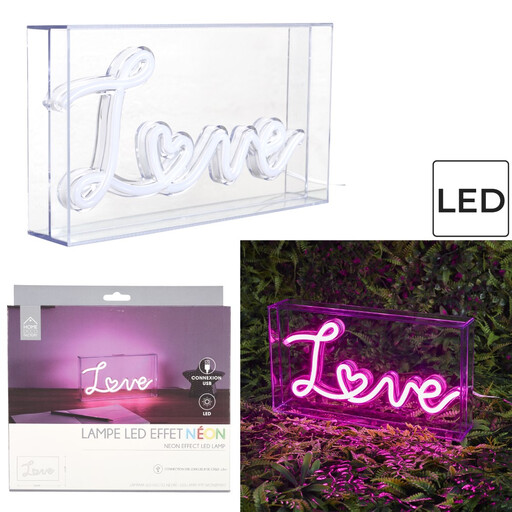
Why it's a bad idea: This type of decorative lamp is designed exclusively for indoor use. Neither its USB power supply nor its acrylic structure is meant to withstand humidity, rain, or temperature fluctuations.
Using it outside, even on a sheltered balcony, exposes you to a short circuit and rapid deterioration. It's the perfect example of a product chosen for its looks while completely ignoring its technical specifications and intended use.
Always check for an IP rating and a clear "outdoor use" mention on the product page or packaging.
Explore our full selection of products that meet strict quality criteria and current safety standards.
The lifespan depends on two key components: the LEDs and the battery. The LEDs themselves are very durable (often rated for over 15,000 hours). The rechargeable battery is the weakest link and will wear out first. Generally, a good quality model will maintain decent performance for two to three years before its runtime noticeably decreases.
Yes, but with reduced performance. A solar panel continues to generate energy on an overcast day, but the charging is much slower, and the nightly runtime is shortened as a result. In winter, shorter days and weaker sunlight also limit the charge. It is therefore completely normal for your string light to stay on for a shorter period than in the middle of summer.
For optimal charging, place the solar panel where it will receive maximum direct sunlight, ideally facing south and away from the shade of trees or buildings. Also, remember to regularly clean its surface with a soft cloth to remove dust and dirt that can reduce its efficiency.