
Livraison le jour même ou le lendemain

Qualité garantie

Débloquez vos offres de bienvenue: Livraison GRATUITE | Jusqu'à -80 % | 30 jours d'essai gratuits à JoyPlus
Téléchargez l'application
The promise of illuminating your garden, patio, or balcony with outdoor solar string lights is an appealing one. They're an eco-friendly, cost-effective solution that's incredibly easy to install. However, disappointment is all too common: a string of lights that fails after the first downpour, a glow so dim you can barely see it, or a battery life that doesn't last more than two hours.
As a product expert at Joybuy, I analyze dozens of technical spec sheets every day. My goal? To help you avoid marketing traps and make the right choice. Here are the most common pitfalls and the criteria to scrutinize for a successful purchase.
To avoid these disappointments, let's focus on a few key technical points.
The IP rating is an international standard that defines a product's level of protection. It consists of two digits: the first for protection against solids (dust) and the second against liquids (water).
The battery life of an outdoor solar light depends not just on the battery, but on the synergy between three elements:
A good product must strike the right balance between these three pillars to ensure reliable light from dusk till dawn.
The choice of lighting depends on the atmosphere you want to create. Warm white (around 2700K) is perfect for a cosy feel, ideal for a solar balcony light or a patio. Cool white, on the other hand, offers a brighter, more functional light. Multi-colour (RGB) models are perfect for festive occasions.
Styles also vary, from the ever-popular solar bistro string lights to more discreet copper-wire models, as well as the solar spotlight for targeted lighting. Pay close attention to the materials: ABS plastic is far more resistant to UV rays and impacts than standard plastic.
Here are a few products that meet specific needs, taking into account our criteria for durability and performance.
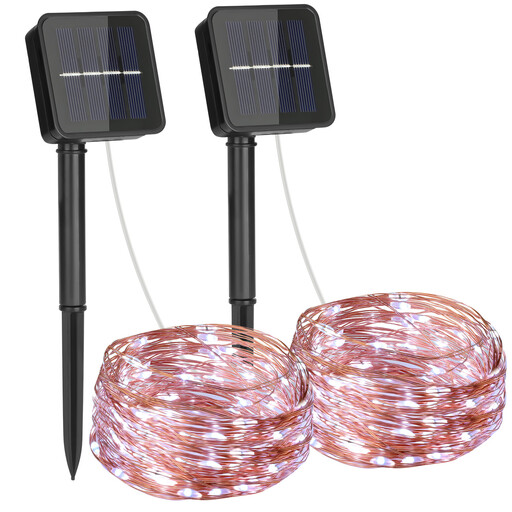
Why we chose it: Perfect for instantly creating a festive atmosphere for a birthday, a garden party, or for decorating a balcony. The two-pack offers excellent value, and the flexible copper wire allows you to easily shape them around branches or a railing.
This model has an IP65 rating, effectively protecting it from rain, unlike entry-level models. It thus avoids the "false waterproofing" trap.
The 8 lighting modes with a memory function allow you to vary the ambiance without having to reconfigure everything each night.
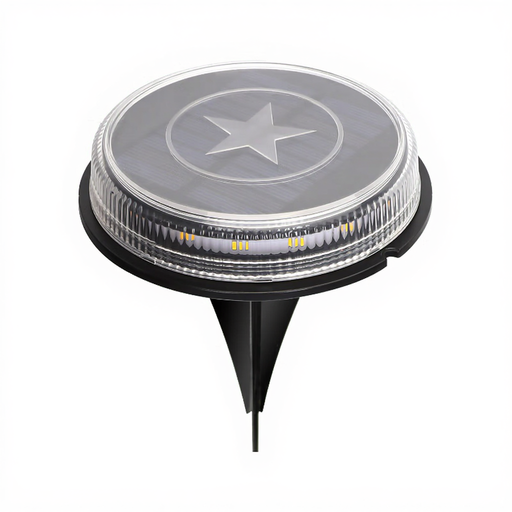
Why we chose it: Perfect for marking a driveway, a path, or a deck. Its flat, robust design is intended to be functional and discreet above all. Note that this is an in-ground spotlight, not a string light.
No risk of breaking on first impact here. Its structure is designed to withstand heavy pressure, even from a car tyre. Its IP66 rating guarantees fail-safe waterproofing.
Ultra-simple wireless installation and maximum durability for functional lighting that won't let you down.
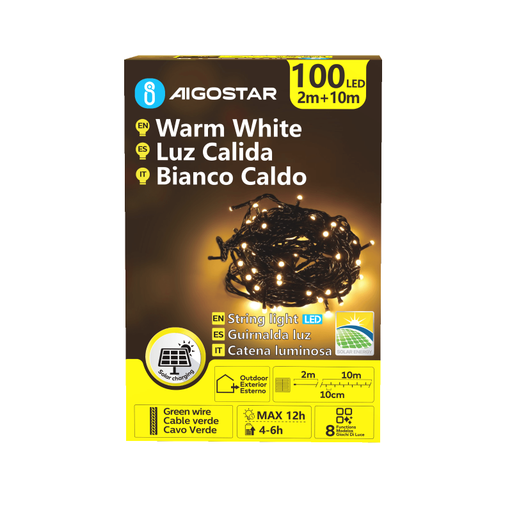
Why we chose it: For those who want to recreate the unique atmosphere of a bistro on their patio or under a pergola. Its warm (amber) white light is perfect for long summer evenings.
No more disappointing battery life. With 4-6 hours of charging, it provides up to 12 hours of light, enough to last the whole evening without dimming. Its IP65 rating makes it suitable for durable outdoor use.
Its 10-metre length and 100 LEDs offer generous coverage to decorate a large space with a single string.
We have put together a complete selection of products that meet our strict selection criteria and current safety standards.
Yes, but expect reduced performance. In winter, the days are shorter and there is less sunlight. The solar panel will not charge the battery as much, resulting in a shorter illumination time. To optimise charging, make sure the panel is clean and well-positioned to catch what little sun is available.
It all depends on the quality of its components. The LEDs have a very long lifespan (often over 10,000 hours). The component that wears out fastest is the rechargeable battery, which typically lasts for 500 to 800 charge cycles (about 2 to 3 years) before showing signs of degradation. Fortunately, the battery can be replaced on many models.
No, and that's their main advantage. Most models are equipped with a dusk-to-dawn sensor that automatically turns the lights on at nightfall and off at daybreak to begin the charging cycle. You just need to leave the switch in the 'ON' position after the initial setup.