
Livraison le jour même ou le lendemain

Qualité garantie

Débloquez vos offres de bienvenue: Livraison GRATUITE | Jusqu'à -80 % | 30 jours d'essai gratuits à JoyPlus
Téléchargez l'application
Protecting your home or business is a priority, and wireless solar security cameras are emerging as the ideal solution: simple, autonomous, and eco-friendly. But be warned: the market is flooded with marketing promises that too often lead to buyer's remorse. Our mission, as tech experts, is to help you decode the spec sheets to make a truly informed choice. This guide focuses on the pitfalls to avoid and the essential criteria for finding the solar camera perfectly suited to your needs.
Before you even start comparing models, it's crucial to know the three major pitfalls that most often disappoint buyers.
4K solar outdoor camera is no guarantee of image quality. High resolution paired with a small sensor or a mediocre lens will produce images full of digital noise that are almost unusable at night, making 4K useless for identifying crucial details.To avoid falling into these traps, focus on the technical specs that really matter and define the true performance of a wireless outdoor security camera kit.
Resolution (2K, 4K) isn't everything. It must be paired with a quality image sensor. Prioritise models equipped with HDR (High Dynamic Range) technology, which is essential for managing high-contrast scenes (areas of shadow and bright sun). For night-time surveillance, colour night vision, made possible by a small LED spotlight, offers a decisive advantage over traditional black-and-white infrared. It allows you to identify the colour of clothing or a vehicle—a detail that can make all the difference.
The real-world autonomy of a solar surveillance camera depends on a delicate balance between three pillars:
The method for saving your recordings is a decisive factor.
Because every need is unique, here is our selection of models that cater to specific user profiles.
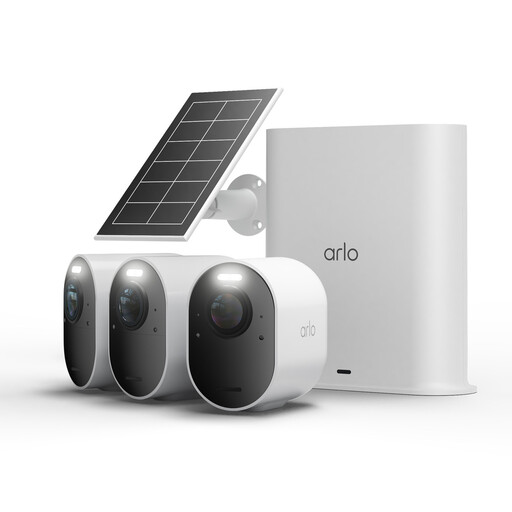
The Editor's Verdict: This kit is tailored for those who want no compromises. It's designed for monitoring large properties thanks to its 180° field of view and 4K HDR resolution, which allows you to zoom in on details without losing quality, day or night.
It avoids the "fake 4K" trap by pairing its high resolution with a top-tier sensor and lens that deliver true 4K HDR imaging, even in low light, ensuring precise identification.
Superior 4K HDR video quality and a 180° panoramic field of view with distortion correction. Automatic subject tracking with 12x zoom.
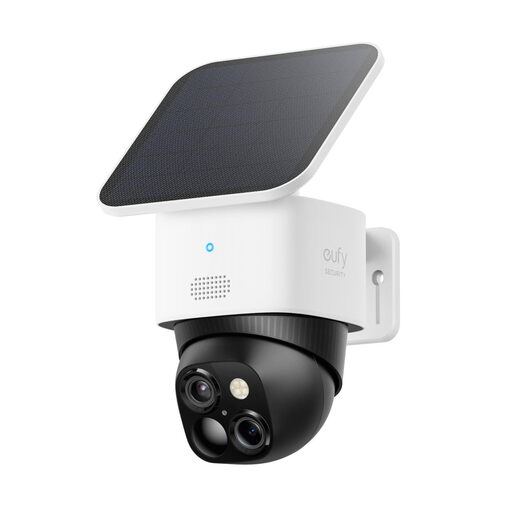
The Editor's Verdict: Perfect for covering large areas (like a garden or car park) or the corners of a property, this motorised `360° outdoor camera` leaves no blind spots. It can track movement over a wide area, all without a mandatory subscription.
This model is the perfect antidote to the hidden subscription trap. Eufy has built its reputation on an ecosystem with no mandatory monthly fees, favouring secure local storage. The investment is therefore transparent and controlled.
Motorised 360° coverage for complete surveillance with no blind spots. Operates without a mandatory monthly subscription.
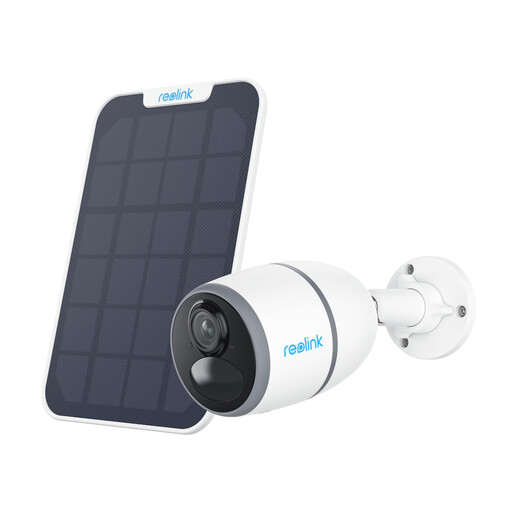
The Editor's Verdict: This is THE `wireless home surveillance` solution for locations out of Wi-Fi range: stables, construction sites, warehouses, or remote second homes. It operates via the 3G/4G mobile network, offering total installation flexibility.
This model tackles the number one problem of remote sites: lack of connectivity. It avoids the common frustration of buying a Wi-Fi camera for a location that turns out to be out of the router's range—a frequent and costly mistake.
4G LTE connectivity for installation anywhere. Local storage on a microSD card for total cost control (only a small data plan for the SIM card is required).
Explore our full selection of cameras that meet our demanding selection criteria and current security standards.
Yes, but their efficiency is understandably reduced. A good model is equipped with a high-capacity battery, capable of lasting several days (or even weeks for top-performing models) without a single ray of sun. The energy stored on sunny days acts as a reserve. However, in regions with less sun during the winter, an occasional manual top-up via its USB-C port may be necessary from time to time.
The lithium-ion batteries in these cameras are designed to last for a certain number of charge cycles (typically between 300 and 500). In practice, since solar charging constantly maintains an optimal charge level, you can expect a lifespan of 3 to 5 years before noticing a significant drop in autonomy. Good to know: most models from major brands (Arlo solar, Eufy solar, etc.) offer removable and replaceable batteries.
It all depends on the model and brand. More and more manufacturers, led by Eufy, are offering functional solutions without any subscription, thanks to local storage (on a microSD card or a dedicated base station). However, a subscription often remains an option to unlock advanced features like more sophisticated AI detection, a longer cloud video history (30 or 60 days), or emergency call options. The rule of thumb: carefully read the product sheet to distinguish between the features included by default and those reserved for subscribers.