
Livraison le jour même ou le lendemain

Qualité garantie

Débloquez vos offres de bienvenue: Livraison GRATUITE | Jusqu'à -80 % | 30 jours d'essai gratuits à JoyPlus
Téléchargez l'application
Want to light up your garden, patio, or driveway without skyrocketing your electricity bill or getting bogged down in a complicated installation? That's the promise of the outdoor solar light. Practical, cost-effective, and eco-friendly, it ticks all the boxes. The only catch? The market has become so vast that it's easy to get lost. Between useless gadgets and genuine bargains, how do you tell the difference?
Don't worry. Our guide is here to help you see things more clearly, define your needs, and choose the model that will truly transform your summer evenings.
Before you settle on a model, ask yourself three key questions to make the right choice.
Your needs will dictate the type of light you should turn to.
Brightness is the name of the game. It's measured in lumens (lm). For a powerful solar spot that needs to genuinely illuminate a high-traffic area, aim for 100 to 500 lumens (or more). For a simple decorative marker light, 5 to 50 lumens is more than enough.
Battery life, on the other hand, depends on the combination of the battery (its capacity is in mAh) and the solar panel. For the magic to happen at night, you need maximum sun during the day. It's only logical.
A solar light that lets in water is a solar light destined for the bin. This is where the IP (Ingress Protection) rating comes in, which measures resistance to dust (first digit) and water (second digit).
To put it simply:
Enough theory, let's get practical. Here are three models that caught our eye, each designed for a specific need.
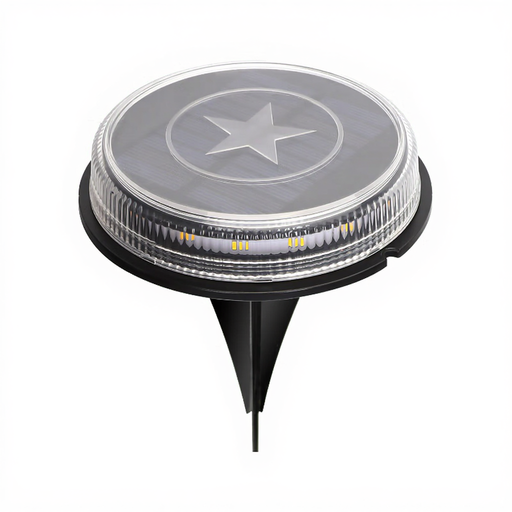
Why it stands out: What's striking about this spot is its design: flat, discreet, and above all, built to withstand almost anything. You can place it on the ground, embed it, and even drive over it with a car without it flinching. Ideal for a garage driveway or a parking area. And of course, the wireless installation takes just seconds.
Pros:
Who is it for? For those who want nearly invisible, ultra-resistant, zero-maintenance ground lighting. Perfect for driveways, wooden decks, and paths used by vehicles.
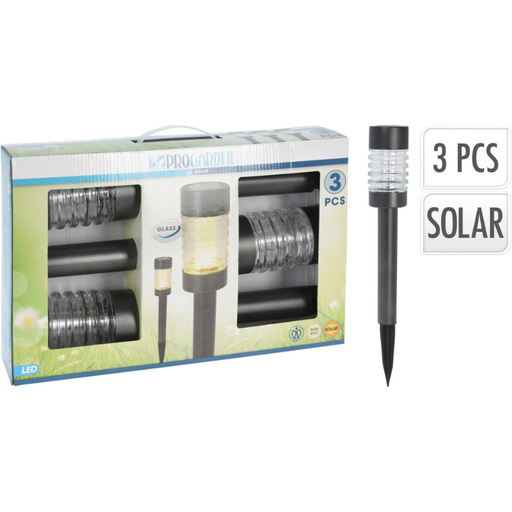
Why it stands out: Here, the focus is on design. This set of three stakes brilliantly combines anthracite stainless steel and real glass for a decidedly modern touch. At 5 lumens each, they aren't meant to light up the night like day, but to cast a soft, welcoming, warm white glow.
Pros:
Who is it for? For those who prioritise aesthetics and want to create a warm atmosphere with stylish solar garden lighting. Ideal for elegantly defining a path or highlighting a flowerbed.
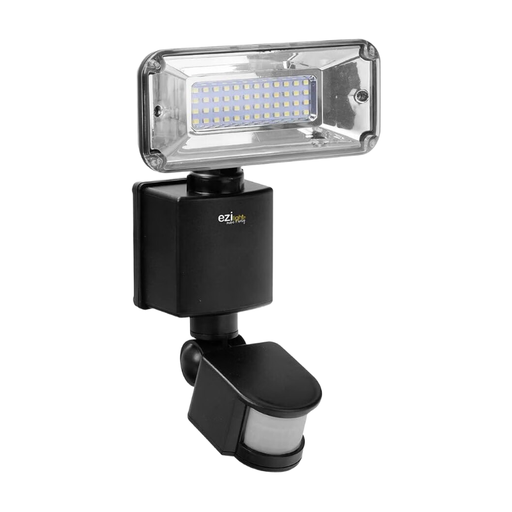
Why it stands out: Time for security. The Solar Pro 1 is a powerful solar spot that means business. It combines intense LED lighting with an ultra-responsive motion sensor. As soon as it detects presence, it unleashes its full power for a guaranteed deterrent effect. Its major asset is its adjustable head, which allows you to aim it precisely at the area you want to monitor.
Pros:
Who is it for? For anyone who wants to secure the perimeter of their home without any hassle. This wall-mounted outdoor light with a motion sensor is perfect for entrances, garages, or pathways that feel a bit unsettling at night.
Is your project unique, or are you simply curious to see other styles and brightness levels? From festive string lights to high-power floodlights, our complete selection will meet all your needs.
? Discover our full range of outdoor solar lights
Yes, but don't expect miracles. Modern solar panels can capture light even on cloudy days, but the charge is much less efficient than in the middle of summer. The result: battery life will be shorter in winter or after a day with no sun. It's just physics!
It all depends on the components. The LEDs and the solar panel are designed to last for years (LEDs often exceed 20,000 hours). The weakest link is the rechargeable battery. Expect a lifespan of 2 to 4 years for a quality model, after which its performance will decline. The good news: on many lights, it's easy to replace.
It couldn't be simpler. The only essential task is to keep the solar panel clean. A wipe with a damp cloth from time to time to remove dust, pollen, or leaves is enough to ensure an optimal charge. In winter, remember to also clear away any snow that might cover it.