
Livraison le jour même ou le lendemain

Qualité garantie

Débloquez vos offres de bienvenue: Livraison GRATUITE | Jusqu'à -80 % | 30 jours d'essai gratuits à JoyPlus
Téléchargez l'application
The promise of solar garden lighting is an attractive one: no cables to run, a lower electricity bill, and an eco-friendly choice. Yet, the experience often ends in disappointment. A light that dies after the first heavy downpour, laughable battery life that leaves you in the dark by 9?p.m., or a glow so dim it barely illuminates the path.
As a Product Expert at Joybuy, my role is to help you decode the spec sheets to make a truly enlightened choice. Before you commit, here are the 3 most common pitfalls to avoid so you don't regret your purchase.
To avoid these disappointments, you just need to check a few key technical points. They make all the difference between a short-lived gadget and a long-lasting investment for your outdoor space.
This is the non-negotiable feature for a wireless outdoor light. The Ingress Protection rating, noted as "IP" followed by two digits, measures the product's resistance to dust and water.
Your light's runtime depends directly on its panel's ability to capture solar energy and its battery's capacity to store it.
Different needs call for different types of solar lights.
To illustrate this advice, here are a few models that stand out from the crowd for different needs.
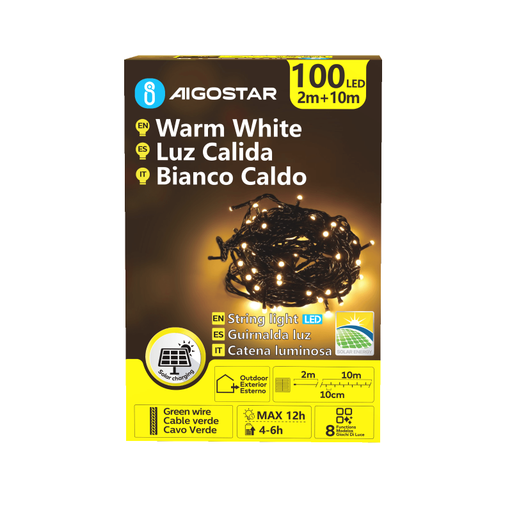
Why we chose it: Perfect for decorating a pergola, balcony, or fence. With its 10-meter length and 100 LEDs, it casts an ideal ambient light for summer evenings.
Its IP65 rating effectively protects it from rain, unlike many entry-level string lights. Its 800 mAh battery ensures a comfortable runtime to last the whole evening.
Its 8 lighting modes (steady, flashing, waves, etc.) allow you to vary the atmosphere for any occasion, making it particularly versatile.
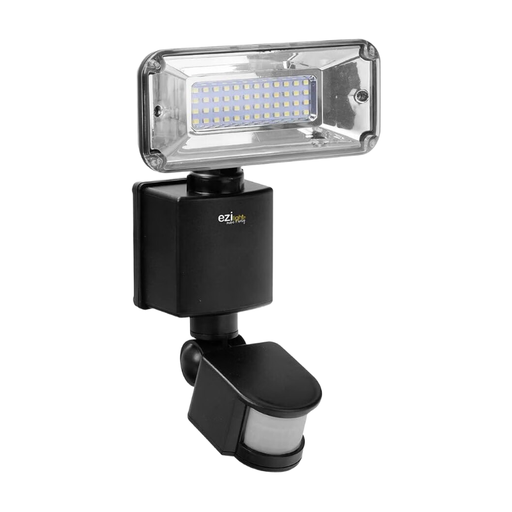
Why we chose it: Perfect for lighting a garage entrance, a doorway, or a dark corner of the garden. It combines powerful lighting with a smart security function.
The motion detector bypasses the dual challenge of brightness and battery life. The light only turns on at full intensity when needed, saving energy for key moments.
Its adjustable head allows you to direct the light beam precisely where you need it for maximum efficiency.
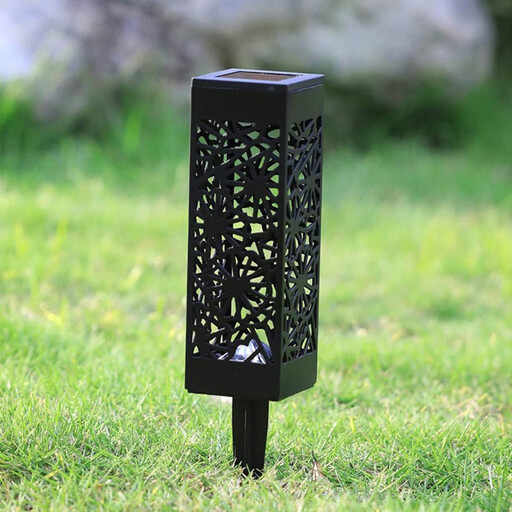
Why we chose it: This set of 6 bollard lights is perfect for lining a pathway or defining a flowerbed. Installation is a breeze: just stake them into the ground.
Its IP65 rating ensures true weather resistance, a common weak point for many entry-level pathway lights. The cutout design transforms simple marking into a decorative element in its own right.
The floral pattern that the warm light projects onto the ground creates a unique and elegant visual effect, enhancing the garden at night without ever being glaring.
Explore our full selection of products that meet our quality criteria and safety standards.
Yes, but their performance is logically reduced. A modern solar panel will charge even in low light, but the stored energy will be less than after a full day of bright sun. The nightly runtime will therefore be shorter. To optimize charging, place the panel in the most open and best-exposed area possible (ideally south-facing), and remember to clean it from time to time.
It depends on the quality of the components. The LEDs themselves have a very long lifespan (often over 20,000 hours). It's the rechargeable battery that wears out the fastest. Generally, expect between 1 and 3 years before its ability to hold a charge significantly decreases. On some models, the battery is a standard type and can be easily replaced.
Maintenance is minimal. The most important thing is to keep the solar panel clean. Dust, pollen, dead leaves, or snow can reduce its efficiency. A simple wipe with a damp cloth every two or three months is enough to ensure an optimal charge.