
Livraison le jour même ou le lendemain

Qualité garantie

Débloquez vos offres de bienvenue: Livraison GRATUITE | Jusqu'à -80 % | 30 jours d'essai gratuits à JoyPlus
Téléchargez l'application
There's nothing like a well-lit garden, patio, or balcony to transform the atmosphere of your summer evenings. The problem? Installing traditional lighting often means construction work, a hefty budget, and a climbing electricity bill. Fortunately, the outdoor solar lamp is a game-changer: it's the practical and eco-friendly solution to light up your nights, hassle-free.
But with an overwhelming number of options on the market, how do you make the right choice? This guide is here to light the way. As the Head of Product Recommendations at Joybuy, my mission is to demystify the market for you with objective, jargon-free advice. We'll review the essential buying criteria before presenting our selection of the best models for every budget and project.
Before you settle on a model, there are three criteria to scrutinize to ensure your future outdoor solar lighting perfectly matches your expectations.
The ideal type of lamp depends primarily on what you plan to do with it.
Your lighting will have to withstand the elements. This is where the Ingress Protection (IP) rating comes in. This standard assesses a device's resistance to dust (the first digit) and water (the second digit). For worry-free outdoor use, aim for a minimum rating of IP65. This certifies that your IP65 waterproof solar wall light is protected from both dust and heavy rain. As for materials, ABS plastic or stainless steel are reliable choices for their resistance to rust and UV rays.
Battery life is the crucial factor. It depends on the battery and solar panel combination. A good model should be able to store enough energy from 6 to 8 hours of sunlight to last all night (i.e., 8 to 12 hours of light). Also, consider the brightness, expressed in lumens. About fifteen lumens is sufficient for pathway marking or a soft ambiance. To effectively light a high-traffic area, you'll need to aim higher.
To help you turn your ideas into reality, here are three models that caught our attention for their design and performance.

Why this model stands out: This is the champion of versatility. Supplied with several mounting bases, it adjusts to fit most standard square posts (from 9x9 cm to 14x14 cm), whether they are made of wood, PVC, or composite. Its understated design and warm 360° light make it an excellent choice for combining security and aesthetics on a fence or deck.
Key features:
Who is it for? For anyone looking to highlight the posts of their fence, deck, or patio with a solution that is simple, elegant, and effective.
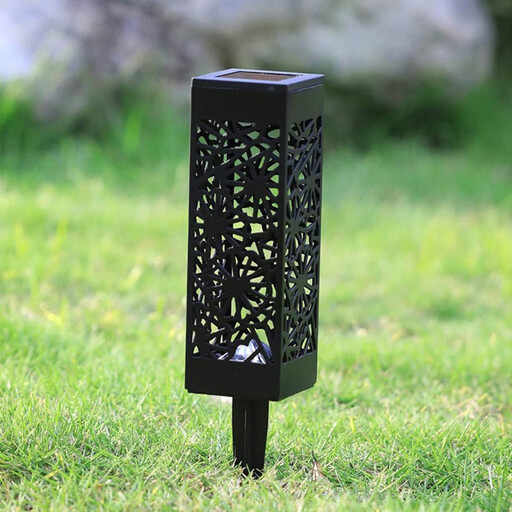
Why this model stands out: These solar stakes do more than just illuminate: they decorate. Their openwork shade projects a delicate floral pattern onto the ground, transforming a simple path into a charming light display. An excellent way to personalize your garden.
Key features:
Who is it for? For those who want lighting that is both functional and decorative to enhance their paths, flowerbeds, or lawn edges.
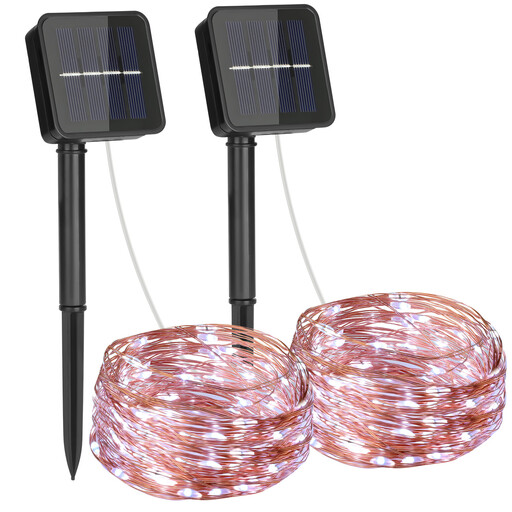
Why this model stands out: Its strength lies in its creativity. The ultra-flexible copper wire and 8 lighting modes offer nearly endless decoration possibilities. Whether for a summer party, holiday festivities, or a cosy everyday ambiance, this solar string light adapts to all your creative whims.
Key features:
Who is it for? For creative minds who love to personalize their decor and are looking for a versatile solution to light up a balcony, a pergola, shrubs, or even a corner of the living room near a sunny window.
Our selection covers three very common uses, but the world of solar lighting is much broader. Wall-mounted lights with motion detectors, powerful spotlights to illuminate a tree, floodlights... If you have a specific need or are simply curious, feel free to explore our full catalogue.
Explore our complete collection of LED garden lights to find the model that will enchant your evenings.
The lifespan of an outdoor solar light depends on two key components: the LED and the battery. LEDs are extremely durable (often lasting over 50,000 hours). It's the rechargeable battery that will show signs of wear first. Generally, you can expect 2 to 3 years of optimal use before considering a replacement (if the model allows for it).
Yes, but their performance is reduced. A solar panel needs light to charge, ideally direct sunlight. In winter, with shorter days and often overcast skies, or on very cloudy days, charging is less efficient. Your lights will still turn on, but their runtime will logically be shorter than in the middle of summer.
Maintenance is a breeze. The only crucial point is to keep the solar panel clean. A simple wipe with a soft, damp cloth from time to time is enough to remove dust, pollen, or leaves that can block the sun and reduce charging efficiency. In winter, just remember to clear away any snow that might cover it.