
当日/次日达

品质保障

开启新人专享福利: 全场免邮 | 低至 2 折 | 免费试用 30 天 JoyPlus 会员
下载 Joybuy
Lighting up your garden without running wires, in an eco-friendly and effortless way: the promise is appealing. Yet, the experience often ends in disappointment. Between unmet waterproofing claims and battery life that dwindles quickly, it's easy to make the wrong choice.
As a product expert at Joybuy, I analyse dozens of spec sheets every day. My goal is to help you see things more clearly. Let's cut through the marketing jargon and get straight to the point. Here are the three classic mistakes to avoid to make the right choice.
To avoid falling into this trap, a few technical checks are essential. These are the true deciding factors that will determine the quality and lifespan of your future solar garden light.
The IP (Ingress Protection) rating is an international standard that classifies a device's level of protection against solids (dust) and liquids (water). For outdoor use, where the weather can be unpredictable, an IP65 rating is an excellent benchmark.
An IP65 waterproof light is therefore designed for long-term resistance to rain, making it a non-negotiable feature for reliable outdoor lighting.
A solar light's runtime depends on two factors: its battery capacity (expressed in mAh) and the efficiency of its solar panel. A high-quality, well-positioned panel will charge a good-capacity battery faster, ensuring longer illumination.
Prioritise models that clearly display this information. A stated runtime of 6 to 8 hours after a full charge is a good performance indicator for everyday use.
Before you decide, ask yourself the right question: what is it for?
To move from theory to practice, here's how these criteria translate into real products suited for different needs.
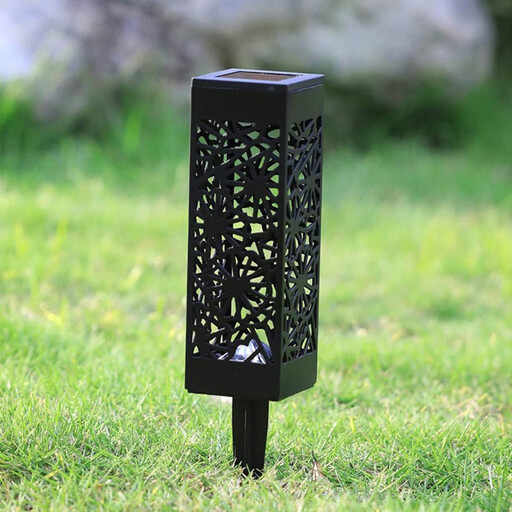
Why we chose it: Ideal for those who want to beautify their garden or mark a pathway without breaking the bank. The six-pack allows you to create a harmonious set, and the openwork design projects elegant floral patterns on the ground, adding a unique decorative touch.
This product directly addresses the false waterproofing trap by proudly displaying an IP65 certification, guaranteeing its resistance to the elements all year round.
The openwork design that creates light patterns on the ground and the ultra-simple installation (just stake them into the ground) make it both a beautiful and practical garden decoration solution.
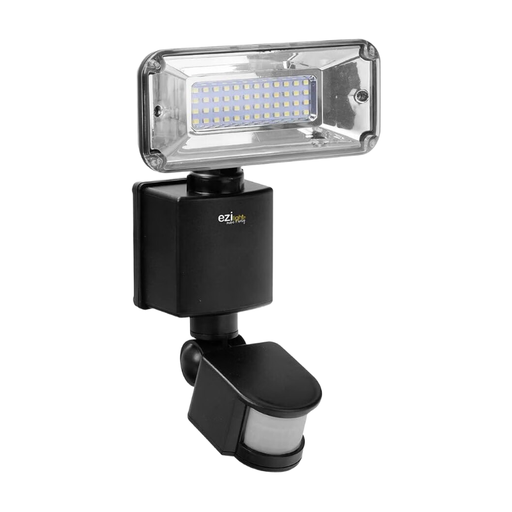
Why we chose it: Perfect for securing an entrance, a garage, or a dark area of the garden. This spotlight is a no-frills solution: its mission is to provide powerful light only when needed, thanks to its integrated motion sensor.
It sidesteps the trap of confusing decoration with security. This is a pure solar spotlight with a motion sensor, designed for lighting performance, not aesthetics, thus avoiding any disappointment about its primary function.
Its powerful LED floodlight combined with the motion sensor offers a remarkably effective and energy-efficient security solution. The lamp head is adjustable for targeted lighting.
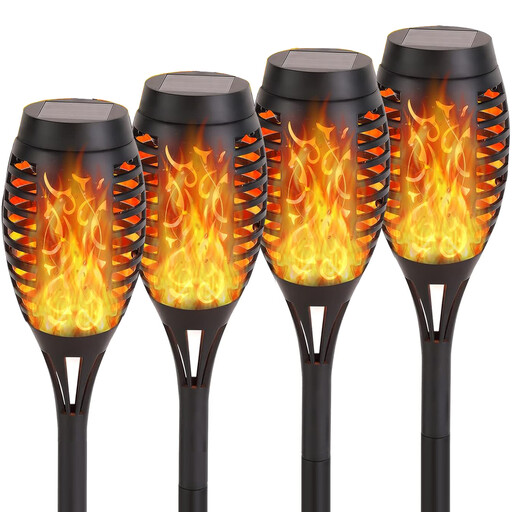
Why we chose it: For those looking to create a warm and inviting atmosphere on a patio or in a garden. The flickering flame effect is realistic and brings a touch of originality and cosiness to your summer evenings.
This product fully embraces its function: garden decoration. It doesn't pretend to be a security light, thus avoiding the trap of inadequate brightness. Furthermore, its IP65 certification ensures its durability against rain.
The flickering flame effect is its main asset, creating a unique ambiance. The four-pack format allows you to distribute the light points for a cohesive visual effect.
We have selected a full range of products for you that meet these quality and safety criteria.
It all depends on the quality of its components. The LED has a very long lifespan (often over 20,000 hours). The part that wears out fastest is the rechargeable battery, which can usually be replaced after 2 to 3 years on high-quality models. Regular maintenance of the solar panel also extends the product's efficiency.
Yes, but expect reduced performance. Modern solar panels can capture energy even in overcast weather, but charging will be less efficient than in direct sunlight. In winter, shorter days and less sunlight will inevitably reduce the light's nightly runtime. This is why it's crucial to choose a model with a high-performance solar panel.
For optimal charging, place your light in a spot that receives maximum direct sunlight during the day, ideally south-facing and free from shadows cast by trees, walls, or awnings. Also, remember to clean the solar panel's surface with a damp cloth from time to time to remove dust and debris that could block the light.